
No products in the cart.
Blog
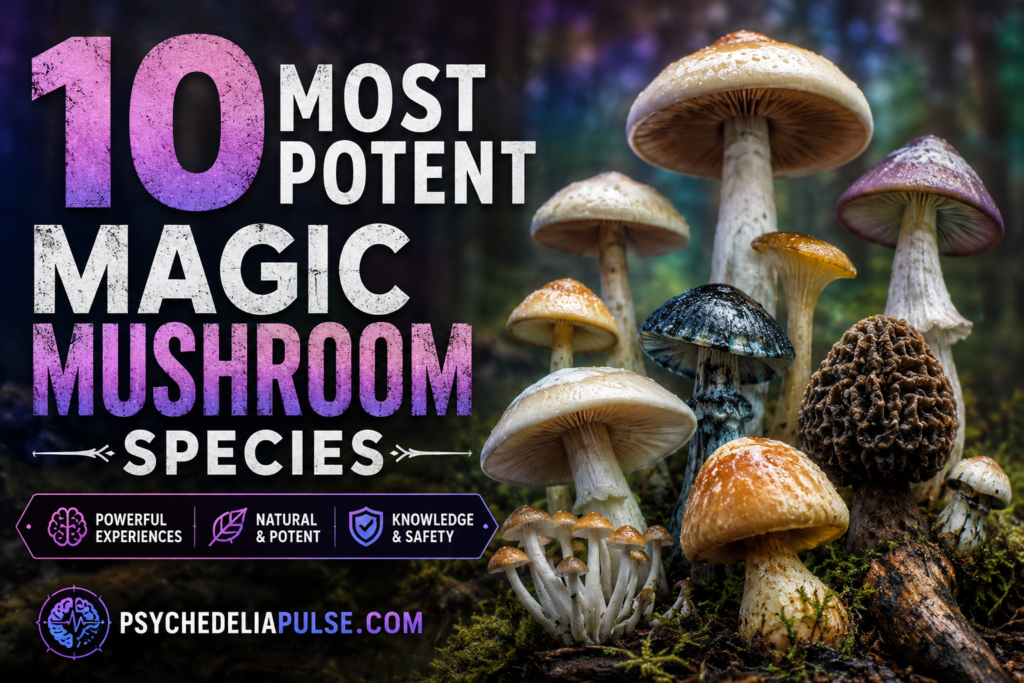
Most Potent Magic Mushroom Species: A Ranked Guide to Psilocybin Alkaloid Content
28
Jun
Jun
What Is the Most Potent Magic Mushroom Species?
Psilocybe azurescens is widely regarded as the most potent magic mushroom species based on published HPLC analyses. Laboratory testing has reported up to 2.51% total active alkaloids by dry weight, including psilocybin, psilocin, and baeocystin. Potency varies naturally between specimens, growing conditions, genetics, and analytical methods.
Overview
The most potent magic mushroom species identified in published laboratory testing is Psilocybe azurescens, followed by Psilocybe subaeruginosa and Psilocybe cyanescens. Potency is measured using High-Performance Liquid Chromatography (HPLC), which quantifies psilocybin, psilocin, baeocystin, and related alkaloids by dry weight. This guide explains species rankings, compares wood-loving and dung-loving Psilocybe mushrooms, clarifies the difference between species and strains, examines minor alkaloids, discusses Wood-Lover Paralysis (WLP), and highlights deadly look-alikes such as Galerina marginata. Because alkaloid concentrations vary naturally, published potency values should be interpreted as laboratory ranges rather than fixed measurements.
Key Takeaways
- Psilocybe azurescens is the most potent magic mushroom species documented in published HPLC analyses, with reported total alkaloid content reaching approximately 2.51% by dry weight
- Wood-loving Psilocybe species consistently occupy the upper end of published alkaloid rankings, although researchers have not established that wood substrate alone causes higher alkaloid production
- Potency values are ranges, not guarantees. Natural variation in genetics, substrate, environment, harvest timing, and storage means any given specimen may test considerably above or below published species averages
- Species and strains are not interchangeable terms. Penis Envy and Golden Teacher are cultivated strains of Psilocybe cubensis, not separate species — a distinction that directly affects how potency comparisons should be evaluated
- Misidentification with Galerina marginata — a wood-loving species containing potentially fatal amatoxins — represents the most serious documented safety risk associated with wild Psilocybe foraging
Methodology: How This Ranking Was Compiled
The species rankings and alkaloid figures presented in this guide are drawn exclusively from published laboratory analyses using High-Performance Liquid Chromatography (HPLC) or equivalent validated chromatographic methods. Anecdotal reports, user accounts, and unverified vendor claims were excluded from the ranking criteria.
Primary sources include:
- Peer-reviewed analyses published by Jochen Gartz, including comparative studies of European and North American Psilocybe species
- The foundational species description and alkaloid analysis of Psilocybe azurescens by Paul Stamets and J.S. Gartz (1996)
- Taxonomic and chemical studies by Gastón Guzmán on Mexican and Central American Psilocybe species
- Psilocybin Cup competition data published by Oakland Hyphae, which provides independent laboratory analysis of submitted cultivated samples
- Supporting peer-reviewed literature on tryptamine alkaloid biosynthesis and chemical stability
Where multiple published measurements exist for a single species, figures are reported as ranges reflecting documented variation rather than as single definitive values. Where published data is limited, this is explicitly noted. All figures represent alkaloid concentrations measured in dried specimens expressed as a percentage of dry weight.
Known limitations of this dataset:
- Published analyses represent a small fraction of total wild and cultivated Psilocybe diversity
- Sample size for several species is limited, making statistical generalization unreliable
- Storage conditions, drying method, and sample age at time of analysis all introduce variation that may not be controlled or reported consistently across studies
- Oakland Hyphae Psilocybin Cup data reflects cultivated submissions rather than wild specimens and may reflect selection bias toward high-performing samples
Readers should treat all figures in this guide as documented data points within natural ranges, not as guaranteed potency values for any given specimen.
Key Definitions
What Is Psilocybin?
Psilocybin is the primary active compound in Psilocybe mushrooms and the molecule most responsible for psychedelic effects. Chemically, it is a phosphorylated tryptamine — specifically, O-phosphoryl-4-hydroxy-N,N-dimethyltryptamine. After ingestion, the body removes the phosphate group through dephosphorylation, converting psilocybin into psilocin, which crosses the blood-brain barrier and acts on serotonin receptors — primarily the 5-HT2A receptor. Psilocybin is a fungal secondary metabolite: a compound produced by the fungus that is not directly required for primary metabolism but likely serves ecological functions that remain incompletely understood.
Psilocybin is more chemically stable than psilocin, making it the dominant alkaloid detected in dried and stored specimens. It is also the compound targeted by current clinical research programs at Johns Hopkins University, Imperial College London, UCSF, COMPASS Pathways, and Usona Institute.
What Is Psilocin?
Psilocin is the pharmacologically active form of the compound — the molecule that directly binds serotonin receptors to produce psychedelic effects. It is produced in vivo from psilocybin via dephosphorylation, and is also present in fresh mushroom tissue prior to ingestion.
Psilocin is significantly less chemically stable than psilocybin. Its phenolic hydroxyl group is susceptible to oxidation — the same chemical reaction responsible for the characteristic bluing observed when Psilocybe tissue is damaged or exposed to air. This instability means that improper drying or storage measurably reduces psilocin content in dried specimens over time.
What Is Baeocystin?
Baeocystin is a naturally occurring tryptamine alkaloid found across Psilocybe species in varying concentrations. It is structurally similar to psilocybin and was first isolated from Psilocybe baeocystis, for which it is named. Its pharmacological contribution to the overall effects of consuming Psilocybe mushrooms is incompletely understood. Early research by Gartz suggested limited independent psychoactivity, but more recent investigation indicates potential interactions with primary alkaloids that have not been fully characterized.
What Is HPLC?
High-Performance Liquid Chromatography (HPLC) is the analytical method used to measure alkaloid concentrations in Psilocybe mushrooms. The technique works by dissolving a prepared sample in a solvent, passing it through a chromatographic column under high pressure, and detecting separated compounds using ultraviolet (UV) absorption or other detectors. Each compound produces a distinct signal at a characteristic retention time, allowing quantification against known calibration standards.
In mushroom potency analysis, HPLC measures psilocybin, psilocin, baeocystin, norbaeocystin, and — in some laboratories — aeruginascin and other minor alkaloids. Results are expressed as milligrams per gram or as a percentage of dry weight. Some laboratories also use Liquid Chromatography–Mass Spectrometry (LC-MS), which combines chromatographic separation with mass detection for higher specificity and sensitivity, particularly useful for identifying novel or trace compounds in metabolomics and fungal secondary metabolite research.
How the Most Potent Magic Mushroom Species Are Measured
Meaningful potency comparisons between magic mushroom species require a consistent measurement standard. The accepted method is High-Performance Liquid Chromatography (HPLC), which separates and quantifies individual compounds within a sample with high precision. Results are expressed as a percentage of dry weight — the alkaloid content relative to the total mass of a fully dried mushroom sample — because fresh mushrooms contain between 85–95% water, making raw wet-weight measurements unreliable for cross-sample comparison.
Key Finding: “HPLC-based dry weight measurement is the only standardized method that allows meaningful potency comparisons between Psilocybe species. Published figures from different studies reflect documented laboratory measurements, not universal species potency values — and should be interpreted accordingly.”
Why published potency figures vary:
Even with a standardized method, reported values across different sources rarely align precisely. Natural variation arises from:
- Genetic variation within the same species
- Substrate composition and nutrient availability during growth
- Geographic origin and environmental conditions
- Harvest timing relative to spore drop
- Drying method and storage conditions after harvest
- Sample age at time of analysis
- Laboratory methodology, instrumentation, and calibration standards
The Psilocybin Cup, organized by Oakland Hyphae, has expanded the publicly available potency dataset significantly by submitting cultivated samples to independent laboratory analysis. While Cup data reflects cultivated specimens and controlled submissions rather than wild field samples, it provides a useful complement to earlier published research — particularly for assessing within-species strain variation in Psilocybe cubensis.
Direct Answer — How is mushroom potency measured?
Scientists measure mushroom potency using High-Performance Liquid Chromatography (HPLC). This analytical technique separates and quantifies psilocybin, psilocin, baeocystin, and related compounds as a percentage of dry weight, allowing standardized comparisons between species and samples. Some laboratories use LC-MS for higher compound specificity.
The Active Alkaloids in Psilocybe Mushrooms
Understanding which compounds are being measured — and how they interact — is essential context for interpreting any magic mushroom alkaloid content chart.
Psilocybin
Psilocybin is the primary active compound in Psilocybe mushrooms and the molecule most responsible for psychedelic effects. It is a prodrug converted to psilocin via dephosphorylation after ingestion. Psilocybin is relatively stable compared to psilocin, making it the dominant alkaloid detected in dried specimens and the compound targeted by most clinical research programs currently underway.
Psilocin
Psilocin is pharmacologically active without conversion and is the compound that directly binds the serotonin 5-HT2A receptor to produce psychedelic effects. Oxidized psilocin — the product of psilocin’s reaction with oxygen — is responsible for the characteristic blue discoloration observed when Psilocybe tissue is damaged. This instability means psilocin content decreases measurably during improper drying and storage.
Baeocystin
Baeocystin is a structural analog of psilocybin found in varying quantities across Psilocybe species. Some species, including Psilocybe baeocystis — for which the compound is named — contain notable concentrations relative to their psilocybin content. Its independent pharmacological contribution to the effects of whole-mushroom consumption remains incompletely characterized in published research.
Norbaeocystin and Aeruginascin
Norbaeocystin is typically present in small quantities and is considered a minor contributor to total alkaloid load. Aeruginascin, found in certain species including Psilocybe cubensis, has attracted research interest due to preliminary suggestions that it may modulate the subjective character of psychedelic effects — though this hypothesis remains under investigation and should not be treated as established pharmacology.
The Alkaloid Entourage Effect
The concept of an alkaloid entourage effect — in which minor compounds modify or amplify the activity of primary alkaloids — is increasingly discussed in mycological and pharmacological literature. Emerging metabolomics research has begun mapping the full alkaloid profiles of individual Psilocybe species, revealing compound complexity beyond what earlier HPLC panels routinely captured. While compelling as a framework, the evidence base remains early-stage. ITS sequencing and phylogenetic analysis of Psilocybe species has also improved understanding of evolutionary relationships between alkaloid-producing lineages, though the genetic basis of alkaloid biosynthesis variation between species is not yet fully characterized.
Readers should distinguish between documented pharmacology and speculative interaction models when evaluating claims about minor alkaloids.
Most Potent Magic Mushroom Species: Ranked by Published Alkaloid Data
The following rankings reflect published laboratory analyses using HPLC or equivalent validated methods, as described in the Methodology section. Ranges are noted where multiple data points exist. These figures represent documented measurements rather than guaranteed concentrations for any given specimen.
1. Psilocybe azurescens — Highest Published Psilocybin Content by Dry Weight
Psilocybe azurescens is the highest-potency Psilocybe species documented in published laboratory analyses, with reported total alkaloid concentrations reaching approximately 2.51% by dry weight.
Published alkaloid range: Up to approximately 2.51% total active alkaloids by dry weight
According to published HPLC analyses by Stamets and Gartz (1996), Psilocybe azurescens holds the highest psilocybin content by dry weight of any Psilocybe species documented in peer-reviewed literature. First formally described near the mouth of the Columbia River in Oregon, it remains primarily a Pacific Northwest species with documented populations along coastal Oregon and Washington.
This is a wood-loving species, fruiting on decaying deciduous wood chips and sandy soils, typically in late autumn through early winter. It is cold-tolerant to a degree unusual among Psilocybe species, capable of fruiting when temperatures approach freezing.
Identifying characteristics:
- Caramel to chestnut-brown pileus (cap), becoming hygrophanous and fading as it dries
- Pronounced umbo (central cap bump) when young
- Strong, consistent bluing reaction when tissue is damaged — a visual indicator of psilocin oxidation
- Dark purplish-brown to nearly black spore print
- Relatively rare in the wild; not confirmed outside the Pacific Northwest in established populations
P. azurescens is not widely cultivated due to the complexity of replicating its preferred substrate and environmental conditions, though outdoor bed cultivation has been documented.
2. Psilocybe subaeruginosa — Strongest Wild Magic Mushroom Outside North America
Psilocybe subaeruginosa is the dominant high-potency Psilocybe species of Australia and New Zealand, with published analyses placing its alkaloid content second only to Psilocybe azurescens in most comparative datasets.
Published alkaloid range: Up to approximately 1.93% total active alkaloids by dry weight
Psilocybe subaeruginosa is a wood-loving species fruiting on woody debris and mulch, typically during autumn and winter months. Within Australian mycological communities, it occupies a cultural position comparable to that of P. cyanescens in the Pacific Northwest — the most commonly encountered high-potency wild species for foragers in its range.
Like other wood-loving species, it produces a strong bluing reaction and a characteristic chestnut-brown cap that fades hygrophanously.
3. Psilocybe cyanescens — Most Widely Distributed Potent Wood-Loving Species
Psilocybe cyanescens — commonly called Wavy Caps — is among the most potent and most widely distributed wood-loving Psilocybe species, with published alkaloid analyses ranging from approximately 0.85% to 1.96% total active compounds by dry weight.
Published alkaloid range: Approximately 0.85%–1.96% total active alkaloids by dry weight
Native to the Pacific Northwest, P. cyanescens has naturalized across much of Western Europe and parts of New Zealand, spread largely through the horticultural trade via contaminated wood chip mulch. It is the most frequently encountered high-potency wild species for foragers across its expanded range.
Psilocybe cyanescens vs. Psilocybe azurescens — direct comparison:
| Feature | P. cyanescens | P. azurescens |
|---|---|---|
| Cap shape | Wavy, undulating margin | Broadly umbonate when young |
| Potency (published peak) | ~1.96% total alkaloids | ~2.51% total alkaloids |
| Distribution | Pacific NW, Western Europe, New Zealand | Pacific Northwest (coastal OR/WA) |
| Cultivation | Documented but uncommon | Documented but difficult |
| Substrate | Deciduous wood chips, mulch | Sandy soils, wood debris |
4. Psilocybe bohemica / Psilocybe serbica
Psilocybe bohemica and the closely related Psilocybe serbica are Central European wood-loving species with published psilocybin concentrations among the highest documented in European mycological literature.
Published alkaloid range: Approximately 1.34% psilocybin by dry weight (select samples, per Gartz)
Their taxonomic relationship is debated, with some mycologists treating them as variants of a single species complex rather than distinct taxa. Regardless of final classification, both names appear in the potency literature and warrant inclusion in any comparative alkaloid discussion.
5. Psilocybe semilanceata — Most Potent Widely Distributed Grassland Species
Psilocybe semilanceata — the Liberty Cap — is among the most geographically widespread psilocybin-containing mushrooms in the world and the most potent commonly encountered species for foragers across much of Europe.
Published alkaloid range: Approximately 0.2%–1.0% psilocybin by dry weight; select samples reported higher
P. semilanceata grows in nutrient-rich grasslands grazed by livestock, where it is associated with soil rather than wood substrates. Its distinctive conical to sharply umbonate cap makes it more reliably identifiable than many other small brown mushrooms in its habitat — a meaningful advantage in a genus where misidentification carries serious risk.
Alkaloid content in P. semilanceata is notably variable across its broad geographic range. Most published samples fall between 0.2% and 0.6% psilocybin, though select analyses have reported concentrations approaching or exceeding 1.0%.
6. Psilocybe baeocystis — Notable Baeocystin Content
Psilocybe baeocystis is the species for which baeocystin was named, reflecting its comparatively elevated concentrations of this minor alkaloid relative to its psilocybin content.
Published alkaloid range: Approximately 0.15%–0.85% psilocybin by dry weight; notable baeocystin levels
This Pacific Northwest wood-loving species fruits on wood chips, peat, and decaying coniferous matter. Its distinct alkaloid profile — with proportionally higher baeocystin relative to other species — makes it a point of interest in discussions of minor alkaloid pharmacology and the proposed entourage effect.
7. Psilocybe cubensis — Most Widely Cultivated Species
Psilocybe cubensis is the most cultivated magic mushroom species globally. Although it does not rank among the highest-potency species in published field analyses, its accessibility and extensive strain development have made it the dominant species in both recreational and research contexts.
Published alkaloid range: Approximately 0.14%–0.90% psilocybin by dry weight; strain-dependent variation
This is the appropriate place to address one of the most common misconceptions in discussions of the most potent Psilocybe species.
Species vs. Strains — A Critical Distinction:
Direct Answer — What is the difference between mushroom species and strains?
A mushroom species is a genetically distinct organism defined by evolutionary lineage, reproductive biology, and morphological characteristics. A strain is a cultivated genetic line developed and maintained within a single species. Penis Envy and Golden Teacher are strains of Psilocybe cubensis, not separate species. Calling them species is taxonomically incorrect.
High-potency P. cubensis strains such as Penis Envy have tested at the upper range of published P. cubensis data in Oakland Hyphae Psilocybin Cup submissions. However, even elite cultivated strains of P. cubensis generally remain below the peak published values for P. azurescens or P. cyanescens in total alkaloid content. Within P. cubensis, strain-level potency variation is real but narrower in magnitude than species-level differences.
8. Psilocybe tampanensis — Sclerotia-Forming Species
Psilocybe tampanensis is notable for producing sclerotia — dense, hardened underground structures containing active alkaloids — and for having been maintained in cultivation since a single wild collection near Tampa, Florida in 1977.
Published alkaloid range: Approximately 0.31% psilocybin by dry weight (fruiting bodies); sclerotia reported lower
Published alkaloid content in P. tampanensis is considerably lower than the leading wood-loving species. Its significance in this ranking relates primarily to its unique biology and its legal classification in certain jurisdictions where fruiting bodies and sclerotia are treated differently under applicable law.
9. Psilocybe caerulescens — Ethnomycological Significance
Psilocybe caerulescens holds exceptional significance in the history of ethnomycology as one of the species used in traditional Mazatec ceremonies — the cultural context that catalyzed Western scientific interest in psilocybin mushrooms.
Published alkaloid range: Variable; generally lower total alkaloid concentrations
P. caerulescens was among the species encountered by R. Gordon Wasson during his 1955 participation in Mazatec ceremonies in Oaxaca, Mexico — documented in Life Magazine in 1957, an account that catalyzed Western scientific interest in psilocybin mushrooms. Albert Hofmann subsequently isolated and identified psilocybin and psilocin from related species.
Its published alkaloid concentrations are not among the highest in the genus, but its place in documented ethnomycological and pharmacological history gives it singular importance in any comprehensive treatment of Psilocybe species.
10. Psilocybe zapotecorum — Traditionally Used Mexican Species
Psilocybe zapotecorum has documented traditional use among indigenous communities in Mexico and is established in ethnomycological literature through the taxonomic work of Gastón Guzmán.
Published alkaloid range: Variable; limited published analytical data
Published analytical data for P. zapotecorum is limited relative to more extensively studied species. Its inclusion here reflects its established role in ethnomycological literature as documented by Guzmán, whose taxonomic contributions to the genus Psilocybe remain foundational to the field.
Magic Mushroom Alkaloid Content Chart
The following table summarizes published potency data for the species covered in this guide. All figures are expressed as approximate percentages of dry weight. Ranges reflect variation across published HPLC analyses; no single figure should be interpreted as a guaranteed potency for any specimen.
| Species | Psilocybin (%) | Psilocin (%) | Baeocystin (%) | Total Alkaloids (approx.) |
|---|---|---|---|---|
| P. azurescens | Up to ~1.78% | Up to ~0.38% | Up to ~0.35% | Up to ~2.51% |
| P. subaeruginosa | Up to ~1.93% | Trace–0.10% | Trace | Up to ~1.93%+ |
| P. cyanescens | ~0.85–1.96% | ~0.01–0.24% | ~0.01–0.02% | Up to ~1.96%+ |
| P. bohemica/serbica | Up to ~1.34% | Trace | Trace | Up to ~1.34%+ |
| P. semilanceata | ~0.2–1.0% | Trace–0.02% | Trace | ~0.2–1.0%+ |
| P. baeocystis | ~0.15–0.85% | ~0.01–0.10% | Up to ~0.10% | ~0.15–0.90% |
| P. cubensis | ~0.14–0.90% | ~0.01–0.06% | ~0.01–0.03% | ~0.14–0.90% |
| P. tampanensis | ~0.31% | ~0.04% | Trace | ~0.35% |
| P. caerulescens | Variable | Variable | Not well documented | Limited data |
| P. zapotecorum | Variable | Variable | Not well documented | Limited data |
Sources: Published HPLC analyses including Stamets and Gartz (1996), Gartz (1994), and subsequent peer-reviewed literature. Values represent documented data points within natural ranges, not guaranteed specimen concentrations.
Why Wood-Loving Species Dominate the Most Potent Magic Mushroom Species Rankings
Key Finding: “Wood-loving Psilocybe species consistently occupy the upper end of published alkaloid rankings, although researchers have not established that wood substrate alone causes increased alkaloid production. The correlation is documented; the mechanism is not.”
A consistent pattern emerges from the published potency data: lignicolous Psilocybe species — those fruiting primarily on woody substrates — dominate the upper end of documented alkaloid concentrations. The five highest-ranking species in this guide — P. azurescens, P. subaeruginosa, P. cyanescens, P. bohemica/serbica, and P. baeocystis — all fruit primarily on woody substrates. By contrast, coprophilous and grassland species such as P. cubensis and P. semilanceata generally fall lower in total alkaloid measurements.
Proposed mechanistic hypotheses include:
- Substrate chemistry: Wood-derived substrates may supply distinct precursors or metabolic conditions that favor higher production of fungal secondary metabolites including tryptamine alkaloids
- Ecological pressures: Alkaloid production may function in part as a chemical deterrent against grazing invertebrates — pressures that differ between woody and dung-based ecological niches. Research on fungal chemical ecology supports the broader principle that secondary metabolites often serve defensive functions
- Phylogenetic factors: Wood-loving Psilocybe species may share ancestral biosynthetic traits that independently favor higher alkaloid output, a hypothesis amenable to investigation through combined ITS sequencing and metabolomics approaches
These remain hypotheses supported by correlation in the published data. The causal mechanism has not been established experimentally.
Strongest Wild Magic Mushrooms in the USA
Key Finding: “The strongest wild magic mushrooms documented in the United States are concentrated in the Pacific Northwest, where Psilocybe azurescens, Psilocybe cyanescens, and Psilocybe baeocystis produce the highest published alkaloid concentrations of any North American wild Psilocybe species.”
For researchers and mycologists focused specifically on wild Psilocybe populations within the United States, the species distribution is geographically concentrated:
- Psilocybe azurescens — Pacific Northwest (coastal Oregon and Washington); highest published alkaloid content of any North American species
- Psilocybe cyanescens — Pacific Northwest, naturalized in urban wood chip environments across the region; widely encountered in suitable habitat
- Psilocybe baeocystis — Pacific Northwest; notable for elevated baeocystin content relative to other species in its range
- Psilocybe semilanceata — Present in parts of the Pacific Northwest and select northeastern locations; the most widely distributed potent grassland species across its North American range
The concentration of highest-potency species in the Pacific Northwest reflects the region’s cool, wet climate, abundant deciduous and coniferous mulch, and the ecological conditions that favor lignicolous Psilocybe fruiting. Outside this region, potent wild Psilocybe species become considerably less common in the United States. Psilocybe cubensis is naturalized in parts of the Gulf Coast and Southeast, but its alkaloid content is lower than that of the leading Pacific Northwest species.
How Laboratory Potency Testing Works: Step by Step
Understanding how HPLC-based potency testing is conducted contextualizes what published figures actually represent and why variation between analyses is expected.
1. Collection
Specimens are collected at an appropriate developmental stage — typically before or shortly after the veil breaks, when alkaloid content is generally near its peak. Field conditions, handling, and transit time before processing all introduce potential variation.
2. Drying
Specimens are dried to remove water content and stabilize the sample for analysis. Drying method matters: low-temperature drying — typically at or below 35–40°C using forced air or desiccants — is preferred to minimize psilocin degradation. Higher temperatures accelerate the oxidation of psilocin, which can measurably reduce detected psilocin concentrations before analysis begins.
3. Grinding
Dried specimens are ground into a homogenous powder. Thorough homogenization is important because alkaloid distribution within a single mushroom is not perfectly uniform — caps, stipes, and mycelium may differ in concentration.
4. Extraction
A measured mass of dried powder is extracted using an appropriate solvent — typically methanol or an acidified aqueous solution — to dissolve alkaloid compounds from the mushroom matrix.
5. Chromatographic Analysis (HPLC or LC-MS)
The extracted solution is injected into the chromatographic system, where compounds are separated by their interaction with the column stationary phase under high pressure. Each compound elutes at a characteristic retention time and is detected by UV absorption (HPLC) or mass-to-charge ratio (LC-MS). LC-MS provides higher compound specificity and is increasingly used in metabolomics-focused research to detect trace alkaloids.
6. Calibration and Quantification
Detected signals are compared against known reference standards of psilocybin, psilocin, baeocystin, and other target compounds at known concentrations. This calibration converts the detector signal into an absolute quantity, which is then expressed as a percentage of the original dry sample weight.
7. Reporting
Results are reported as alkaloid percentage by dry weight, typically with associated uncertainty estimates. Reputable analyses report the specific compounds measured, the analytical method, instrumentation, and — ideally — the sample provenance and preparation conditions.
Key Finding: “Each step of the analytical process — from field collection through drying, extraction, and chromatographic analysis — introduces potential sources of variation. Understanding this pipeline explains why published potency figures for the same species differ across studies and why no single measurement should be treated as a universal species potency value.”
Historical Timeline: Research Milestones in Psilocybe Potency Science
| Year | Researcher / Event | Contribution |
|---|---|---|
| 1955 | R. Gordon Wasson | Participated in Mazatec psilocybin ceremonies in Oaxaca, Mexico; documented in Life Magazine (1957), catalyzing Western scientific interest |
| 1958 | Albert Hofmann | Isolated and identified psilocybin and psilocin from Psilocybe mexicana specimens supplied by Roger Heim |
| 1957–1960s | Roger Heim | French mycologist who collected and cultivated Mexican Psilocybe species for chemical analysis; collaborated with Hofmann |
| 1950s–1970s | Maria Sabina | Mazatec healer whose ceremonial practice provided Wasson and subsequent researchers access to traditional mushroom use; her cultural contribution was foundational to the field |
| 1994 | Jochen Gartz | Published comparative HPLC analyses of European Psilocybe species, establishing alkaloid profiles for P. bohemica, P. semilanceata, and related species |
| 1996 | Paul Stamets & J.S. Gartz | Formally described Psilocybe azurescens and published HPLC analyses establishing it as the highest-potency species documented in published literature |
| 1983–2000s | Gastón Guzmán | Published extensive taxonomic monographs on Mexican and Central American Psilocybe species, providing the taxonomic foundation for alkaloid research on dozens of additional species |
| 2019–present | Oakland Hyphae / Psilocybin Cup | Established competitive independent laboratory testing of cultivated Psilocybe samples, significantly expanding the public potency dataset for P. cubensis strains |
| 2006–present | Johns Hopkins, Imperial College London, UCSF, COMPASS Pathways, Usona | Clinical research programs using synthesized psilocybin; established the pharmacological basis and therapeutic potential documented in peer-reviewed trials |
Wood-Lover Paralysis (WLP): An Unresolved Safety Concern
Key Finding: “Wood-Lover Paralysis is a documented phenomenon associated with specific wood-loving Psilocybe species, but the causative compound has not been identified in published research. Its inconsistent occurrence suggests individual biological variation, an unidentified compound interaction, or a preparation-related variable that current studies have not isolated.”
Wood-Lover Paralysis (WLP) is a documented but incompletely understood condition associated with consumption of certain wood-loving Psilocybe species — most frequently reported with P. cyanescens, P. azurescens, and P. subaeruginosa.
Reported symptoms include temporary muscle weakness, impaired coordination, heaviness in the limbs, and difficulty with fine motor control. Onset appears to occur during or after the psychedelic experience, and symptoms have generally been reported as self-resolving without medical intervention. No fatalities have been directly attributed to WLP in published literature.
What remains unknown:
- The specific compound or compounds responsible
- Why WLP affects some individuals consuming these species but not others
- Whether the condition is dose-dependent, individual-dependent, or related to specific preparation methods
- The precise mechanism of action
Psilocybin, psilocin, and baeocystin have each been proposed as possible contributors, but none has been confirmed as the causative agent. WLP represents an active area of harm reduction interest. Readers should treat this as a documented, if poorly understood, risk factor that does not apply equally to all Psilocybe species.
Deadly Look-Alikes: Why Wild Mushroom Identification Is a Life-or-Death Skill
No discussion of wild Psilocybe identification is complete without a direct treatment of misidentification risk. Several toxic and potentially fatal mushroom species share habitats, substrates, and general morphological features with high-potency Psilocybe species.
Galerina marginata
Key Finding: “Galerina marginata is the most dangerous look-alike for foragers targeting wood-loving Psilocybe species. It contains amatoxins capable of causing fatal liver and kidney failure, grows on identical substrates, and is visually similar enough to require expert-level mycological knowledge — not casual field identification — to distinguish reliably.”
Galerina marginata is a small, brown-capped mushroom that fruits on woody debris in the same locations, at the same time of year, and in close physical proximity to P. cyanescens, P. azurescens, and related species. It contains amatoxins — the same class of compounds responsible for the majority of fatal mushroom poisonings worldwide, including those caused by Amanita phalloides. According to poison control data, amatoxins cause progressive liver and kidney failure; symptoms may be delayed 6–24 hours after ingestion, by which time severe organ damage may already have occurred.
Reliable differentiation requires knowledge of multiple characteristics including spore print color, microscopic features, and habitat context. The North American Mycological Association (NAMA) strongly advises against consuming wild mushrooms without confirmed expert identification. Documented deaths have resulted from misidentification of Galerina marginata as an active Psilocybe species.
Other Species of Concern
- Cortinarius species — Many contain orellanine, a nephrotoxic compound causing progressive kidney failure with delayed onset
- Pholiota species — Generally non-lethal but capable of causing significant gastrointestinal distress; co-occur with wood-loving Psilocybe on similar substrates
- Inocybe species — Some contain muscarine and can cause cholinergic toxidrome; visually similar to small Psilocybe in certain field conditions
These risks do not diminish the scientific or cultural significance of Psilocybe mushrooms. They establish clearly that field identification of these species is not an entry-level skill.
Does Drying and Storage Affect Potency?
Key Finding: “Alkaloid content in Psilocybe mushrooms is not static after harvest. Psilocin — the pharmacologically active form — is considerably less stable than psilocybin and degrades measurably with exposure to heat, oxygen, and moisture. Improper drying or storage can reduce the total active alkaloid content of a dried specimen before it is ever analyzed or consumed.”
Key stability factors:
- Psilocin degrades faster than psilocybin. Psilocin’s phenolic hydroxyl group makes it susceptible to oxidation — the same reaction responsible for bluing. This instability means improper drying or storage reduces psilocin content measurably over time
- Heat accelerates degradation. Drying at elevated temperatures — above approximately 40°C (104°F) — increases the rate of psilocin breakdown. Low-temperature drying using desiccants and airflow is preferred
- Oxygen and light are degradative. Storage in sealed, opaque containers with oxygen absorbers extends alkaloid stability
- Moisture reintroduction during storage promotes both microbial activity and accelerated chemical degradation
The practical implication for published potency data is that analyses conducted on fresh material, recently dried material, and older stored material may yield different results from the same original specimens — contributing meaningfully to the variability seen across published figures.
Research Limitations
The alkaloid data presented in this guide reflects the current published literature, but several structural limitations of that dataset deserve explicit acknowledgment:
Natural biological variability is the largest single source of uncertainty. Alkaloid concentrations vary between individual specimens of the same species, between populations in different geographic locations, and within a single flush of fruiting bodies. No published figure represents a universal species potency value.
Sample size limitations affect the reliability of species-level generalizations. For several species — including P. zapotecorum, P. caerulescens, and P. tampanensis — published analyses are based on very small sample sets. Broad conclusions drawn from limited sampling are necessarily provisional.
Sampling bias in competition data affects Oakland Hyphae Psilocybin Cup figures specifically. Submissions to the Cup are voluntary and disproportionately represent cultivators motivated to submit high-performing samples, which may skew Cup data toward the upper end of the actual P. cubensis potency distribution.
Analytical method variation across studies — including differences in extraction protocols, column chemistry, detector types, and calibration standards — introduces systematic differences between laboratory results that are difficult to fully account for in cross-study comparisons.
Storage and preparation conditions at the time of analysis are not consistently reported across published studies, making it impossible to fully account for pre-analysis degradation in historical datasets.
These limitations do not invalidate the published data. They establish the appropriate epistemic frame for interpreting it: as a documented record of measured samples, not as a precise map of species-wide alkaloid concentrations.
Frequently Asked Questions
What is the most potent magic mushroom species?
Psilocybe azurescens is the most potent magic mushroom species identified in published HPLC analyses. Reported laboratory measurements have found approximately 2.51% total active alkaloids by dry weight, including psilocybin, psilocin, and baeocystin. Individual mushrooms vary naturally, so reported values represent documented laboratory measurements rather than guaranteed potency for any given specimen.
What is the difference between mushroom species and strains?
A species is a genetically distinct organism defined by evolutionary lineage and biological characteristics. A strain is a cultivated genetic line developed and maintained within a single species. Penis Envy and Golden Teacher are strains of Psilocybe cubensis, not separate species. This distinction is taxonomically significant and directly affects how potency comparisons should be interpreted.
Why are wood-loving Psilocybe species often stronger?
Published laboratory data consistently place wood-loving Psilocybe species — including Psilocybe azurescens, Psilocybe cyanescens, and Psilocybe subaeruginosa — among the highest-potency mushrooms by dry weight. Although the correlation is well documented, researchers have not established that wood substrate alone causes higher alkaloid production. Proposed explanations include substrate chemistry, ecological pressures, and phylogenetic factors, none of which has been confirmed as causal.
How is mushroom potency measured?
Scientists measure mushroom potency using High-Performance Liquid Chromatography (HPLC). This analytical technique separates and quantifies psilocybin, psilocin, baeocystin, and related compounds as a percentage of dry weight, allowing standardized comparisons between species and samples. Some laboratories use LC-MS for higher compound specificity and trace alkaloid detection.
What is Wood-Lover Paralysis (WLP)?
Wood-Lover Paralysis is a documented but incompletely understood condition involving temporary muscle weakness or impaired coordination reported after consuming certain wood-loving Psilocybe species. The causative compound has not been identified in published research. Symptoms have generally been reported as self-resolving, but the inconsistency of its occurrence and the absence of a confirmed mechanism make it an active concern in harm reduction discussion.
What are the most common active compounds in Psilocybe mushrooms?
The primary active compounds are psilocybin and psilocin. Secondary alkaloids include baeocystin, norbaeocystin, and — in certain species — aeruginascin. The pharmacological contribution of minor alkaloids to overall effects is an area of ongoing research, with metabolomics approaches beginning to reveal compound complexity beyond what standard HPLC panels capture.
What is the biggest danger when identifying wild Psilocybe mushrooms?
Misidentification with Galerina marginata poses the most serious documented risk. This species contains amatoxins capable of causing fatal liver and kidney failure, grows on the same woody substrates as high-potency Psilocybe species, and is visually similar enough to require expert-level mycological knowledge to distinguish reliably. The North American Mycological Association advises that no wild mushroom should be consumed without confirmed expert identification.
Does drying affect mushroom potency?
Yes. Improper drying or storage degrades alkaloid content, particularly psilocin, which is less chemically stable than psilocybin. Heat, oxygen, moisture, and light all accelerate degradation. Low-temperature drying with desiccants and sealed, opaque storage is recommended to preserve alkaloid integrity.
Sources and Further Reading
The following sources informed the rankings, alkaloid data, historical timeline, and scientific characterizations presented in this guide.
Primary Scientific Literature
- Stamets, P. & Gartz, J. (1995). A new caerulescent Psilocybe from the Pacific Coast of northwestern America. Integration: Journal for Mind-Moving Plants and Culture, 6, 21–27
- Gartz, J. (1994). Magic Mushrooms Around the World. Los Angeles: LIS Publications
- Guzmán, G. (1983). The Genus Psilocybe. Vaduz: Cramer
- Hofmann, A., Heim, R., Brack, A., & Kobel, H. (1958). Psilocybin, ein psychotroper Wirkstoff. Experientia, 14(3), 107–109
Competition Data
- Oakland Hyphae / Psilocybin Cup — Independent laboratory potency analyses of submitted cultivated Psilocybe cubensis samples
Clinical Research Programs
- Johns Hopkins Center for Psychedelic and Consciousness Research
- Imperial College London Centre for Psychedelic Research
- UCSF Translational Psychedelic Research Program
- COMPASS Pathways
- Usona Institute
Mycological Safety and Identification
Suggested Further Reading
- Stamets, P. (1996). Psilocybin Mushrooms of the World. Berkeley: Ten Speed Press
- Wasson, R.G. (1957). Seeking the magic mushroom. Life Magazine
- Carhart-Harris, R. et al. (2021). Trial of psilocybin versus escitalopram for depression. New England Journal of Medicine, 384, 1402–1411
This article reflects published literature available at time of writing. Mycological taxonomy and alkaloid research are active fields; readers should consult current peer-reviewed sources for the most recent findings.
Conclusion
The evidence from published laboratory analyses shows that the most potent magic mushroom species consistently include Psilocybe azurescens, Psilocybe subaeruginosa, and Psilocybe cyanescens — all wood-loving lignicolous species with documented alkaloid concentrations at the upper end of the genus. Psilocybe azurescens leads with published total alkaloid content reaching approximately 2.51% by dry weight, a figure established through HPLC analysis by Stamets and Gartz (1996) and not surpassed in subsequent peer-reviewed literature.
Several principles should guide how anyone interprets this data:
Published potency figures are laboratory measurements of specific samples — not guaranteed concentrations for any given specimen. Natural variation in genetics, substrate, environment, harvest timing, and storage means any individual mushroom may test considerably above or below published species averages. The research limitations section of this guide describes the specific structural constraints of the available dataset.
The distinction between species and strains is not a technicality — it is the difference between comparing fundamentally distinct organisms and comparing cultivated variants of the same organism. Potency claims that conflate these categories should be evaluated with proportional skepticism.
Safety considerations are inseparable from this topic. Galerina marginata occupies the same habitats as the most potent wild Psilocybe species and contains amatoxins capable of causing fatal organ failure. Wood-Lover Paralysis represents an unresolved risk associated specifically with high-potency wood-loving species. The North American Mycological Association and poison control authorities consistently emphasize that expert identification is non-negotiable before consuming any wild mushroom.
The expanding body of published HPLC and LC-MS data — including competition results from Oakland Hyphae’s Psilocybin Cup and emerging metabolomics research — continues to refine the picture of alkaloid distribution across Psilocybe. The foundational work of Albert Hofmann, Paul Stamets, Jochen Gartz, and Gastón Guzmán established the framework that guides current analysis. Ongoing clinical research at Johns Hopkins, Imperial College London, UCSF, COMPASS Pathways, and Usona Institute continues to advance understanding of how these compounds act at the receptor level and what their therapeutic potential may represent. Further research will continue to sharpen both the chemical and clinical picture.
