
No products in the cart.

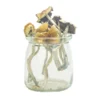

Psilocybe semilanceata – Liberty Cap Wild Psychedelic Mushroom
$170.00 – $830.00Price range: $170.00 through $830.00
Psilocybe semilanceata, also known as Liberty Cap, is a wild psilocybin mushroom known for potent cerebral effects and historical use in European traditions.
Psilocybe semilanceata (Liberty Cap): Complete Identification Guide
Psilocybe semilanceata, commonly known as the Liberty Cap, is a wild mushroom identified by its conical cap with a pointed umbo, flexible stem, dark purple-brown spore print, and separable gelatinous pellicle. It grows in damp grasslands among decaying grass roots — not directly on dung — and is frequently misidentified because several lookalike species, including some that are fatally toxic, share similar macro-level features.
Quick Answer: What does Psilocybe semilanceata look like?
Psilocybe semilanceata has a narrow conical cap with a pointed umbo, a flexible fibrous stem, dark purple-brown spores, and a separable gelatinous pellicle. It grows in acidic grasslands among decaying grass roots rather than directly on manure. No single feature is sufficient for reliable identification — habitat, spore print, and physical characteristics must all be evaluated together.
Quick Answer: Where do Liberty Caps grow?
Liberty Caps grow in established acidic grasslands, meadows, and livestock pastures where decaying grass roots support saprotrophic growth. In the United States, they are most reliably reported from the Pacific Northwest, Northern California, and parts of New England during cool, wet autumn conditions.
What Is Psilocybe semilanceata?
Psilocybe semilanceata is a saprotrophic basidiomycete in the family Strophariaceae, widely recognized as one of the most widespread wild psilocybin-containing mushrooms in the temperate world. First formally described by Elias Magnus Fries in 1838 and transferred to the genus Psilocybe by Paul Kummer in 1871, the species has accumulated a well-documented scientific and ethnomycological record spanning nearly two centuries. Subsequent taxonomic work by Gastón Guzmán — whose monographic treatment of the genus remains a foundational reference — and chemical analyses by Jochen Gartz and Josef Borovička have established P. semilanceata as one of the most biochemically studied wild psilocybin fungi.
Colloquially known as the Liberty Cap — a name derived from the Phrygian cap, a historical symbol of freedom — Psilocybe semilanceata appears extensively in the peer-reviewed literature on fungal biochemistry, grassland ecology, and psilocybin pharmacology. Paul Stamets’ Psilocybin Mushrooms of the World (1996) treats it as among the most potent wild species by dry-weight psilocybin concentration. Its documented range spans the temperate grasslands of Western Europe, the Pacific Northwest of North America, parts of New England, and comparable climatic zones across the Southern Hemisphere.
For mycologists, researchers, and serious enthusiasts, understanding Psilocybe semilanceata begins with its taxonomy, extends through its ecology, and requires careful attention to the morphological details that distinguish it from both harmless and genuinely dangerous lookalikes.
Psilocybe semilanceata is a species of wild mushroom in the Strophariaceae family distinguished by its conical cap, pronounced umbo, flexible stem, hygrophanous coloration, and dark purple-brown spore print. It is saprotrophic, fruiting among decaying grass roots in temperate, acidic grasslands rather than growing directly on animal dung. Accurate identification requires the systematic evaluation of habitat, macroscopic features, spore characteristics, and — where definitive confirmation is needed — microscopy, because toxic lookalikes such as Galerina marginata can closely resemble it in the field. This guide addresses taxonomy, morphological identification, habitat and seasonality, microscopy, liberty cap spore print characteristics, comparative lookalike analysis, legal considerations for microscopy spores in the United States, and evidence-based safety information for mycology researchers and enthusiasts.
Key Facts at a Glance
| Character | Value |
|---|---|
| Family | Strophariaceae |
| Cap diameter | 0.5–2.5 cm |
| Stem length | 4–10 cm |
| Stem width | 1–3 mm |
| Spore dimensions | 10.5–15 × 6–8.5 × 7–9.5 µm |
| Spore print color | Dark purple-brown |
| Habitat | Acidic grassland, meadows, pastures |
| Substrate | Decaying grass roots (saprotrophic) |
| Season (PNW) | Late September – November |
| Season (New England) | September – October |
| Primary alkaloids | Psilocybin, psilocin, baeocystin |
| First described | Fries, 1838 |
| Transferred to Psilocybe | Kummer, 1871 |
Taxonomy and Classification
| Rank | Classification |
|---|---|
| Kingdom | Fungi |
| Phylum | Basidiomycota |
| Class | Agaricomycetes |
| Order | Agaricales |
| Family | Strophariaceae |
| Genus | Psilocybe |
| Species | Psilocybe semilanceata |
| Common Name | Liberty Cap |
The genus name Psilocybe derives from the Greek psilos (smooth) and kubê (head), a reference to the characteristically smooth pileus surface shared across the genus. The species epithet semilanceata is Latin for “half-spear-shaped,” a precise morphological descriptor for the narrow, lance-like cap profile that makes this species visually distinctive among grassland fungi.
Taxonomic authority traces through Fries (1838) and Kummer (1871). The classification has remained stable within modern molecular phylogenetics: Psilocybe semilanceata is consistently recovered within the psilocybin-containing clade of Psilocybe in multi-locus ITS sequencing studies, supporting both its generic placement and its biochemical profile. ITS barcoding now provides a supplementary identification tool for herbarium and fungarium specimens where morphological data is incomplete or degraded.
Psilocybe semilanceata Identification: Macroscopic Features
Expert Rule:
“Reliable identification of Psilocybe semilanceata requires the simultaneous evaluation of habitat, cap morphology, pellicle separability, hygrophanous color change, gill maturation, stem flexibility, and a confirmed dark purple-brown spore print. No single feature is sufficient, and a rusty-brown spore print excludes this species regardless of how closely other features appear to match.”
Reliable liberty cap identification requires the simultaneous evaluation of multiple morphological characters. No single feature — cap shape, color, or stem flexibility — constitutes sufficient evidence for identification. The following characteristics must be assessed together, in appropriate habitat context, and confirmed with a spore print before any conclusion is drawn.
Cap (Pileus)
The pileus of Psilocybe semilanceata is sharply conical to campanulate (bell-shaped), typically 5–25 mm in diameter, and terminates in a pronounced, persistent umbo — a nipple-like central projection that remains visible across all developmental stages from button to mature basidiocarp. This combination of conical geometry and defined umbo is diagnostically useful at the genus level in appropriate habitat, though not sufficient alone for species-level confirmation.
Cap color is hygrophanous, changing visibly and predictably with moisture content. In wet conditions, the cap presents as ochraceous-brown to chestnut-brown, often with a translucent olive tinge at the center. As the cap dries, coloration fades to pale buff or straw-yellow from the center outward, with a characteristic darker margin that retains moisture longest. Observing this hygrophanous transition — or the distinct two-toned pattern left by partial drying — is a reliable and underappreciated field indicator.
A critical diagnostic feature is the gelatinous pellicle: a thin, transparent, separable skin covering the cap surface that can be peeled away from fresh specimens. This pellicle produces the slightly viscid, greasy texture of a fresh cap and is a consistent, genus-level character within Psilocybe.
Gills (Lamellae)
The gills are adnate to adnexed, attaching broadly or narrowly to the stipe without decurrence. In young specimens, the lamellae are pale gray to whitish; as basidiospores mature, they darken progressively to deep purple-brown or violet-black. Gill edges are typically paler than gill faces — a detail more apparent in fresh specimens under magnification. Gill color at maturity is among the more reliable macroscopic indicators and should always be evaluated alongside the spore print.
Stem (Stipe)
The stipe is slender and characteristically flexible, rarely snapping cleanly when bent — a functional consequence of its densely fibrous internal structure. It measures 40–100 mm in length and 1–3 mm in diameter, typically equal in width or slightly swollen at the base. Coloration ranges from off-white to pale gray, often with a bluish or greenish tint at the base in fresh specimens — a discoloration reflecting the oxidation of psilocin on air exposure.
Important: Bluing is not universal in P. semilanceata and should not be treated as a standalone positive identifier. Its presence is supportive; its absence does not exclude the species.
The stipe surface is silky-fibrous with fine longitudinal striations. A faint remnant of the partial veil may occasionally appear as an ephemeral fibrous zone on the upper stipe, but a persistent, well-defined annulus (ring) is absent — a key distinction from Galerina marginata.
Flesh (Context)
The flesh is thin and pallid to whitish, and may exhibit bluing when cut or bruised, particularly at the stipe base. This reaction results from enzymatic oxidation of psilocin. Because bluing is variable and can be mimicked or absent, it should be treated as a supporting character rather than a primary diagnostic criterion.
Odor and Taste
Fresh specimens produce a faint, farinaceous (flour-like) odor, sometimes described as mildly earthy or grassy. The taste is similarly mild and farinaceous. Neither character is strongly distinctive, but both are useful for ruling out lookalike species with markedly different odor profiles.
Liberty Cap Spore Print: What to Look For
Obtaining a spore print is one of the most reliable steps in liberty cap identification and represents a non-negotiable checkpoint before any further conclusions are drawn.
Method: Remove the cap from the stipe, place it gill-side down on a surface — ideally half white and half black to accommodate any spore color — and cover it with a bowl or glass for 4–12 hours in a humid environment.
Diagnostic Standard:
Psilocybe semilanceata produces a dark purple-brown spore print, sometimes recorded as deep violet-brown or nearly black-purple depending on spore density and substrate color. This coloration is consistent across the species.
A spore print deviating from dark purple-brown — particularly one appearing rusty-brown or cinnamon — should immediately redirect the identification process toward Galerina or Cortinarius species, both of which contain potentially lethal compounds. A dark purple-brown print does not confirm Psilocybe semilanceata on its own, but a non-purple-brown print is definitive evidence against it.
Microscopy: Spore Morphology and Microscopic Features
For researchers, educators, and advanced mycologists, microscopic examination provides the highest achievable confidence in Psilocybe semilanceata identification. Microscopy is particularly valuable when specimens are macroscopically ambiguous or when documentation for scientific or herbarium purposes is required.
Basidiospores
The spores of Psilocybe semilanceata are ellipsoid to subrhomboid in face view, measuring approximately 10.5–15 × 6–8.5 × 7–9.5 µm (Guzmán, 1983). They are thick-walled, smooth-surfaced, and possess a distinct apical germ pore — a small, truncated opening visible under oil immersion at 400× to 1000× magnification. The germ pore is a consistent feature across psilocybin-containing Psilocybe species and is absent in most toxic lookalikes, making its presence a significant microscopic differentiator.
Spore color in mass is dark purple-brown, consistent with the macroscopic spore print. In KOH mounts, spores appear golden-brown to purplish-brown.
Basidia and Cystidia
Basidia are clavate (club-shaped), 4-spored, and measure approximately 20–30 × 7–9 µm. Cheilocystidia — cystidia located on the gill edge — are fusoid-ventricose to lageniform, with a narrow, elongated neck that distinguishes Psilocybe from several superficially similar genera. Pleurocystidia (cystidia on the gill face) are absent or rare in this species, a detail that aids genus-level microscopic differentiation.
Pileipellis
The cap cuticle is an ixocutis: a gelatinized layer of repent, interwoven hyphae embedded in gelatinous matrix. This structure is directly responsible for the separable gelatinous pellicle observed macroscopically. Its presence, confirmed microscopically, is a genus-level character in Psilocybe that substantially strengthens identification confidence when combined with spore morphology.
Psilocybe semilanceata Identification and Habitat: Where Do Liberty Caps Grow in the USA?
Psilocybe semilanceata occupies a narrow but widely distributed ecological niche: established, unfertilized, acidic grasslands where undisturbed soil supports stable grass root decomposition. This is a saprotrophic species — it does not form mycorrhizal associations with plant roots and does not fruit directly from animal dung. Mycelial networks develop within the rhizosphere layer among decomposing root systems of grasses including Agrostis (bentgrass), Festuca ovina (sheep’s fescue), and Poa species (Watling & Gregory, 1987).
Habitat Diagnostic:
If a suspected Liberty Cap is growing directly from dung rather than from soil among grass roots, the identification should be reconsidered. Psilocybe semilanceata is a grassland saprotroph, not a coprophilous species.
Ecological Requirements
Several site characteristics correlate strongly with P. semilanceata occurrence:
- Soil: Acidic, well-drained but moisture-retentive; pH typically below 6.5
- Vegetation: Close-grazed or traditionally managed grassland; undisturbed meadows; hillside pastures
- Land use history: Minimal synthetic fertilizer input; long-established grassland with high grass-root biomass
- Moisture: Consistent seasonal moisture; sites with morning fog, heavy dew, or frequent light rainfall
- Altitude: Sea level to montane; mid-elevation sites common in the Pacific Northwest
The species is consistently absent from recently cultivated ground, heavily fertilized agricultural fields, and young grasslands lacking established root systems. Its presence is frequently treated in ecological literature as a bioindicator of grassland continuity and low agrochemical disturbance.
Wild Psilocybin Mushrooms in the Pacific Northwest
Wild psilocybin mushrooms in the PNW represent a regionally significant and well-documented mycological phenomenon. Psilocybe semilanceata is reliably encountered in western Oregon, western Washington, and parts of northern California, where cool temperatures, consistent rainfall, and acidic soils converge to create optimal habitat.
Productive sites in the region typically include coastal meadows, sheep and cattle pastures in valley foothills, roadside embankments with established grass cover, and montane meadows receiving significant autumn precipitation. The Pacific Northwest fruiting season generally runs from late September through November, with peak fruiting during overnight temperatures between 5°C and 12°C (41°F–54°F) following sustained rainfall.
Field Observation Example
Location: Western Oregon, Willamette Valley foothills
Habitat: Established acidic sheep pasture, ungrazed for three weeks
Weather: Three consecutive days of light rain following a dry September
Overnight temperature: 8°C
Observed characteristics: Multiple conical-capped specimens 1.5–2 cm diameter; pronounced persistent umbos; caps viscid to touch with separable pellicle; stipes flexible, 6–8 cm, with faint basal discoloration; spore print dark purple-brown after 8 hours; no woody debris in substrateThis combination of features — particularly pellicle presence, spore print color, and substrate — is consistent with Psilocybe semilanceata. Microscopy was subsequently performed to confirm germ pore morphology.
Liberty Cap Season USA: When Do Liberty Caps Fruit?
Liberty cap season in the USA is governed primarily by temperature and precipitation rather than calendar date. The species requires a specific combination of cool, moist conditions to initiate and sustain fruiting — conditions that vary significantly by region and elevation.
| Region | Primary Season | Peak Conditions |
|---|---|---|
| Pacific Northwest (OR, WA) | Late September – November | Overnight temps 5–12°C; post-rain flush |
| Northern California | October – December | First significant autumn rains |
| New England | September – October | Cool, wet periods; acidic meadows |
| Upper Midwest | September – October | Variable; habitat-dependent |
In the Pacific Northwest, fruiting is characteristically triggered by the first sustained autumn rains following the dry summer period — a pattern aligning with the regional onset of marine-influenced precipitation. In New England, fruiting typically begins in early September at higher elevations and extends through October in coastal lowland grasslands.
Fruiting ceases reliably once overnight temperatures drop consistently below 3–4°C (37–39°F) or when ground frost sets in. Warm, dry conditions during the expected fruiting window will suppress or delay fruiting even in otherwise productive habitat.
Psilocybe semilanceata Lookalikes: Species Comparison
The most significant risk in wild Psilocybe semilanceata identification is confusion with toxic lookalike species. Several grassland fungi share one or more macroscopic features with the Liberty Cap, and some are capable of causing serious or fatal poisoning. The following species represent the most consequential misidentification risks documented in the mycological and toxicological literature.
Galerina marginata (Deadly Skullcap)
Galerina marginata is the most dangerous Psilocybe semilanceata lookalike and the species most implicated in fatal misidentification events worldwide. It contains amatoxins — the same compound class responsible for Amanita phalloides poisoning — which cause progressive, potentially irreversible hepatic and renal failure with delayed symptom onset of 6–24 hours, a window during which no symptoms may be apparent (Diaz, 2005).
⚠️ Critical Safety Rule: Any specimen producing a rusty-brown or cinnamon-brown spore print, regardless of other features, should be treated as potentially Galerina marginata until excluded by expert examination. This is not a theoretical risk — fatal poisonings from this confusion are documented in the medical literature.
Key differences from Psilocybe semilanceata:
| Feature | P. semilanceata | G. marginata |
|---|---|---|
| Spore print | Dark purple-brown | Rusty-brown to cinnamon |
| Umbo | Pronounced, persistent | Absent or weak |
| Annulus (ring) | Absent or ephemeral | Often persistent and fibrous |
| Substrate | Grass roots in soil | Woody debris, decaying wood |
| Spore surface | Smooth, with germ pore | Ornamented (roughened), no germ pore |
| Toxicity | Psychoactive | Potentially fatal (amatoxins) |
Panaeolus foenisecii (Lawn Mower’s Mushroom)
Panaeolus foenisecii is extremely common in lawns, garden edges, and managed grasslands across North America and Europe. It is not considered fatally toxic but causes gastrointestinal distress and, in some documented cases, mild psychoactive effects attributable to trace serotonin-related compounds (Bresinsky & Besl, 1990).
Key differences:
- Cap is hemispherical to convex, typically lacking the pronounced sharp umbo of P. semilanceata
- More uniformly brown-to-buff hygrophanous transition
- Spore surface is distinctly warty (nodulose) under microscopy — absent in P. semilanceata
- Commonly fruits in mown lawns and fertilized grassland — habitats P. semilanceata consistently avoids
Conocybe apala (White Dunce Cap)
Conocybe apala (syn. C. lactea) is a fragile, pale grassland species that superficially resembles young or dry Psilocybe semilanceata at a glance. Certain Conocybe species contain amatoxins, making differentiation critical.
Key differences:
- Whitish to pale cream coloration throughout — no ochraceous-brown tones
- Spore print rusty-brown to cinnamon, not dark purple-brown
- Cap surface dry, matte, and non-viscid — no gelatinous pellicle present
- Stipe extremely fragile, breaking cleanly under flex rather than bending
Mycena Species
Several Mycena species colonize grasslands and share a superficially conical cap profile. Most are distinguishable by white spore prints, different gill structure, and the consistent absence of a gelatinous pellicle. Mycenas are generally not considered dangerous, but their presence in Psilocybe habitat underscores why cap shape alone is never a sufficient identifier.
Common Identification Mistakes
| Mistake | Why It Matters | Correction |
|---|---|---|
| Using cap shape as the sole identifier | Multiple species share a conical cap | Always verify habitat, pellicle, and spore print |
| Assuming bluing confirms Psilocybe | Bluing is variable and not species-specific | Treat bluing as supporting evidence only |
| Identifying from photographs | Photos cannot reveal pellicle, spore print, or odor | Always examine physical specimens |
| Ignoring substrate | G. marginata grows on wood, not grass roots | Substrate verification is mandatory |
| Treating a dark spore print as sufficient | Other species can produce dark prints | Confirm purple-brown specifically; check microscopy |
| Overlooking spore print color entirely | Most fatal errors involve this omission | A spore print is non-negotiable before any conclusion |
Psilocybe semilanceata Potency: What the Evidence Shows
Evidence Summary:
Published chemical analyses indicate that Psilocybe semilanceata often contains higher average concentrations of psilocybin than many cultivated Psilocybe cubensis samples, although alkaloid levels vary substantially between individual specimens and cannot be determined by appearance alone.
Psilocybe semilanceata is documented in peer-reviewed literature as one of the more psilocybin-rich wild Psilocybe species. Gartz (1994) reported psilocybin concentrations ranging from approximately 0.2% to over 2.0% of dry weight across analyzed specimens, with baeocystin and norbaeocystin present as secondary alkaloids. Borovička et al. (2015) similarly confirmed substantial inter-specimen variability, attributing it to environmental factors including soil chemistry, moisture availability, and temperature during basidiocarp development.
Liberty Cap vs Cubensis: A Potency Comparison
Psilocybe cubensis — the most widely cultivated psilocybin mushroom globally — typically shows psilocybin concentrations of 0.3–0.8% of dry weight in most analyzed samples, though selectively bred cultivars have exceeded this range (Stamets, 1996; Pellegrini et al., 2013). Psilocybe semilanceata has been reported at comparable or higher concentrations across multiple independent analyses, with greater variability attributable to the uncontrolled environmental conditions inherent in wild fruiting.
Baeocystin, a structural analog of psilocybin with less well-characterized pharmacology, occurs in relatively higher concentrations in P. semilanceata than in typical P. cubensis samples. Some researchers have proposed this may contribute to qualitative differences in pharmacological profile (Gartz, 1994), though this hypothesis awaits further controlled clinical investigation.
The critical practical conclusion is this: wild Psilocybe semilanceata specimens cannot be assumed to contain consistent alkaloid concentrations. Potency cannot be predicted from physical appearance, size, geographic origin, or fruiting density.
Is It Legal to Buy Psilocybe semilanceata Spores in the United States?
Legal Summary:
Psilocybin and psilocin are Schedule I controlled substances under U.S. federal law. Because mushroom spores do not contain these compounds prior to germination, spores sold for microscopy have historically occupied a legal gray area at the federal level. State-level restrictions — particularly in California, Idaho, and Georgia — limit or prohibit possession regardless of stated purpose. Laws are evolving; always verify current federal, state, and local statutes before acquiring or possessing Psilocybe spores of any kind.
Federal framework: Psilocybin and psilocin are Schedule I under the Controlled Substances Act. Spores do not contain detectable psilocybin or psilocin prior to germination, placing microscopy spores in a federal gray area that has not been conclusively legislated.
State-level restrictions: California, Idaho, and Georgia have enacted or interpreted statutes restricting Psilocybe spore possession regardless of intent. In these jurisdictions, the microscopy-use defense does not provide reliable legal protection.
Evolving decriminalization frameworks: Oregon’s Measure 109 (2020) and municipal decriminalization efforts in several U.S. cities have altered the enforcement landscape for psilocybin fungi and related materials. These frameworks are jurisdiction-specific and continue to develop.
This information is provided for educational purposes and does not constitute legal advice. Readers must verify applicable regulations in their specific jurisdiction.
Can You Identify Psilocybe semilanceata From a Photo?
No. Photographic identification of Psilocybe semilanceata is not reliable and should not be used as a basis for any decision regarding a collected specimen.
This limitation is not a matter of photographic resolution or image quality. It reflects a fundamental methodological constraint: accurate Psilocybe semilanceata identification requires physical access to fresh material for spore print production, tactile assessment of cap texture and pellicle separability, odor evaluation, and — in ambiguous cases — microscopic examination. Photographs cannot substitute for any of these steps.
The consequences of misidentification are not trivial. Galerina marginata can closely resemble P. semilanceata in field photographs, yet contains compounds causing fatal organ failure with delayed symptom onset — a timeline that may allow consumption of additional material before poisoning is recognized. Cases of serious amatoxin poisoning following photograph-based identification are documented in emergency medicine and toxicology literature (Diaz, 2005).
AI-assisted identification platforms, social media communities, and reverse image search tools share this fundamental limitation. These resources may have educational value for generating identification hypotheses, but none can replace systematic physical examination by a qualified mycologist.
Identification Checklist: How to Identify Liberty Caps Systematically
Identification Standard: All applicable criteria below should be evaluated before drawing any identification conclusion. An incomplete checklist is not a completed identification.
- Habitat confirmed: Established, unfertilized, acidic grassland; decaying grass root substrate — not dung, not woody debris
- Cap shape: Conical to campanulate with a persistent, pronounced umbo present across developmental stages
- Pellicle: Gelatinous, translucent, separable skin confirmed on fresh cap surface
- Hygrophanous coloration: Visible moisture-dependent color change from ochraceous-brown (wet) to pale buff (dry)
- Gill color: Progressively darkening to deep purple-brown at spore maturity
- Stipe character: Slender, flexible under gentle bending (not brittle); fibrous texture; basal bluing possible but not required
- Spore print: Dark purple-brown confirmed — not rusty-brown, not white, not black
- Odor: Mild, farinaceous — not strongly pungent, medicinal, or strongly radish-like
- Lookalikes systematically excluded: Particularly Galerina marginata (rusty-brown print; annulus present; growing on wood or wood-enriched soil)
- Microscopy (where precision is required): Ellipsoid spores with apical germ pore confirmed; ixocutis pileipellis present; fusoid-ventricose cheilocystidia observed
Harm Reduction and Safety
Psilocybe semilanceata and related wild psilocybin mushrooms present genuine physical risks independent of their legal or pharmacological status.
Misidentification is the primary physical risk. Galerina marginata and amatoxin-containing Conocybe species represent documented lethal hazards in the same grassland environments where P. semilanceata fruits. A confirmed dark purple-brown spore print substantially reduces — but does not eliminate — the risk of Galerina confusion. Expert verification by a qualified mycologist or submission to a regional herbarium or fungarium remains the only fully reliable safeguard.
Potency variability in wild specimens is clinically significant. Unlike standardized pharmaceutical preparations, wild Psilocybe semilanceata cannot be assumed to contain consistent concentrations of psilocybin, psilocin, or baeocystin. The same habitat may produce specimens with substantially different alkaloid profiles across different fruiting flushes or within a single collection event (Gartz, 1994; Borovička et al., 2015).
Contraindications exist for certain populations. Individuals with personal or family histories of psychosis, schizophrenia spectrum disorders, or bipolar disorder with psychotic features face documented elevated risks from psilocybin exposure. Concurrent use with serotonergic medications — including SSRIs, SNRIs, and MAOIs — may substantially alter pharmacological profile and requires careful clinical consideration (Nichols, 2016).
This guide is provided for mycological education and does not constitute medical advice, legal counsel, or encouragement of any activity prohibited under applicable law.
Glossary of Key Terms
| Term | Definition |
|---|---|
| Umbo | A central, nipple-like projection on the cap surface, persistent across developmental stages in P. semilanceata |
| Pileus | The cap of a mushroom; in P. semilanceata, sharply conical with a pronounced umbo |
| Lamellae | Gills; the blade-like structures on the underside of the cap that bear spores |
| Pellicle | A thin, separable, gelatinous skin covering the cap; a genus-level character in Psilocybe |
| Ixocutis | A gelatinized cap cuticle of interwoven hyphae embedded in gelatinous matrix; responsible for the separable pellicle |
| Hygrophanous | Describing a cap that changes color predictably and visibly with moisture content |
| Basidium | The spore-bearing cell in Basidiomycota; in P. semilanceata, clavate and 4-spored |
| Cheilocystidia | Sterile cells located on the gill edge; fusoid-ventricose to lageniform in P. semilanceata |
| Saprotrophic | Obtaining nutrients from decaying organic matter; P. semilanceata decomposes grass roots |
| Germ pore | An apical pore in the spore wall through which the germination tube emerges; present in Psilocybe, absent in Galerina |
| Basidiocarp | The fruiting body of a basidiomycete fungus; the macroscopic mushroom structure |
| ITS barcoding | Internal transcribed spacer sequencing; a molecular method for fungal species identification and phylogenetic placement |
Frequently Asked Questions
What is Psilocybe semilanceata?
Psilocybe semilanceata, commonly called the Liberty Cap, is a saprotrophic mushroom in the family Strophariaceae. It is identified by a sharply conical cap with a persistent pointed umbo, a flexible fibrous stem, a separable gelatinous pellicle, and a dark purple-brown spore print. It grows in damp acidic grasslands among decaying grass roots rather than directly on manure, and accurate identification requires evaluating multiple features because toxic lookalikes exist.
How do you identify a Liberty Cap?
Identification requires the simultaneous evaluation of: a conical cap with a pointed umbo, hygrophanous color changes from brown to buff, a separable gelatinous pellicle on fresh specimens, a flexible fibrous stem, a confirmed dark purple-brown spore print, and appropriate acidic grassland habitat. No single feature confirms identification. Microscopic confirmation — including ellipsoid spores with an apical germ pore and an ixocutis pileipellis — provides the highest confidence level.
Where do Liberty Caps grow?
Liberty Caps grow in established acidic grasslands, meadows, and livestock pastures where abundant decaying grass roots support saprotrophic growth. In the United States, they are most reliably reported from the Pacific Northwest (Oregon, Washington), Northern California, and parts of New England during cool, wet autumn conditions.
What mushrooms look similar to Psilocybe semilanceata?
The most dangerous lookalike is Galerina marginata, which contains potentially fatal amatoxins and produces a rusty-brown — not purple-brown — spore print. Additional lookalikes include Panaeolus foenisecii, Conocybe apala, and various Mycena species. Because some lookalikes are fatally toxic, no uncertain specimen should be considered identified without expert verification.
What color is a Liberty Cap spore print?
Psilocybe semilanceata produces a dark purple-brown spore print, sometimes appearing deep violet-brown or nearly black-purple at high spore density. This is a critical diagnostic character. A rusty-brown or cinnamon-colored print excludes P. semilanceata and suggests Galerina or Conocybe species.
Is Psilocybe semilanceata more potent than Psilocybe cubensis?
Published chemical analyses have frequently reported higher average psilocybin concentrations in Psilocybe semilanceata than in many cultivated Psilocybe cubensis samples (Gartz, 1994; Stamets, 1996). However, natural variation in wild specimens is substantial, and potency cannot be estimated from physical appearance, size, or geographic origin.
Is it legal to buy Psilocybe semilanceata spores in the United States?
Laws vary significantly by jurisdiction. Spores intended for microscopy have historically occupied a legal gray area at the federal level because they do not contain scheduled compounds prior to germination. California, Idaho, and Georgia have specific restrictions. Regulatory frameworks are evolving. Always verify current federal, state, and local regulations before acquiring or possessing Psilocybe spores.
Can you identify Psilocybe semilanceata from a photo?
No. Photographs cannot substitute for physical examination of habitat, pellicle separability, spore print color, odor, or microscopic features. Because Galerina marginata — a potentially fatal species — can visually resemble P. semilanceata in field photographs, photo-based identification carries serious and documented risk.
Why do Liberty Caps bruise blue?
Bluing results from the enzymatic oxidation of psilocin upon exposure to air. It is a supporting indicator of psilocybin-containing Psilocybe species but is neither universal nor unique to P. semilanceata. Bluing is absent in some specimens and present in some non-Psilocybe species, and should never be used as a standalone identifier.
Do Liberty Caps grow on dung?
No. Psilocybe semilanceata is saprotrophic, fruiting from decaying grass roots in established grassland soil — not directly from animal dung. Specimens appearing to grow from dung should be reconsidered for alternative identifications.
What is a hygrophanous mushroom?
A hygrophanous mushroom is one whose cap changes color visibly and predictably based on moisture content. In P. semilanceata, the cap shifts from ochraceous-brown or chestnut (wet) to pale buff or straw-yellow (dry), often showing a two-toned appearance during intermediate drying. This is a characteristic and diagnostically useful feature of the species.
Can dry specimens still be identified?
Partially. Dry specimens retain shape and spore print viability for some time, and microscopic features remain accessible. However, the gelatinous pellicle is lost or collapsed in dried material, and hygrophanous color changes cannot be directly observed. Dried specimens should be rehydrated carefully for microscopy and compared against fresh-collection records where possible.
Scientific References
- Fries, E.M. (1838). Epicrisis Systematis Mycologici. Uppsala.
- Kummer, P. (1871). Der Führer in die Pilzkunde. Zerbst.
- Guzmán, G. (1983). The Genus Psilocybe. J. Cramer, Vaduz.
- Stamets, P. (1996). Psilocybin Mushrooms of the World. Ten Speed Press.
- Gartz, J. (1994). Biotransformation of tryptamine derivatives in mycelial cultures of Psilocybe. Journal of Basic Microbiology, 34(1), 17–21.
- Watling, R., & Gregory, N.M. (1987). British Fungus Flora: Strophariaceae & Coprinaceae. Royal Botanic Garden, Edinburgh.
- Bresinsky, A., & Besl, H. (1990). A Colour Atlas of Poisonous Fungi. Wolfe Publishing.
- Diaz, J.H. (2005). Amatoxin-containing mushroom poisonings: Species, toxidromes, treatments, and outcomes. Wilderness & Environmental Medicine, 16(4), 201–209.
- Nichols, D.E. (2016). Psychedelics. Pharmacological Reviews, 68(2), 264–355.
- Borovička, J., Oborník, M., Stříbrný, J., Dit Durel, M., Gryndler, M., & Rockefeller, A. (2015). Phylogenetic and chemical studies in the potential psychotropic species complex of Psilocybe sensu stricto. Czech Mycology, 67(2), 163–189.
- Pellegrini, M., Rotolo, M.C., Marchei, E., Pacifici, R., Saggio, F., & Pichini, S. (2013). Magic truffles or philosopher’s stones: A legal way to sell psilocybin? Forensic Science International, 230(1–3), e1–e5.
Conclusion
Psilocybe semilanceata occupies a well-documented position at the intersection of fungal ecology, natural product biochemistry, and contemporary psilocybin research. As Guzmán’s monographic treatment established and subsequent chemical analyses by Gartz and Borovička have confirmed, it is both one of the most widely distributed wild psilocybin fungi and one of the most biochemically variable — characteristics that make systematic identification methodology not just good practice, but essential.
The species’ defining characteristics — conical cap with persistent umbo, separable gelatinous pellicle, hygrophanous coloration, flexible fibrous stipe, and dark purple-brown spore print in established acidic grassland — form a coherent and learnable diagnostic profile. That profile must be applied in full, not selectively, because partial identification in the presence of Galerina marginata carries irreversible consequences documented in toxicological and emergency medicine literature.
For mycologists, researchers, and students approaching Psilocybe semilanceata from a scientific standpoint, the species offers a compelling study in grassland fungal ecology, secondary metabolite chemistry, and the methodological standards that separate reliable field identification from informed speculation. Developing fluency with those standards — through structured study, quality reference materials, microscopy practice, and access to expert guidance — is the most direct and defensible route to working with this or any wild Psilocybe species with genuine confidence.
| QUANTITY | OZ, 1/4 POUND, 1/2 POUND, POUND |
|---|
41 reviews for Psilocybe semilanceata – Liberty Cap Wild Psychedelic Mushroom
Add a review Cancel reply
Related products
Rated 4.66 out of 5
$190.00 – $890.00Price range: $190.00 through $890.00
Rated 4.78 out of 5
$178.00 – $865.00Price range: $178.00 through $865.00
Rated 4.76 out of 5
$170.00 – $830.00Price range: $170.00 through $830.00
MAGIC MUSHROOMS
Rated 4.76 out of 5
$185.00 – $930.00Price range: $185.00 through $930.00
MAGIC MUSHROOMS
Rated 4.78 out of 5
$175.00 – $850.00Price range: $175.00 through $850.00
MAGIC MUSHROOMS
Psilocybe Azurescens – Ultra-Potent Wild Psilocybin Mushroom
Rated 4.80 out of 5
$180.00 – $870.00Price range: $180.00 through $870.00
Rated 4.73 out of 5
$185.00 – $860.00Price range: $185.00 through $860.00
MAGIC MUSHROOMS
Rated 4.71 out of 5
$190.00 – $890.00Price range: $190.00 through $890.00
Kiara Stanton (verified owner) –
Discreet and efficient shipping.
Alyssa Morris (verified owner) –
I’ve never had such a deeply emotional experience from something so simple. The quality here is unmatched.
Tony Briggs (verified owner) –
This allowed me to observe my thoughts without judgment. It changed how I speak to myself now.
Allan Pugh (verified owner) –
The best blend of mental clarity and sensory wonder.
Reagan Harlow (verified owner) –
Potent and clean. No nausea.
Justice Gallo (verified owner) –
Always fresh, always consistent.
Cassius Neville (verified owner) –
I felt so much love during my trip. Thank you for making this safe.
Mallory Bright (verified owner) –
Discreet delivery was on point, and the experience was unforgettable.
Jocelyn Spencer (verified owner) –
I wasn’t just buying something — I was giving myself space to grow, and this site made that feel completely natural.
Spencer Wells (verified owner) –
This was life-shifting, and I’m beyond grateful for how carefully the product was handled.
Heidi Nixon (verified owner) –
So much emotional release, I didn’t know I needed it.
Allison Long (verified owner) –
This product helped me unpack so much mentally — and knowing it came from a reliable, discreet source made all the difference.
Zane Whitley (verified owner) –
Professional, private, and powerful.
Dahlia Boone (verified owner) –
One of the most meaningful experiences I’ve had — and it started with a website that treated it all with respect.
Derrick Norton (verified owner) –
So grateful I found this place. The combination of emotional support and excellent logistics is rare.
Rachel Lewis (verified owner) –
It brought me into the moment in the most intimate way. I noticed the beauty in the tiniest details.
Ivy Gibbs (verified owner) –
This journey opened my eyes and softened my heart. I’m so grateful for the professionalism that made it possible.
Autumn Watson (verified owner) –
The feeling of being in control, yet completely open, was powerful. And the professionalism here makes it all possible.
Ricky Key (verified owner) –
I’ve been exploring for years. These are by far the most reliable.
Kaylani Schaefer (verified owner) –
Perfect for beginners. The journey was gentle but deep.
Elliot Saunders (verified owner) –
The attention to quality shows. I had zero stomach issues.
Jonathan Collins (verified owner) –
The delivery was fast and discreet, which helped me focus fully on the experience itself.
Makayla Myers (verified owner) –
My journey was quiet, deep, and incredibly healing. The ordering experience matched that same energy.
Miley Brewer (verified owner) –
They don’t just sell — they serve. And that’s why this experience felt so safe.
Shawn Ross (verified owner) –
I’ve waited years for something like this — safe, sacred, and available when I was ready.
Rowan Steele (verified owner) –
It helped me confront something difficult with softness and self-love.
Rodney Little (verified owner) –
Discreet packaging, fast arrival, and a product that helped me finally exhale.
Samuel Simmons (verified owner) –
This helped me close an emotional chapter I’d been stuck in. The quality made that healing possible.
Brady Bishop (verified owner) –
No distractions, no confusion — just a clean, easy journey into myself.
Jared Foster (verified owner) –
Hands down the best source I’ve come across. Quality, care, and customer support were all on point.
Sean Wood (verified owner) –
From start to finish, it felt like I was in good hands. Customer service was responsive and respectful, and the product was top-tier.
Maya Butler (verified owner) –
I liked the consistent quality.
Maya Lowe (verified owner) –
The resealable bag made storage simple and convenient.
Leslie Klein (verified owner) –
I liked the consistent size and appearance.
Luna Lang (verified owner) –
I enjoyed the quality and ease of use.
Jack Hampton (verified owner) –
The website provided helpful preparation suggestions.
David Dennis (verified owner) –
This has become a regular ingredient in my kitchen.
Mackenzie Larsen (verified owner) –
The flavor complemented a wide variety of dishes.
Leah Dennis (verified owner) –
The packaging was sturdy and easy to reseal.
Leah Boyd (verified owner) –
Everything about the purchase process was smooth.
Hazel Clements (verified owner) –
I enjoyed the overall experience from ordering to cooking.