
No products in the cart.

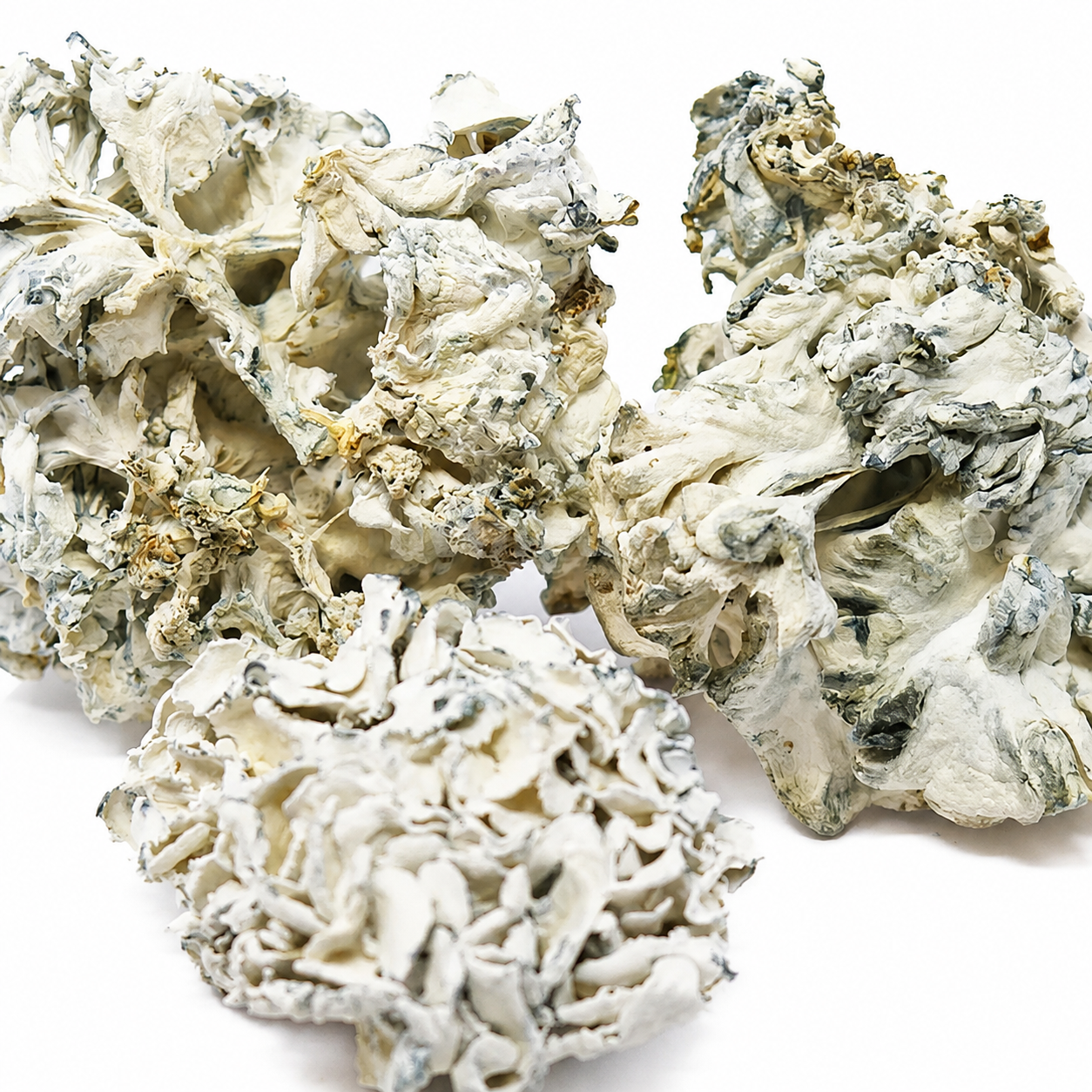
Enigma Mushroom Strain
Price range: $180.00 through $890.00
Discover Enigma Mushrooms — a rare, highly sought-after Psilocybe cubensis phenotype from the reported Tidal Wave/TW2 lineage, famous for its dense, brain-like coral formations and exceptionally potent reputation.
Enigma Mushroom: Genetics, Potency, Morphology and the TW2 Story
The Enigma mushroom is an unusual phenotype associated with Psilocybe cubensis, recognizable by convoluted coral- or brain-like tissue rather than the familiar cap-and-stem form. Its reported connection to Tidal Wave/TW2, unusual reproductive anatomy and several high-profile laboratory submissions have made Enigma one of the best-known unconventional P. cubensis lines.
The evidence is less settled than its reputation suggests. Enigma’s morphology is directly observable, but parts of its ancestry remain community provenance, individual potency results cannot establish a cultivar-wide average, and the causal genetics behind its unusual development have not been established by peer-reviewed comparative genomic research identified for this review as of August 2026.
This guide uses three evidence categories throughout: measured (supported by an analytical result or direct observation), reported (historical or community provenance) and unknown (questions that require stronger scientific evidence before any confident answer is warranted).
Quick Answer: What is an Enigma mushroom?
The Enigma mushroom is the common name for an unusual, clone-maintained phenotype associated with Psilocybe cubensis. Instead of forming ordinary caps, stems and exposed gills, it typically develops dense coral- or brain-like tissue. Its lineage is commonly traced to Tidal Wave/TW2, and some tested specimens have shown exceptionally high tryptamine concentrations. Neither ancestry nor potency can be assumed from appearance or a name alone.
Key Takeaways
- Enigma is generally treated as an unusual P. cubensis phenotype, not a separate mushroom species.
- Its convoluted anatomy differs markedly from ordinary cap-and-stem P. cubensis fruit bodies.
- The commonly repeated origin story connects Enigma to Tidal Wave/TW2 and Magic Myco, but that provenance rests on community records rather than peer-reviewed genetic research.
- Typical Enigma material does not present the conventional gill-and-cap anatomy used to collect mushroom spores.
- Individual samples have attracted attention for high laboratory-measured tryptamine concentrations, but no single percentage represents every Enigma specimen.
- Blue bruising, shape and strain names cannot quantitatively determine potency.
- U.S. law varies by substance, material, state and locality; decriminalization is not the same as legalization.
What Is the Enigma Mushroom?
Enigma is a morphologically unusual Psilocybe cubensis line — recognized by the NCBI Taxonomy database as a species within the genus Psilocybe — in which the familiar mushroom body is replaced by convoluted masses of fungal tissue. Calling it a “strain” is convenient and widely understood, but “phenotype,” “isolation” or “clone-maintained line” is more precise depending on what is actually documented about the material.
Scientific definition: “Enigma mushroom” is a common name for a distinctive, clonally maintained phenotype associated with P. cubensis that usually forms convoluted coral- or brain-like fruiting tissue rather than ordinary cap-and-stem mushrooms.
Is Enigma a species, strain, mutation, or phenotype?
A phenotype is an organism’s observable set of characteristics. A mutation is a specific genetic change. A strain is a loosely defined term in mushroom commerce and hobby mycology that can mean different things depending on context.
Enigma’s distinctive morphology is directly observable, so calling it a phenotype makes a claim that can actually be tested. Calling it a somatic mutation goes one step further: it proposes an underlying genetic explanation. Without comparative genomic evidence identifying the responsible change, those two statements should not be treated as equivalent. As the NIH National Human Genome Research Institute defines it, a phenotype is the observable expression of a genotype in a given environment — a distinction that matters when evaluating claims about Enigma’s architecture versus its underlying genetics.
Two cultures could both develop brain-like masses while carrying entirely different genetic changes. Similar appearance alone does not prove they share the same mutation.
Common mistake: Treating “Enigma strain,” “Enigma mutation” and “Enigma species” as scientifically interchangeable.
Better practice: Use P. cubensis phenotype or clone-maintained line when discussing observable evidence, and identify “mutation” as a hypothesis unless genomic evidence establishes more.
What are the key Enigma mushroom facts?
| Attribute | Current description | Evidence type | Evidence confidence |
|---|---|---|---|
| Taxonomic association | Psilocybe cubensis | Measured | High |
| Morphology | Coral/brain/blob-like tissue | Measured | High |
| Reported lineage | Tidal Wave/TW2 | Reported | Moderate |
| Ordinary cap and stem | Typically absent | Measured | High |
| Conventional spore collection | Generally unavailable | Measured | High for typical morphology |
| Maintenance method | Associated with cloned cultures | Reported/observed | High |
| Potency | Highly variable; exceptional samples reported | Measured (sample-specific) | Sample-dependent |
| Causal mutation | Proposed but uncharacterized | Unknown | Unresolved |
| U.S. legality | Material- and jurisdiction-dependent | Legal | Requires current review |
| Last verified | August 2026 | — | — |
Common mistake: Converting a record-setting specimen result into an “average Enigma potency.”
Better practice: Attach the sample identifier, laboratory, date and analytical method to every potency figure cited.
Why Does Enigma Look Like a Brain or Coral?
Enigma’s brain-like appearance comes from its unusual fruit-body development. Instead of producing a clearly differentiated stem, cap and exposed gill surfaces, it develops compact projections and folds that merge into convoluted masses. That physical structure establishes an unusual phenotype. It does not reveal which genes caused it.
How does normal P. cubensis anatomy differ from Enigma morphology?
Conventional P. cubensis fruit bodies normally develop a pileus (cap), stipe (stem) and lamellae (gills). The gill surface contains basidia involved in sexual spore formation — a reproductive process described in detail in peer-reviewed Basidiomycota literature held by PubMed Central and documented in foundational mycology texts. Typical Enigma fruiting bodies, by contrast, develop convoluted masses without that familiar, clearly differentiated architecture.
This makes Enigma visually distinctive from conventional P. cubensis mushrooms, although Enigma is not the only reported P. cubensis phenotype associated with abnormal or blob-like fruiting. Appearance can describe morphology but cannot authenticate lineage or identify the underlying genetic cause.
Common mistake: Assuming unusual anatomy makes Enigma a separate species.
Better practice: Evaluate morphology and genetics independently rather than using appearance as a substitute for taxonomy.
What does “blobbing” mean in mushroom cultivation?
“Blobbing” is informal mycology terminology for fruiting growth that develops into dense or amorphous tissue rather than conventional differentiated mushroom bodies. It describes appearance, not a formally validated developmental stage, and it does not uniquely identify Enigma.
A photograph showing a dense white mass may be consistent with blob-like morphology but cannot establish an Enigma identity without provenance documentation.
Better practice: Treat “blob” as a shape description, not genetic authentication.
What can scientists infer from the Enigma phenotype?
Researchers can document Enigma’s architecture, color changes and development. What they cannot infer from those observations alone is a specific causal DNA mutation or authenticated TW2 ancestry.
Consistent brain-like morphology across repeated cultures supports phenotypic stability. It does not identify the DNA variant responsible. A stronger study would compare authenticated Enigma and closely related cultures both genetically and phenotypically under controlled conditions using methods aligned with current genomic standards described by NCBI. That study has not appeared in the peer-reviewed literature identified for this review as of August 2026.
Common mistake: Saying that clonal stability “proves” the underlying mutation.
Better practice: Keep three categories clearly separate — what is observed, what is historically reported and what molecular science has demonstrated.
Where Did Enigma Come From? The Tidal Wave/TW2 Story
Quick Answer: Enigma is commonly reported to descend from the Tidal Wave/TW2 lineage, with community histories associating its selection or early distribution with Doma/Magic Myco. Treat this as historical provenance rather than genomically demonstrated ancestry unless primary records or comparative genetic evidence establish individual links in the pedigree.
The frequently repeated lineage is B+ × Penis Envy → Tidal Wave → TW2 → Enigma. A contemporaneous breeder record can support historical provenance; genomic comparison addresses biological relatedness. Neither automatically proves the other.
What is the reported B+ × Penis Envy lineage?
Each arrow in the reported lineage represents a distinct claim requiring its own documentation. A lineage diagram should distinguish community-documented relationships from relationships confirmed by genetic analysis and should mark clearly which links remain unverified.
Culture pedigrees can be valuable historical records, much like horticultural provenance records maintained by institutions such as the USDA Agricultural Research Service, but molecular confirmation answers a categorically different question.
Common mistake: Writing the entire lineage as an experimentally proven genetic pedigree.
Better practice: Label it “reported lineage” until independent genetic evidence or exceptionally strong contemporaneous documentation confirms each link.
What role did Magic Myco and Doma play?
Community histories commonly credit Doma of Magic Myco with identifying and circulating the Enigma/TW2 phenotype. Primary archived statements and contemporaneous records should be preferred over later retellings. A dated breeder post preserved in a stable archive is stronger historical evidence than a retail storefront copying the story years later.
Common mistake: Citing modern retail copy as proof of Enigma’s origin.
Better practice: Link to primary archives where available and explicitly acknowledge gaps in the historical record rather than papering over them.
Is Enigma the same thing as Tidal Wave 2?
No. Within the community narrative, Tidal Wave 2 (TW2) is a selection associated with the Tidal Wave lineage from which Enigma is reported to have emerged — making TW2 a reported precursor, not a synonym for Enigma. The two names describe different things in community usage, though the precise relationship remains historical provenance rather than genomically verified ancestry.
Why did clone-based distribution shape Enigma’s reputation?
Enigma’s unusual morphology and dependence on clone maintenance made provenance particularly important — and simultaneously harder to verify at scale. A culture passed through several hands may retain the same name while documentation about its chain of custody gradually disappears. Culture names function poorly as authentication systems without accession records or genetic reference data comparable to those maintained by institutional repositories such as the American Type Culture Collection (ATCC).
Common mistake: Assuming every culture sold under the same label is genetically identical.
Better practice: For legitimate research purposes, prioritize traceable provenance and documented culture identity over commercial branding.
Why Doesn’t Enigma Produce Normal Spores?
Quick Answer: Typical Enigma fruiting bodies do not form the conventional exposed cap-and-gill anatomy used for ordinary P. cubensis spore collection. Enigma is therefore commonly maintained through clonal or vegetative culture. Describing every Enigma specimen as “100% sterile” is stronger than the available observational evidence justifies.
What do gills, basidia and basidiospores normally do?
In conventional Basidiomycota reproduction, specialized structures called basidia participate in forming basidiospores, typically across an organized hymenial surface. In P. cubensis, this means the gill tissue beneath the cap — a process described in peer-reviewed fungal biology literature indexed on PubMed and in taxonomic resources maintained by MycoBank, the internationally recognized fungal nomenclature database. A mature fruit body can expose a large gill surface; Enigma’s convoluted anatomy generally does not present that same structure.
The distinction worth preserving is between “no conventional spore-bearing anatomy observed” and absolute biological sterility. The first is an observation. The second is a broader biological claim that requires more thorough evidence.
Common mistake: Treating absence of a visible spore print as proof of complete reproductive sterility in every circumstance.
Better practice: Describe the actual anatomy and observation before making broader reproductive claims.
How does Enigma’s unusual anatomy affect reproduction?
Typical Enigma morphology does not form the familiar exposed gill system used for normal P. cubensis spore production. Enigma is therefore commonly maintained through vegetative culture rather than conventional spore collection — a practical constraint that distinguishes it from most other named P. cubensis lines and that explains why searches for “Enigma mushroom spores” encounter a genuine biological problem rather than simply a supply issue.
Common mistake: Assuming a seller advertising “Enigma spores” necessarily has a conventional Enigma spore product.
Better practice: Treat biological claims about commercial materials skeptically and verify applicable law before acquiring any controlled or potentially controlled material.
How is clone maintenance different from sexual reproduction?
A tissue clone derives living mycelium from existing fungal material without generating genetically recombined offspring through spores. Agar and liquid culture are standard laboratory formats used across fungal biology — with culinary, industrial and research fungi alike — consistent with protocols described in peer-reviewed mycological literature available through PubMed Central.
| Culture type | Contains | Requires spores? | General scientific use |
|---|---|---|---|
| Spore culture | Fungal spores | Yes | Reproductive/genetic study |
| Tissue clone | Living fungal tissue | No | Phenotype preservation |
| Agar culture | Mycelium on solid medium | No | Observation/isolation |
| Liquid culture | Mycelium in liquid medium | No | Culture maintenance |
Cloning preserves biological material. It does not automatically prove that every subsequent culture remains genetically or phenotypically identical to the original.
Common mistake: Treating “liquid culture” as a legal category with uniform status across jurisdictions.
Better practice: Learn tissue culture techniques using lawful edible fungi and verify jurisdiction-specific rules separately before working with any other material.
Enigma Mushroom Potency: What Do Laboratory Results Really Prove?
Quick Answer: Laboratory testing shows that some submitted Enigma samples have contained high concentrations of measured tryptamines. It does not establish one universal Enigma potency percentage. Any numerical claim should identify the exact sample, laboratory, date, units, analytes measured and analytical method used.
What are psilocybin, psilocin and the minor tryptamines?
Psilocybin is a naturally occurring tryptamine prodrug converted in the body to psilocin, the principal compound responsible for psychedelic effects. This conversion mechanism is documented in peer-reviewed pharmacology literature, including research published in journals indexed by PubMed. Baeocystin and norbaeocystin are related compounds detected in some Psilocybe material. Analytical panels may measure different combinations of these compounds, which means two values both labeled “total tryptamines” may not be directly comparable across laboratories or studies.
The United States Pharmacopeia (USP) provides reference standards and analytical guidance for compound identification and quantification that illustrate why methodology definitions matter when comparing any reported chemical measurement.
Common mistake: Adding every reported percentage together without confirming how each laboratory defines its total.
Better practice: Preserve original laboratory terminology and report individual analytes whenever possible.
What does HPLC potency testing measure?
High-performance liquid chromatography (HPLC) is an analytical technique that separates compounds in a sample so selected analytes can be identified and quantified using an appropriate validated method. The analytical principles underlying HPLC are described extensively in peer-reviewed chemistry literature indexed by PubMed and in method-validation guidance published by the FDA and international bodies such as the International Council for Harmonisation (ICH). Accuracy depends on calibration standards, sample preparation and analytical validation.
A result reported as percentage of dry mass is not automatically equivalent to a wet-mushroom measurement or another laboratory’s differently calculated result.
Common mistake: Assuming every laboratory number is directly interchangeable with every other.
Better practice: Compare results only after normalizing units and confirming analytical methodology.
What do Psilocybin Cup and Hyphae Labs results tell us?
Hyphae Labs (Oakland Hyphae) competition results are measurements of submitted samples — not randomized estimates of an entire named mushroom population. They can provide valuable evidence that particular Enigma entries reached high measured concentrations. They cannot establish a universal dry-weight potency for Enigma as a variety.
For publication, report laboratory records sample by sample:
| Sample | Date | Laboratory | Psilocybin | Psilocin | Other analytes | Method | Primary source |
|---|---|---|---|---|---|---|---|
| [Verified sample] | [date] | [lab name] | [result] | [result] | [specify] | [specify] | [direct link to original record] |
Do not publish an “average Enigma psilocybin percentage” unless enough comparable, authenticated samples exist to make that statistic methodologically defensible.
Common mistake: Calculating an “average Enigma potency” from different competitions, laboratories and analytical methods as though they were a single dataset.
Better practice: Build a source-level dataset and preserve each sample as a separate observation.
Why are Enigma potency percentages easy to misinterpret?
A dry-weight percentage describes the mass of an analyte relative to dry sample mass under the stated analytical method — a measurement convention explained in analytical chemistry guidance from bodies such as the AOAC International. It does not establish how chemistry is distributed across a batch, nor does it translate automatically into a predictable subjective experience.
“Genetics ≠ assay result” is a useful rule: genetics can influence chemistry, but an assay measures the actual sample in front of the instrument — nothing more.
Common mistake: Using a named variety as a substitute for analytical testing when estimating strength.
Better practice: Treat untested material as compositionally uncertain.
Does Enigma Have Different Effects From Other P. cubensis Mushrooms?
There is not enough controlled evidence to establish a unique Enigma effect profile separate from other psilocybin-containing P. cubensis material. Subjective experiences vary with measured compound exposure, individual physiology, expectations, environment and numerous other factors that a cultivar name cannot account for.
Can a strain name predict the experience?
Popular descriptions sometimes assign personalities to named mushroom lines, but those characterizations generally come from anecdotal reports rather than blinded comparisons of authenticated material. Controlled psychedelic research — including studies published in peer-reviewed journals such as Psychopharmacology and Neuropsychopharmacology — consistently identifies dose, individual participant characteristics and environmental context as primary determinants of subjective outcomes. Cultivar-specific effect claims require their own controlled evidence, which does not currently exist in the peer-reviewed literature identified for this review.
The Johns Hopkins Center for Psychedelic and Consciousness Research and NYU Langone’s psychedelic research program represent the current standard for rigorous controlled psilocybin research — neither identifies cultivar-specific effect profiles in their published methodology.
Common mistake: Treating online experience reports as proof that Enigma produces a pharmacologically unique effect distinct from psilocybin dose and context.
Better practice: Separate measured chemistry from subjective anecdotes and avoid predicting an individual’s experience from a cultivar name.
How Does Enigma Compare With Penis Envy, Tidal Wave and Golden Teacher?
Enigma versus Penis Envy comparisons usually focus on strength, but potency rankings are less certain than strain charts suggest. A named lineage is not a standardized pharmaceutical formulation, and no name guarantees a specific chemical composition.
How do the major named P. cubensis lines compare?
| Feature | Enigma | Penis Envy | Tidal Wave | Golden Teacher |
|---|---|---|---|---|
| Taxonomic association | P. cubensis | P. cubensis | P. cubensis | P. cubensis |
| Typical morphology | Brain/coral masses | Distinct cap/stem form | Conventional mushroom form | Conventional mushroom form |
| Conventional spores | Generally unavailable | Often limited/variable | Usually present | Usually present |
| Reported lineage | TW2 | Established; details disputed | Commonly reported B+ × Penis Envy | Community cultivar history |
| Notable potency results | Exceptional individual results documented | High results reported | High results reported | Variable |
| Evidence caveat | Sample-specific | Sample-specific | Sample-specific | Sample-specific |
| Last verified | August 2026 | August 2026 | August 2026 | August 2026 |
Named varieties create useful descriptive categories. They are not validated potency specifications.
Common mistake: Converting the comparison table into a guaranteed strength ranking.
Better practice: Interpret laboratory results at specimen or batch level whenever possible.
Is Enigma stronger than Penis Envy?
Some tested Enigma specimens have exceeded some tested Penis Envy specimens in measured tryptamine concentration. That fact does not prove every Enigma sample outperforms every Penis Envy sample. If sample A measures more target analyte than sample B under comparable validated testing, that comparison applies to A and B — and nothing else.
Common mistake: Claiming “Enigma is X times stronger than Penis Envy” without a representative, methodologically consistent dataset.
Better practice: Ask what was tested, where, when and by which method before drawing any comparison.
Why can’t a strain name predict potency?
Mushroom names do not standardize genetics, environmental history, age, storage or chemical homogeneity. This is the central information gap in most online mushroom potency charts — one that strain names are structurally incapable of filling. The FDA’s guidance on analytical method validation illustrates why chemical characterization requires actual specimen measurement rather than category assumptions.
Common mistake: Assigning precise dose conversions to a cultivar name.
Better practice: Never treat a strain-name potency estimate as a laboratory result.
What Does Enigma’s Development Look Like?
Observed Enigma development stages are better understood as morphological phases than as a universal growth calendar. Community reports commonly describe early convoluted tissue, coral-like projections, increasing density, brain-like folding and eventual color and texture changes.
What does early Enigma growth look like?
Early development typically appears as pale, compact structures that become increasingly convoluted over time. Developmental photographs are most useful when scale, illumination and observation intervals are standardized — consistent with image documentation practices described in peer-reviewed biological literature.
Better practice: Record longitudinal observations with consistent methodology rather than drawing conclusions from a single visual snapshot.
What is the coral-like phase?
“Coral stage” is an informal visual descriptor for branching or projecting tissue — not a formally validated developmental stage. Closely spaced projections can make a specimen resemble marine coral before they become more extensively folded. Appearance alone cannot authenticate lineage.
Common mistake: Treating “coral stage” as a precisely timed physiological transition with a predictable duration.
Better practice: Describe observable structure and date the observation separately.
What is brain-like folding?
Brain-like folding refers to dense convolutions resembling cerebral gyri rather than conventional mushroom caps. Macro photography with a scale marker can quantify fold density more objectively than casual description. It cannot serve as an assay for psilocybin concentration.
Common mistake: Assuming denser folds indicate greater potency.
Better practice: Keep morphological and chemical observations in separate datasets.
Do blue color changes indicate potency?
No. Blue bruising is a chemical color reaction associated with oxidation chemistry in psilocybin-containing mushrooms. Research published in peer-reviewed journals including Angewandte Chemie has examined the chemical pathways behind blue pigmentation in Psilocybe species, but visible bruising intensity is not a calibrated quantitative assay for psilocybin content. Color is also affected by tissue damage, lighting conditions and observation variables unrelated to alkaloid concentration.
Common mistake: Selecting apparently “bluer” material under the assumption that it contains more psilocybin.
Better practice: Use laboratory analysis for quantitative chemistry. Use photography for morphology documentation.
| Phase | Typical appearance | What it can suggest | What it cannot establish |
|---|---|---|---|
| Early | Pale compact structures | Development underway | Identity or potency |
| Coral-like | Projecting/folded tissue | Morphological progression | Exact age |
| Brain-like | Dense convolutions | Mature morphology | Alkaloid percentage |
| Color change/aging | Blue, gray or other changes | Tissue change | Quantitative potency |
How Long Does Enigma Take to Develop Compared With Typical P. cubensis?
A 60–90-day development range is frequently repeated in cultivation communities. It should be presented as a reported range — not a biological constant. There is little controlled published evidence establishing a representative Enigma development timeline.
Why do reported Enigma timelines vary?
Without an agreed “day zero,” two reports may be measuring different processes entirely. Genetic differences and environmental conditions introduce additional variability on top of that definitional inconsistency.
Common mistake: Treating 60–90 days as a guaranteed development window applicable to all Enigma cultures.
Better practice: Whenever reporting timelines, state exact start and endpoint definitions so readers can assess comparability.
What evidence would establish a reliable development range?
A credible dataset would require documented provenance, standardized milestone definitions, consistent observation protocols and an adequate sample size — standards consistent with observational study design guidance from institutions such as the NIH National Institute of General Medical Sciences. A future report worth citing would publish sample size, median observed duration, observed range and definition of day zero.
Common mistake: Averaging forum anecdotes across different conditions and measurement approaches as though they were controlled data.
Better practice: Label anecdotal ranges as reported observations and reserve statistical language for actual datasets with known methodology.
How Are Clone-Maintained Enigma Genetics Preserved?
Enigma is associated with vegetative culture preservation because its typical morphology does not provide the conventional spores used to reproduce most P. cubensis lines. Tissue culture, agar and liquid culture are standard tools across fungal biology — but explaining those tools does not establish the identity or legal status of any specific Enigma culture.
What is fungal tissue cloning?
Tissue cloning maintains living fungal material derived from an existing specimen rather than initiating a new sexual generation. The same technique is routinely used with culinary mushrooms in teaching laboratories and commercial production settings, consistent with protocols described in peer-reviewed mycological literature available through PubMed Central.
Cloning preserves biological material. It does not automatically prove that every subsequent culture remains genetically or phenotypically identical to the original.
Better practice: Maintain documented provenance records and teach practical tissue-culture techniques using legal edible fungi before working with any other material.
What is agar culture?
Agar culture uses a gelled nutrient medium as a surface on which fungal mycelium can grow and be observed. Appearance on agar can reveal useful information, but visual cleanliness does not provide microbial or genetic authentication — a distinction reinforced by culture authentication standards maintained by repositories such as ATCC.
Common mistake: Assuming an attractive agar culture proves species or strain identity.
Better practice: Pair visual laboratory records with appropriate identification methods.
What is liquid culture?
Fungal liquid culture contains growing mycelium distributed within a liquid nutrient medium. It is a general mycology tool — not an organism-specific legal classification. The biological material inside the medium matters more, legally and scientifically, than the words “liquid culture” on the container.
Common mistake: Assuming Enigma liquid culture is automatically legal in every U.S. jurisdiction.
Better practice: Verify the specific organism and current jurisdictional law independently before acting.
How can researchers evaluate culture identity and stability?
Names can persist long after chain-of-custody documentation has disappeared. Visual similarity is not genetic authentication. Reference sequencing using services aligned with NCBI GenBank submission standards and accession-style recordkeeping would significantly improve research quality across mycology communities.
Common mistake: Calling any altered cultural appearance “genetic drift.”
Better practice: Record source, transfers, observations and authentication evidence while distinguishing genetic changes from environmental effects.
What Does “Somatic Mutation” Mean in Enigma Genetics?
A somatic mutation is a genetic alteration arising outside a sexual germline process. As defined by the NIH National Cancer Institute, somatic mutations occur in non-germline cells and are not passed through conventional reproductive processes. Enigma is widely called a somatic mutation in cultivation communities. That label should not be mistaken for identification of a specific causal DNA variant. Peer-reviewed comparative genomic research establishing Enigma’s causal mutation has not been identified in the literature reviewed for this article as of August 2026.
What is somatic variation in fungi?
Somatic variation encompasses heritable or persistent changes arising during vegetative fungal growth. Fungal biology allows phenotypic variation to emerge without creating a formally recognized new species. The observation supplies a testable hypothesis. Sequencing and controlled experiments test it — a principle consistent with experimental standards described by the NIH Office of Research Integrity.
Common mistake: Treating “mutation” as proof that a specific gene has already been identified and characterized.
Better practice: Specify whether a mutation is demonstrated, suspected or simply part of community terminology.
What do dikaryotic and heterokaryotic mean?
Dikaryotic fungal cells contain two compatible nuclei in a characteristic life-cycle state. Heterokaryosis more broadly describes genetically different nuclei sharing fungal cytoplasm. Both concepts are described in peer-reviewed Basidiomycete genetics literature available through PubMed and make fungal genetics considerably more complex than a simple “one organism, one nuclear genome” model.
Common mistake: Claiming heterokaryosis itself proves Enigma’s origin or explains its morphology.
Better practice: Separate general fungal biology from Enigma-specific experimental findings.
Does stable appearance prove genetic stability?
Phenotypic stability means an observable trait repeatedly appears across successive cultures. Genetic stability means relevant genetic composition remains stable across those same cultures. One does not automatically establish the other — a distinction central to evolutionary biology and fungal genetics literature indexed by PubMed.
Common mistake: Using transfer labels such as T1–T5 as evidence of genetic stability.
Better practice: Report morphological observations and genetic measurements as distinct categories of evidence.
What could genomic sequencing reveal?
A useful Enigma study could compare authenticated Enigma material with authenticated close relatives through whole-genome sequencing using methods consistent with NCBI’s sequence submission and analysis standards, then test whether candidate variants consistently associate with morphology across replicated conditions.
Even a detected variant would not automatically prove causation. Association between a genetic variant and a phenotype requires further experimental support — a standard described in genetic association study guidance from the NIH National Human Genome Research Institute.
Common mistake: Assuming genetic similarity between two samples proves the historical pedigree in every detail.
Better practice: Combine sequencing data, strong provenance and reproducible phenotype evidence before drawing conclusions.
What Safety Issues Matter With High-Potency Psilocybin Mushrooms?
The principal safety problem with Enigma is uncertainty. A strain name, photograph or blue coloration cannot establish a specimen’s psilocybin content. Higher-concentration material makes assumptions about strength especially unreliable. Psilocybin also carries psychological, behavioral and medical risks that deserve consideration independently of cultivar reputation.
Can appearance predict potency?
No. There is no validated visual scale that converts Enigma morphology or bruising into a reliable psilocybin percentage. Laboratory testing and visual identification solve different problems and cannot substitute for each other — a principle consistent with analytical validation standards from the FDA.
Common mistake: Using color intensity as a home potency meter.
Better practice: Treat untested psychoactive material as chemically uncertain.
Why are fixed Enigma dosage charts misleading?
A dose chart assumes a known relationship between material mass and active-compound concentration. Assigning one potency percentage to every Enigma specimen creates false precision. A calculator built around an assumed concentration cannot account for the actual chemistry of an untested specimen. Precision in arithmetic does not fix uncertainty in the underlying data.
Common mistake: Converting a competition result directly into personal dosing instructions.
Better practice: Use clinically grounded harm-reduction information and avoid treating cultivar labels as pharmaceutical standardization.
Who faces higher risks or interaction concerns?
Psychedelics can be particularly concerning for people with certain psychiatric vulnerabilities, cardiovascular conditions, pregnancy-related considerations or medication and substance combinations. The FDA has issued consumer advisories regarding hallucinogenic mushrooms. Peer-reviewed clinical safety literature — including systematic reviews published in journals such as Journal of Psychopharmacology — provides a stronger evidence base than anecdotal community sources.
Individual circumstances require professional assessment. Controlled clinical studies at institutions such as the Johns Hopkins Center for Psychedelic and Consciousness Research screen participants carefully and monitor them throughout; recreational circumstances lack most of those safeguards.
Common mistake: Assuming “natural” means medically risk-free.
Better practice: Consult credible clinical information and a qualified healthcare professional when health conditions or medications are relevant.
When should someone seek emergency help?
Seek urgent medical assistance for loss of consciousness, seizures, severe breathing difficulty, dangerous agitation, suspected poisoning, serious injury, chest pain or behavior creating immediate danger.
In the United States, call 911 for an immediate emergency. Poison Control is available at 1-800-222-1222 and poison.org for poisoning guidance. The Substance Abuse and Mental Health Services Administration (SAMHSA) National Helpline is available at 1-800-662-4357 for treatment referral and information.
Common mistake: Delaying emergency help because symptoms are expected to “wear off.”
Better practice: Keep emergency services informed about what substances may have been involved when that information is known.
Is the Enigma Mushroom Legal in the United States?
Quick Answer: Psilocybin and psilocin remain federally controlled Schedule I substances in the United States as of this article’s last legal review in August 2026. State and local reforms can change how specific conduct is regulated or enforced, but decriminalization, regulated access and federal legality are not interchangeable concepts. The name “Enigma” does not create a legal category.
What is the federal legal status?
Psilocybin and psilocin are listed as Schedule I controlled substances under the Controlled Substances Act, as codified in 21 U.S.C. § 812 and the Electronic Code of Federal Regulations (21 CFR Part 1308). Enigma does not receive a separate federal exception because it carries a cultivar or phenotype name. Legal analysis should focus on what the material actually contains and what specific conduct is involved.
Common mistake: Reading a vendor disclaimer as authoritative legal advice.
Better practice: Check DEA scheduling information directly and consult qualified legal counsel when the question is serious.
Are spores, mycelium and cultures legally interchangeable?
No. Different fungal materials can differ biologically and chemically, which can matter under applicable law. Blanket claims that “mushroom genetics are legal” or “all liquid culture is legal” omit material-specific and jurisdiction-specific questions. The DEA’s controlled substance scheduling and applicable state statutes determine what is controlled — not product labeling.
Common mistake: Assuming rules commonly discussed for spores automatically extend to living Enigma culture.
Better practice: Verify the exact material and both federal and local law before acting.
What are Oregon and Colorado’s frameworks?
Oregon operates a regulated psilocybin-services system administered by the Oregon Health Authority. Colorado has implemented a natural-medicine framework; current program information is maintained by the Colorado Department of Revenue’s Natural Medicine program and the Regulated Natural Medicine Access Program. These systems have eligibility requirements, location restrictions, licensing rules and conduct-specific boundaries. Neither should be summarized simply as “psilocybin is legal.”
Common mistake: Assuming state reform overrides federal controlled-substance law.
Better practice: Consult official regulatory agency pages directly rather than third-party summaries, which age rapidly.
Why should local law always be checked again?
Decriminalization typically reduces or changes criminal enforcement for specified conduct. It does not establish legal commercial sales, and its boundaries vary across municipalities and states. A city enforcement measure is not statewide legalization.
Common mistake: Relying on an undated or unverified article to make a legal decision.
Better practice: Check official government sources immediately before acting.
Last legal review: August 2026. Verify all legal claims against current official sources before publication.
What Are the Most Common Enigma Mushroom Myths and Mistakes?
Most Enigma misinformation follows one pattern: a plausible observation gets converted into a universal claim.
| Claim | Better interpretation |
|---|---|
| “Enigma is a separate species” | Not supported; it is associated with P. cubensis per NCBI Taxonomy |
| “Every Enigma is 2–3× stronger than other varieties” | Unsupported generalization; no representative dataset establishes this |
| “Enigma is absolutely sterile” | Typical morphology lacks normal spore-producing anatomy; universal claims exceed the evidence |
| “More blue bruising means more potent” | Not a quantitative potency test; see bruising chemistry research via PubMed |
| “One Cup result proves Enigma potency” | It proves the submitted sample’s result under those conditions |
| “TW2 ancestry is genomically proven” | Treat lineage as reported unless genetic evidence establishes it |
| “Enigma is the only blob-like P. cubensis phenotype” | Other abnormal phenotypes have been reported |
Actionable evidence-checking framework:
- Identify exactly what the claim says.
- Ask whether it concerns morphology, chemistry, genetics, history or law.
- Find the closest primary evidence.
- Determine whether that evidence covers one sample or a representative population.
- Check the source’s date, methodology and provenance.
- Downgrade the wording when evidence is incomplete.
What Evidence Would Actually Resolve the Biggest Questions About Enigma?
The biggest unanswered Enigma questions are testable. What is missing is not another strain ranking, but an authenticated dataset connecting provenance, genetics, morphology and chemistry.
A strong study would begin with independently documented Enigma cultures and appropriate P. cubensis comparators with established chain of custody. Researchers could perform genomic comparisons using methods consistent with NCBI GenBank standards, document morphology using standardized imaging and analyze multiple biological samples through a validated chemical method consistent with FDA analytical guidance.
The resulting publication should report sample sizes, provenance criteria, analytical uncertainty, failed or ambiguous observations and complete distributions — not only record-setting results.
How Can Researchers Verify That a Culture Is Really Enigma?
Culture authentication is one of the least-discussed and most practically important topics in Enigma research. A name is not evidence of identity. The following questions apply to any culture being evaluated:
- Is chain-of-custody documentation available, and how far back does it extend?
- Has the culture been compared molecularly with a reference specimen of documented provenance using methods consistent with NCBI GenBank standards?
- Are morphological observations consistent with reported Enigma characteristics across multiple fruiting events?
- Are provenance claims traceable to primary archived records, or only to secondary retail descriptions?
Without molecular comparison to an authenticated reference, visual similarity and a shared label cannot establish that two cultures are the same biological material.
Better practice: Treat culture identity as a claim requiring evidence, not a fact established by a product label.
What Do Researchers Still Not Know About Enigma?
Enigma is scientifically interesting partly because basic questions remain genuinely unanswered:
- Are circulating “Enigma” cultures actually one closely related genetic lineage, or several independently derived lines with similar morphology?
- Which genomic variants, if any, distinguish authenticated Enigma from its closest P. cubensis relatives — a question addressable using whole-genome sequencing approaches described in literature accessible via NCBI?
- Does brain-like morphology consistently track those variants across replicated cultures?
- Is unusually high tryptamine concentration reproducible across a representative sample of authenticated material?
- How large is specimen-to-specimen chemical variation within material sharing the Enigma name?
- Which minor tryptamines are reproducibly detectable across authenticated samples?
These are testable questions that a well-designed study with adequate sample size, documented provenance and validated methodology could address. Their current unanswered status reflects the state of publicly available peer-reviewed research — not an inherent limit on what is knowable.
Frequently Asked Questions About Enigma Mushrooms
What is an Enigma mushroom?
The Enigma mushroom is an unusual, clone-maintained phenotype associated with Psilocybe cubensis — a species catalogued by NCBI Taxonomy. It typically forms dense, convoluted coral- or brain-like tissue rather than ordinary stems and caps. The commonly reported lineage connects it with Tidal Wave/TW2, although parts of that historical pedigree remain community provenance rather than genomically demonstrated ancestry.
Is Enigma a separate species?
No. No established evidence identifies Enigma as a separate species. It is generally associated with P. cubensis as catalogued by NCBI Taxonomy and MycoBank. “Phenotype” or “isolation” is more precise than “strain” when discussing its observable characteristics.
Why does Enigma look like a brain?
Enigma develops unusually convoluted fungal tissue instead of the familiar differentiated stem, cap and exposed gills. Which specific genetic and developmental mechanisms produce this morphology remains an open research question not yet resolved in peer-reviewed literature indexed by PubMed.
Is Enigma stronger than Penis Envy?
Some individually tested Enigma specimens have recorded higher concentrations than some Penis Envy specimens, but that cannot establish a universal ranking. Potency varies between samples, and named varieties are not chemically standardized products. Compare specific specimens under consistent methodology before drawing any conclusion.
Does Enigma produce spores?
Typical Enigma morphology lacks the ordinary exposed cap-and-gill structures associated with conventional spore collection, which is why the phenotype is commonly maintained clonally. Claims that Enigma is “100% sterile” in every circumstance go beyond what ordinary observations alone can establish.
Where did the Enigma mushroom originate?
The prevailing community account associates Enigma with the Tidal Wave/TW2 lineage and credits Doma/Magic Myco with its selection or early distribution. This history should be described as reported provenance unless supported by primary contemporary records or genetic evidence.
What does TW2 mean?
TW2 is a designation associated with the Tidal Wave lineage from which Enigma is commonly reported to have emerged. Historical culture pedigree and experimentally verified genetic ancestry are not the same thing — a distinction that matters when evaluating confidence in any part of the lineage story.
Is Enigma the same thing as Tidal Wave 2?
No. Within community usage, Tidal Wave 2 (TW2) refers to a selection within the Tidal Wave lineage reported as a precursor to Enigma — not a synonym for it. The precise relationship remains historical provenance rather than genomically verified ancestry.
How long does Enigma development reportedly take?
A roughly 60–90-day range is often reported in cultivation communities, but it is not a scientifically established universal timeline. Differences in culture history, growing conditions and the definition of the starting milestone make anecdotal timelines difficult to compare meaningfully.
Can Enigma potency be determined from blue bruising?
No. Blue bruising is associated with oxidation chemistry in Psilocybe species — a reaction examined in peer-reviewed chemistry literature accessible via PubMed. Visible color intensity is not a calibrated quantitative potency test. An HPLC measurement from the actual specimen provides fundamentally different and far more reliable evidence.
Does Enigma have different effects from other P. cubensis mushrooms?
There is insufficient controlled evidence to establish a unique Enigma effect profile. Research from institutions such as the Johns Hopkins Center for Psychedelic and Consciousness Research consistently identifies dose, individual physiology and context as primary determinants of psilocybin outcomes — not cultivar identity.
What does an Enigma HPLC result actually measure?
An HPLC result measures the concentration of specified analytes — typically psilocybin, psilocin and sometimes baeocystin or norbaeocystin — in the analyzed sample, expressed relative to dry sample mass under the stated method. Analytical principles are described in guidance from the FDA and ICH. The result describes that specimen under those conditions — not every other specimen sharing the Enigma name.
Are Enigma liquid cultures legal?
There is no blanket answer. Psilocybin and psilocin remain federally scheduled as of August 2026. State and local rules vary. Verify the specific material and current law independently before acting.
Conclusion: What the Evidence Says About the Enigma Mushroom
The Enigma mushroom is a distinctive P. cubensis phenotype — documented within the broader Psilocybe genus recognized by NCBI Taxonomy and MycoBank — with unusual convoluted morphology, a commonly reported Tidal Wave/TW2 history and individual laboratory submissions that have attracted significant attention.
The evidence is strongest when it describes an identified specimen, documented morphology or a verified laboratory result attached to its source. It becomes weaker when a single sample result is generalized to every Enigma culture, or when community provenance is presented as molecular proof.
Future genomic comparisons using NCBI GenBank standards, authenticated culture collections and standardized multi-sample HPLC datasets consistent with FDA analytical guidance could resolve many of the uncertainties documented here.
For readers, the most reliable approach is to keep three categories clearly separate: what has been measured, what has been reported and what remains unknown.
Sources and research methodology
This article draws on peer-reviewed literature in fungal taxonomy, analytical chemistry and clinical psychedelic research; primary federal regulatory sources for legal claims; and archived community records for historical provenance. Key institutional sources consulted include NCBI Taxonomy, NCBI GenBank, MycoBank, PubMed, PubMed Central, ATCC, the DEA controlled substance schedules, 21 CFR via eCFR, the Oregon Health Authority, the Colorado Natural Medicine program, Poison Control, SAMHSA, the Johns Hopkins Center for Psychedelic and Consciousness Research, the FDA and the NIH National Human Genome Research Institute. All potency figures should be verified against original laboratory records before any placeholder is replaced. Legal claims were last reviewed August 2026 and should be re-verified against official sources before publication.
Be the first to review “Enigma Mushroom Strain”
Related products
Price range: $190.00 through $890.00
This product has multiple variants. The options may be chosen on the product page 
MAGIC MUSHROOMS
Price range: $178.00 through $840.00
This product has multiple variants. The options may be chosen on the product page 
MAGIC MUSHROOMS
Price range: $180.00 through $860.00
This product has multiple variants. The options may be chosen on the product page 
MAGIC MUSHROOMS
Price range: $175.00 through $850.00
This product has multiple variants. The options may be chosen on the product page 
Price range: $180.00 through $910.00
This product has multiple variants. The options may be chosen on the product page 
MAGIC MUSHROOMS
Price range: $178.00 through $840.00
This product has multiple variants. The options may be chosen on the product page 
Price range: $180.00 through $885.00
This product has multiple variants. The options may be chosen on the product page 
Price range: $180.00 through $910.00
This product has multiple variants. The options may be chosen on the product page
Reviews
There are no reviews yet.