
No products in the cart.

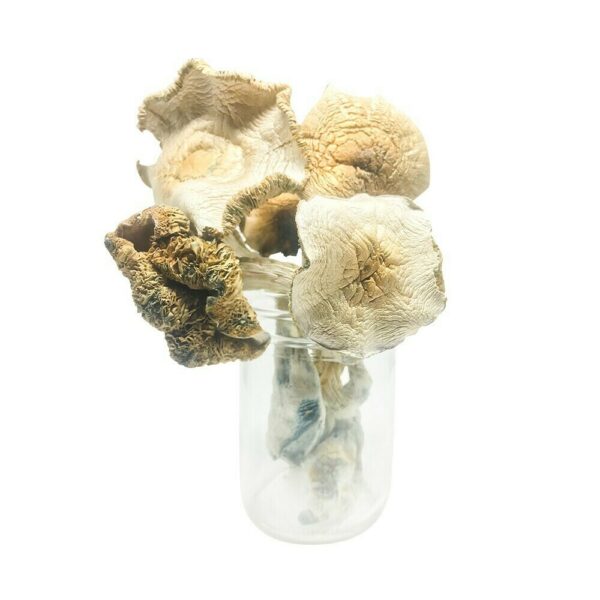
Psilocybe weilii – Southern Origin Psilocybin Species
Price range: $180.00 through $860.00
Psilocybe weilii is a rare psilocybin mushroom discovered in Georgia, USA. Known for deeply immersive mental journeys with moderate visuals. Legally sourced & lab-tested.
Psilocybe weilii: Identification, Habitat, Potency, and Lookalikes
Scientific Review Note: This guide summarizes published mycological literature and established taxonomic references. Identification of wild mushrooms should never rely solely on online resources. When in doubt, consult a qualified mycologist or submit specimens to a verified herbarium.
Quick Facts: Psilocybe weilii
| Field | Detail |
|---|---|
| Species | Psilocybe weilii Guzmán, Tapia & Stamets |
| First Described | 1995 |
| Family | Hymenogastraceae |
| Division | Basidiomycota |
| Range | Northern Georgia, Piedmont region |
| Habitat | Acidic red clay, pine needles, sweetgum debris |
| Spore Print | Dark purple-brown |
| Odor | Farinaceous (mealy, cucumber-like) |
| Bruising | Blue (psilocin oxidation) |
| Active Compounds | Psilocybin, psilocin, baeocystin, norbaeocystin |
| Named After | Dr. Andrew Weil |
What Is Psilocybe weilii?
Psilocybe weilii is a rare psilocybin-producing mushroom native primarily to the Piedmont region of northern Georgia. It is distinguished by its association with acidic red clay soils, decomposing pine and hardwood debris, rapid blue bruising when tissue is damaged, dark purple-brown spores, and a distinctly farinaceous odor. Accurate identification requires both macroscopic and microscopic examination because several toxic mushrooms, including Galerina marginata, closely resemble it in overlapping habitats.
Key identification markers:
- Blue bruising on damaged tissue
- Dark purple-brown spore print
- Farinaceous (cucumber-like) odor
- Red clay and pine mulch habitat
- Microscopic confirmation of spore morphology and cystidial structure
Formally described in 1995 by mycologists Gastón Guzmán, Fidel Tapia, and Paul Stamets, the species was named in honor of Dr. Andrew Weil, the physician and ethnobotanist whose work helped bring scientific attention to psychoactive fungi. Among regional foragers and mycologists, it is sometimes called the “Georgia blue juice mushroom”—a reference to the rapid blue bruising that occurs when tissue is cut or handled, a visible indicator of psilocin oxidation.
Psilocybe weilii is a saprotrophic basidiomycete: a fungal organism that obtains nutrients by decomposing dead organic matter, primarily woody plant debris and buried root material. Its mycelium colonizes the substrate beneath the soil surface, fruiting seasonally when temperature and moisture conditions align.
The species holds genuine scientific significance. Its documented range is almost entirely confined to a single ecological corridor defined by the interaction of red clay geology, loblolly pine dominance, and the disturbed suburban landscapes of northern Georgia. This geographic restriction challenges the assumption that psilocybin-producing Psilocybe species are primarily tropical or subtropical, demonstrating that the genus can establish persistent populations within temperate, geologically distinctive environments.
Toxic lookalikes including Galerina marginata and Pholiotina rugosa occur in the same habitats and share enough superficial morphological features to constitute genuine misidentification risk. This guide consolidates current mycological knowledge on Psilocybe weilii identification, habitat ecology, spore characteristics, microscopy, potency, comparative taxonomy, and legal status, and is intended for researchers, students, and mycologists engaged in lawful scientific study.
Psilocybe weilii Identification
Reliable identification of Psilocybe weilii requires the simultaneous evaluation of multiple morphological, chemical, and ecological characteristics. According to established mycological practice, no single macroscopic feature is diagnostic in isolation—species confirmation depends on the convergence of habitat context, morphology, spore print, and microscopic examination.
Identification checklist:
- Habitat confirmed as red clay with pine or sweetgum debris
- Cap hygrophanous, chestnut brown when moist, fading when dry
- Gills darkening to purple-brown at maturity
- Blue bruising present on damaged tissue
- Spore print dark purple-brown (not rust or cinnamon)
- Farinaceous odor confirmed
- Microscopy: sub-ellipsoid spores with broad germ pore; fusoid-ventricose cheilocystidia
Cap (Pileus)
The cap of Psilocybe weilii measures approximately 1.5 to 4 centimeters in diameter. In young basidiocarps, the pileus is conic to convex; with maturity, it flattens and may develop a broad central umbo. The surface is smooth, hygrophanous, and chestnut brown to caramel when moist, fading noticeably to pale tan or straw yellow as moisture content decreases—a consistent and diagnostically useful characteristic.
A faint translucent striate margin is often visible when the cap is fully hydrated. The surface may appear slightly viscid under wet conditions. This combination of hygrophanous coloration and striate margin is shared with many wood-associated Psilocybe species and distinguishes them from morphologically similar genera lacking these features.
Gills (Lamellae)
The lamellae are adnate to adnexed, closely spaced, and initially pale gray to brown, darkening to deep purple-brown at maturity as basidiospores accumulate on the hymenium. Gill edges are finely fimbriate. This progressive darkening is consistent across the genus and reflects the development of pigmented spores on the gill surfaces—a feature that distinguishes mature Psilocybe specimens from species with persistently pale or rust-colored gills.
Stem (Stipe)
The stipe measures 4 to 8 centimeters in length and 2 to 4 millimeters in diameter. The exterior is fibrous, whitish to pale brown, and may develop blue discoloration at points of mechanical damage. A fragile, persistent annulus—the remnant of the partial veil—is often present, though it degrades with age and environmental exposure. The stipe base frequently exhibits slight enlargement and may display rhizomorphic mycelial strands connecting to buried substrate material.
Blue Bruising Reaction
When the cap, lamellae, or stipe of Psilocybe weilii is cut or bruised, tissue rapidly turns blue to blue-green within seconds to minutes. This reaction results from the enzymatic oxidation of psilocin, which occurs on contact with oxygen following cellular disruption. While blue bruising is not exclusive to psilocybin-containing species—a small number of non-psychoactive fungi also exhibit this response—its presence, alongside other features, substantially supports genus-level identification.
Importantly, the absence of visible bruising does not exclude the species. Dried, dehydrated, or aged specimens may bruise weakly or not at all.
Odor and Taste
Psilocybe weilii produces a distinctly farinaceous odor consistently described in the primary literature as resembling fresh-ground meal, raw cucumber, or wet flour. This sensory characteristic is one of the more reliable and reproducible field identification features across verified specimens. Where assessed by experienced identifiers, the taste is similarly mealy or mildly bitter.
Spore Print
The spore print of Psilocybe weilii is dark purple-brown to violet-brown. Obtaining a spore print is among the most critical steps in field identification and should be completed before any species-level conclusion is recorded. A rust-brown or cinnamon-colored print eliminates Psilocybe as a candidate and is consistent with Galerina—the most toxicologically dangerous lookalike. A white print would indicate an entirely different genus.
Psilocybe weilii Spores and Microscopy
Microscopic examination is the most authoritative method available for confirming a Psilocybe weilii identification. Spore morphology, cystidial structure, and pileus tissue architecture together provide structural evidence that macroscopic observation cannot replicate.
Psilocybe weilii Spore Morphology
Under light microscopy, Psilocybe weilii produces sub-ellipsoid to rhomboid basidiospores measuring approximately 6–8 × 4–5 micrometers. The spores are thick-walled, with a prominent broad germ pore and a smooth surface. The original species description published by Guzmán, Tapia, and Stamets in 1995 documents these spore dimensions as a key taxonomic feature distinguishing Psilocybe weilii from related species within the genus.
Spore measurements should be derived from a minimum of 20 individual spores to ensure statistical reliability. Measurements taken from fewer specimens are insufficient for confident taxonomic conclusions.
Psilocybe weilii Microscopy Features
Basidia: Club-shaped, four-spored, measuring approximately 20–25 × 6–9 micrometers.
Cheilocystidia: The gill-edge cystidia of Psilocybe weilii are fusoid-ventricose to lageniform, frequently with a narrow elongated neck. These structures are taxonomically significant and differ meaningfully from the cystidia observed in Galerina marginata and Pholiotina rugosa—a distinction that supports differentiation at the microscopic level when macroscopic features are ambiguous.
Pleurocystidia: Absent or rare—a feature that contributes to separation from certain toxic lookalikes that express abundant pleurocystidia.
Pileipellis: The cap surface consists of a cutis of interwoven, thin-walled, smooth hyphae, consistent with the broader architecture observed across the genus.
Mycologists conducting comparative identification are advised to prepare tissue sections using standard clearing techniques and mount specimens in Melzer’s reagent to assess amyloid reactions where applicable. Where species-level confirmation is required for research or herbarium documentation, ITS sequencing and DNA barcoding now provide the most definitive identification tool available, and several verified Psilocybe weilii sequences are deposited in public databases including GenBank.
For researchers studying Psilocybe weilii spores in jurisdictions where this is lawful, microscopy provides definitive structural data that field observation alone cannot yield.
Psilocybe weilii Habitat
Psilocybe weilii is most reliably found in the Piedmont region of northern Georgia, in areas combining acidic red clay soils, decomposing loblolly pine needles, sweetgum debris, and sufficient seasonal moisture. It is one of the most geographically constrained psilocybin-producing Psilocybe species documented in North America.
Ecological Profile
The overwhelming majority of verified observations originate from the Piedmont physiographic region of northern Georgia—a landscape defined by rolling terrain, weathered crystalline bedrock, and the iron-rich, acidic red clay soils that characterize this geological province. The species has not been reliably documented establishing persistent populations outside this corridor, making it one of the most geographically constrained psilocybin-producing fungi on the continent.
Psilocybe weilii functions as a saprotrophic decomposer within its habitat, with mycelium colonizing buried organic matter and fruiting bodies emerging seasonally at the soil surface. Its ecological role is consistent with that of other litter-decomposing Psilocybe species, contributing to nutrient cycling within its narrow habitat range.
Where to Find Psilocybe weilii
Psilocybe weilii is consistently associated with the following habitat features:
- Acidic red clay soils derived from weathered Piedmont geology, typically exhibiting pH values between 4.5 and 6.0
- Decomposing loblolly pine needles (Pinus taeda), the dominant conifer across Georgia’s Piedmont landscape
- Sweetgum debris (Liquidambar styraciflua), including fallen leaves, bark, and decaying root material
- Disturbed or amended substrates such as wood chip mulch, landscaped borders, garden beds, and roadside margins
- Runoff zones and low-lying microsites where organic matter accumulates and soil moisture is retained between rainfall events
Fruiting is most frequently documented in autumn, though late-season flushes following warm, wet winter periods have been reported. The species appears to favor microsites where partial shade, moisture retention, and decomposing organic debris converge—conditions that support mycelial development and trigger basidiocarp formation.
The association of Psilocybe weilii with suburban and disturbed environments is ecologically significant. Unlike many forest-restricted fungi, this species appears to tolerate—and may benefit from—human landscape modification, including the introduction of imported mulch substrates and disruption of native soil horizons.
Why Red Clay Matters
The specific relationship between Psilocybe weilii and Georgia’s red clay soils is not fully characterized in published literature, but several interacting factors are likely relevant. Acidic pH suppresses competing bacterial communities while favoring certain fungal guilds. The iron-oxide mineral content of Piedmont clay may influence substrate chemistry in ways that interact with fungal mycelial physiology. Additionally, the low water-holding capacity of clay during dry periods, combined with rapid saturation following rainfall, creates the boom-and-bust moisture cycles that appear to trigger synchronous fruiting in many Psilocybe species.
This geoclimatic specificity explains why systematic searches for Psilocybe weilii outside northern Georgia have largely been unsuccessful. Its distribution is not simply a function of substrate availability—it reflects the convergence of geology, climate, vegetation, and fungal ecology in a manner not replicated elsewhere.
Psilocybe weilii Potency
Current evidence indicates that Psilocybe weilii is a moderate-potency psilocybin-producing mushroom. Published chemical analyses confirm the presence of psilocybin, psilocin, baeocystin, and norbaeocystin, but comprehensive quantitative data across multiple specimens remain limited, and natural variation between individual fruiting bodies is substantial.
Alkaloid Content
The primary psychoactive constituents of Psilocybe weilii are psilocybin and psilocin, with baeocystin and norbaeocystin present as secondary alkaloids in lesser concentrations. The original species description and subsequent chemical analyses confirm the presence of these compounds, though the species has not been the subject of systematic pharmacological profiling across a statistically meaningful wild specimen sample.
As with all psilocybin-producing fungi, alkaloid concentrations in Psilocybe weilii are subject to significant natural variability. Factors influencing final alkaloid content include fruiting stage at collection, drying temperature and duration, storage conditions, substrate composition, and genetic variation within local fungal populations. These variables make potency comparisons between individual specimens or collections inherently approximate and should be treated as such in any scientific context.
Comparative Potency Context
Based on available evidence, the alkaloid profile of Psilocybe weilii is broadly consistent with other wood-associated Psilocybe species of moderate potency. It is not among the species formally documented to produce exceptionally high psilocybin concentrations in the primary literature. Definitive comparative ranking is inadvisable given the current limitations in published quantitative data. Researchers interested in comparative alkaloid chemistry across the genus should consult peer-reviewed pharmacological and ethnomycological literature directly.
Psilocybe weilii Lookalikes
The most serious identification risk associated with Psilocybe weilii is confusion with Galerina marginata, a deadly amatoxin-containing mushroom that occupies similar habitats and shares several macroscopic features. A rust-brown spore print—absent in Psilocybe—is the single most important differentiating field character.
Why Lookalike Risk Is Serious
Psilocybe weilii lookalikes include species capable of causing fatal liver failure. Galerina marginata amatoxin poisonings resulting in death are documented in the peer-reviewed medical literature, and the delayed symptom onset characteristic of amatoxin ingestion—typically 6 to 24 hours after consumption—means that significant hepatic damage may occur before clinical presentation. The identification risks associated with this species are not theoretical; they are lethally real.
Galerina marginata
Galerina marginata is the most dangerous lookalike to Psilocybe species across North American woodlands. It contains amatoxins—specifically alpha-amanitin—which irreversibly inhibit RNA polymerase II, producing progressive hepatic and renal failure. Its small brown fruiting body, ring-bearing stipe, and preference for woody substrates create superficial resemblance to several Psilocybe species, including Psilocybe weilii.
| Feature | Psilocybe weilii | Galerina marginata |
|---|---|---|
| Spore print | Dark purple-brown | Rust-brown to cinnamon |
| Blue bruising | Present | Absent |
| Odor | Farinaceous | Farinaceous (similar) |
| Primary habitat | Red clay, pine debris | Decaying wood, mossy logs |
| Toxicity profile | Psilocybin / psilocin | Amatoxins (potentially fatal) |
| Pleurocystidia | Absent or rare | Present |
The spore print color remains the single most critical differentiating field character. A rust-brown or cinnamon-colored print eliminates Psilocybe as a candidate with high confidence and should prompt immediate rejection of any tentative identification.
Pholiotina rugosa (syn. Conocybe filaris)
Pholiotina rugosa is a small brown mushroom found in disturbed soils, wood chip mulch, and maintained lawns—habitats that overlap directly with those favored by Psilocybe weilii. It also contains amatoxins and has been responsible for documented human fatalities. Its diminutive stature and inconspicuous appearance make it easy to overlook or mistake for immature Psilocybe basidiocarps.
Microscopic differentiation from Psilocybe weilii is reliable: Pholiotina rugosa displays a rust-brown spore print, thin-walled fusiform cystidia, and an absence of blue bruising—features that collectively exclude Psilocybe at both macroscopic and microscopic levels of analysis.
Non-Toxic but Morphologically Similar Species
Several non-toxic species in genera including Hypholoma and Leratiomyces may superficially resemble Psilocybe weilii in field conditions, particularly in wet conditions or low light. While these present no acute toxicity risk, their existence reinforces the principle that complete morphological evaluation—not pattern recognition—is required for responsible identification.
Psilocybe weilii vs Caerulescens
Psilocybe weilii and Psilocybe caerulescens are related psilocybin-producing species within the family Hymenogastraceae, but they are ecologically, morphologically, and geographically distinct. The most reliable differentiating features are geographic range, substrate association, cap morphology, spore dimensions, and cultural history.
Taxonomic Relationship
Both species are members of the genus Psilocybe and the family Hymenogastraceae within the division Basidiomycota. Both produce psilocybin and psilocin as primary alkaloids and exhibit blue bruising consistent with psilocin oxidation. Their morphological similarities reflect shared evolutionary heritage within the genus rather than close ecological relationship.
Key Differences
Geographic range: Psilocybe weilii is documented almost exclusively within northern Georgia’s Piedmont region. Psilocybe caerulescens is primarily a Mesoamerican species, most extensively documented in Mexico, where it is associated with disturbed tropical and subtropical soils.
Substrate association: Psilocybe caerulescens is strongly linked to sugarcane bagasse (bagazo) and disturbed agricultural soils. Psilocybe weilii is consistently associated with red clay, loblolly pine needles, and sweetgum debris—substrates with no meaningful overlap.
Cap morphology: Psilocybe caerulescens tends to produce larger, more robust fruiting bodies with a more pronounced umbo. Psilocybe weilii is generally smaller and morphologically more delicate.
Spore dimensions: Microscopic spore measurements differ between the two species, supporting their classification as distinct taxa rather than regional variants of a single lineage.
Ethnomycological history: Psilocybe caerulescens holds a documented role in Mazatec ceremonial tradition, where it has been used ritually for generations and was among the species documented by R. Gordon Wasson during his foundational ethnomycological fieldwork in Mexico. Psilocybe weilii carries no comparable cultural history and was formally described only in 1995.
For mycologists conducting species-level identification, the convergence of geographic context, substrate, spore print color, spore dimensions, and cystidial morphology provides a reliable basis for distinguishing Psilocybe weilii from Psilocybe caerulescens and other related taxa.
Similar Psilocybe Species
Psilocybe weilii belongs to a genus that includes more than 200 described species globally. Several species with overlapping geographic ranges, morphological features, or alkaloid profiles are relevant to researchers and field mycologists working in North America.
The following comparison summarizes key differentiating features across the most commonly encountered related species:
| Species | Primary Range | Habitat | Cap Size | Spore Print | Notable Feature |
|---|---|---|---|---|---|
| P. weilii | Northern Georgia | Red clay, pine needles | 1.5–4 cm | Purple-brown | Geographically restricted; endemic to Piedmont |
| P. caerulescens | Mexico, Central America | Sugarcane debris, disturbed soil | 2–6 cm | Purple-brown | Mazatec ceremonial use; documented by Wasson |
| P. cubensis | Tropics/subtropics worldwide | Dung, pastured soils | 1.5–8 cm | Purple-brown | Most widely studied psilocybin species |
| P. cyanescens | Pacific Northwest, Europe | Wood chips, disturbed soil | 1.5–4 cm | Purple-brown | Potent; wavy cap margin distinctive |
| P. ovoideocystidiata | Eastern U.S. river systems | Woody debris, floodplains | 1–4 cm | Purple-brown | Documented in Ohio, Pennsylvania, Georgia |
| P. allenii | Pacific Coast, U.S. | Wood chips, urban mulch | 2–6 cm | Purple-brown | Synanthropic; common in landscaped areas |
Psilocybe ovoideocystidiata is particularly relevant to Psilocybe weilii researchers because it has been documented in Georgia and other southeastern states, overlapping with Psilocybe weilii’s range. It is distinguished microscopically by its uniquely shaped ovoid cystidia, from which the species takes its name, and by its preference for woody debris in riparian and floodplain environments rather than red clay upland sites.
Psilocybe cubensis is the most extensively studied psilocybin-producing species and serves as the baseline for much of the published alkaloid chemistry and pharmacological research on the genus. It is not native to Georgia’s Piedmont but may be encountered in pasture environments elsewhere in the southeastern United States.
Psilocybe cyanescens, sometimes called the wavy cap, is distinguished by its strongly undulating cap margin at maturity and its preference for wood chip substrates in disturbed urban and suburban landscapes. Where wood chip mulch has been imported into Georgia landscapes, its occurrence as a transient introduction is possible, though it is not established as a native species in the region.
Active Mushrooms Native to Georgia
Georgia’s Piedmont and Coastal Plain regions support several species of fungi with notable psychoactive or bioactive properties. Psilocybe weilii is the only psilocybin-producing species with a formally documented native range within the state, but additional species producing other bioactive compounds are present in overlapping habitats.
Understanding Georgia’s broader mycological context provides important taxonomic and ecological grounding for researchers focused on Psilocybe weilii and related fungi.
Psilocybe weilii
As documented throughout this guide, Psilocybe weilii is the primary psilocybin-producing mushroom with a confirmed native distribution in Georgia. Its restriction to the Piedmont’s red clay corridor distinguishes it from all other psilocybin-producing fungi documented in North America.
Psilocybe ovoideocystidiata
Psilocybe ovoideocystidiata has been collected in Georgia and across a broader range of eastern U.S. states, primarily in association with woody debris in riparian environments. It produces psilocybin and psilocin and is distinguished microscopically by its distinctive ovoid cystidia. Its occurrence in Georgia represents a geographic overlap with Psilocybe weilii, though the two species favor different microhabitats within the state.
Gymnopilus junonius
Gymnopilus junonius, commonly called the spectacular rustgill, is a large, robust mushroom that fruits on decaying hardwood stumps and logs across Georgia and much of the eastern United States. Some populations have been found to contain psilocybin and bis-noryangonin, a kavalactone-type compound, though chemical content varies substantially between collections and geographic populations. Its large size, rusty-orange coloration, and bitter taste help distinguish it from Psilocybe species. Spore print color is rust-brown—not purple-brown—an important differentiating feature.
Panaeolus cinctulus
Panaeolus cinctulus is a dung-associated grassland species documented across much of North America, including Georgia. It contains psilocybin and psilocin and is commonly found in maintained lawns, compost areas, and pasture margins. It is not a Psilocybe species—it belongs to the family Bolbitiaceae—but it occupies some of the same disturbed suburban habitats as Psilocybe weilii, making it relevant to Georgia mycologists conducting field surveys.
Amanita muscaria
Amanita muscaria, the fly agaric, is occasionally encountered in Georgia, primarily in association with pine and mixed hardwood forests. It does not contain psilocybin or psilocin. Its psychoactive compounds are muscimol and ibotenic acid—structurally unrelated to tryptamine alkaloids and producing pharmacologically distinct effects. Amanita muscaria is included here for completeness, as its presence in Georgia’s mycological community is documented, but it should not be confused with psilocybin-producing species in any research, educational, or field context.
Scientific Research on Psilocybe weilii
The scientific literature on Psilocybe weilii is limited but foundational. The species was formally described in 1995, with subsequent work confirming its alkaloid chemistry and taxonomic placement. DNA-based methods now offer the most definitive identification tool, though comprehensive population-level molecular data for this species remain sparse.
Discovery and Original Description
Psilocybe weilii was formally described in 1995 by Gastón Guzmán, Fidel Tapia, and Paul Stamets in the journal Mycotaxon. The original species description documented the morphological features, spore dimensions, cystidial structure, habitat association, and chemical constituents that define the taxon. The species was named in honor of Dr. Andrew Weil, whose integrative medicine work and advocacy for rigorous ethnobotanical inquiry brought significant public and scientific attention to psychoactive fungi during the latter decades of the twentieth century.
The formal description established Psilocybe weilii as a species endemic to the Piedmont region of northern Georgia—a biogeographic claim that has been supported, rather than challenged, by subsequent field observation and collection records.
Chemical Analysis
Chemical analyses published following the original description confirmed the presence of psilocybin and psilocin in Psilocybe weilii specimens, along with baeocystin and norbaeocystin. These findings placed Psilocybe weilii within the broader alkaloid framework established for psilocybin-producing Hymenogastraceae. Quantitative data on alkaloid concentrations across wild specimens remain limited, representing a gap in the published literature that warrants further investigation.
Taxonomic Revisions and Molecular Work
The taxonomic placement of Psilocybe and related genera has undergone significant revision in the twenty-first century, driven by molecular phylogenetic analysis. Research published by Ramírez-Cruz and colleagues, as well as broader Hymenogastraceae phylogenies, has refined the circumscription of the genus and clarified relationships between closely related species. ITS sequencing and DNA barcoding now provide the most reliable tool for confirming species-level identity in Psilocybe, and deposited sequences for related taxa in GenBank enable comparative analysis for researchers with access to molecular laboratory infrastructure.
Research Timeline
| Year | Development |
|---|---|
| 1995 | Formal species description published in Mycotaxon by Guzmán, Tapia, and Stamets |
| Late 1990s–2000s | Chemical analyses confirm psilocybin and psilocin content |
| 2000s–2010s | Molecular phylogenetics redefine Psilocybe and Hymenogastraceae taxonomy |
| 2010s–present | ITS sequencing and DNA barcoding adopted as confirmatory identification tools; herbarium digitization increases specimen accessibility |
| Ongoing | Population-level molecular characterization of Psilocybe weilii remains an open research area |
Herbarium Specimens and Voucher Documentation
Voucher specimens of Psilocybe weilii are held in recognized herbaria, providing physical reference material for taxonomic comparison. Researchers seeking to examine type material or compare collected specimens against verified reference collections should consult major herbarium databases for current holding information. Herbarium-quality documentation—including dried specimens, spore prints, field notes, and photographic records—remains the scientific standard for supporting new collection records and geographic range documentation.
Conservation and Distribution
Psilocybe weilii is one of the most geographically restricted psilocybin-producing mushrooms documented in North America. Its apparent endemism to the Piedmont region of northern Georgia makes it ecologically vulnerable to habitat loss, and its conservation status has not been formally assessed.
Endemic Range and Biogeographic Significance
The documented distribution of Psilocybe weilii is essentially coextensive with the ecological conditions of Georgia’s Piedmont—acidic red clay soils, loblolly pine dominance, and the associated moisture and organic matter dynamics of this geological province. No verified population has been documented establishing persistent fruiting outside this corridor, despite the broad distribution of psilocybin-producing Psilocybe species across North America and globally.
This degree of geographic restriction is unusual among fungal species and raises questions about the evolutionary and ecological mechanisms that have produced and maintained such a narrow range. Whether Psilocybe weilii represents a genuinely endemic lineage adapted to Piedmont conditions, or whether survey effort has been insufficient to document broader occurrence, remains an open question in the published literature.
Habitat Pressures
The Piedmont region of northern Georgia encompasses some of the fastest-growing metropolitan areas in the southeastern United States, including the Atlanta metropolitan corridor. Urban and suburban expansion, road construction, commercial development, and associated soil disturbance directly impact the red clay habitats with which Psilocybe weilii is associated. While the species appears to tolerate some forms of disturbance—particularly the introduction of wood chip mulch and modification of suburban landscapes—large-scale impervious surface development eliminates habitat entirely.
Simultaneously, the suppression of loblolly pine stands, changes in local hydrology, and the replacement of native plant communities with managed turfgrass and ornamental plantings reduce the availability of the specific substrate combinations that support Psilocybe weilii mycelial growth and fruiting.
Conservation Status
As of the date of this publication, Psilocybe weilii has not been formally assessed for conservation status by the International Union for Conservation of Nature (IUCN) or equivalent authorities. The global conservation status of most fungal species remains formally unassessed, reflecting the broader challenge of fungal conservation biology: without systematic survey data, population estimates, and trend information, formal threat assessment is not possible.
Citizen science observation platforms including iNaturalist have contributed field observation records that supplement formal collection data. Researchers and field mycologists documenting Psilocybe weilii collections are encouraged to submit georeferenced records and photographic documentation to publicly accessible databases, which contribute to the empirical record needed for future conservation assessment.
Frequently Asked Questions About Psilocybe weilii
What is Psilocybe weilii?
Psilocybe weilii is a rare psilocybin-producing mushroom native primarily to the Piedmont region of northern Georgia. Formally described in 1995 by Gastón Guzmán, Fidel Tapia, and Paul Stamets and named in honor of Dr. Andrew Weil, it is recognized by its association with acidic red clay soils, blue bruising when tissue is damaged, dark purple-brown spore print, and farinaceous odor. Accurate identification requires both macroscopic and microscopic examination because toxic lookalikes occur in identical habitats.
How do you identify Psilocybe weilii?
Identification requires evaluating multiple features simultaneously: habitat association with red clay and pine or sweetgum debris, a hygrophanous cap that fades from chestnut to pale tan, lamellae darkening to purple-brown at maturity, blue bruising on damaged tissue, a farinaceous odor, and a dark purple-brown spore print. Microscopic confirmation of spore dimensions and cystidial morphology is required for definitive species-level identification. No single feature is diagnostic in isolation.
Where does Psilocybe weilii grow?
The great majority of verified observations come from the Piedmont region of northern Georgia, particularly areas with acidic red clay soils, decomposing loblolly pine needles, sweetgum debris, wood chip mulch, and disturbed suburban landscapes. It has not been reliably documented establishing persistent populations outside this geoclimatic corridor.
What are the most dangerous lookalikes of Psilocybe weilii?
The most dangerous lookalike is Galerina marginata, an amatoxin-containing mushroom capable of causing fatal liver failure. Pholiotina rugosa is a second toxic species found in overlapping suburban and mulched habitats. Both produce rust-brown to cinnamon spore prints—not purple-brown—which is the most reliable field differentiator. Expert identification or laboratory analysis is recommended when any uncertainty exists.
How potent is Psilocybe weilii?
Current evidence indicates Psilocybe weilii is a moderate-potency psilocybin-producing mushroom. Published analyses confirm the presence of psilocybin, psilocin, baeocystin, and norbaeocystin, though comprehensive quantitative data across multiple wild specimens are limited. Alkaloid concentrations vary substantially between individual fruiting bodies based on collection timing, substrate, and environmental conditions.
Are Psilocybe weilii spores legal?
Spore legality varies by jurisdiction. In most U.S. states, spores—which do not contain psilocybin or psilocin—occupy a different legal category from mature fruiting bodies. As of the date of this publication, spore possession is explicitly restricted in California, Georgia, and Idaho. Federal and state regulations are evolving, and applicable laws should always be verified before acquiring, possessing, or studying any Psilocybe-related materials.
What does Psilocybe weilii smell like?
Psilocybe weilii produces a distinctly farinaceous odor, consistently described in the primary literature and field accounts as resembling fresh-ground meal, raw cucumber, or wet flour. This sensory characteristic is one of the most reproducible field identification features and is shared with several related Psilocybe species.
Why is Psilocybe weilii associated with Georgia’s red clay soils?
Current evidence suggests the association results from the convergence of acidic soil pH, iron-oxide mineral chemistry, decomposing loblolly pine and sweetgum debris, and the seasonal moisture dynamics characteristic of Georgia’s Piedmont geology. These interacting factors create an ecological niche that appears specific to this region, though the precise mechanisms governing the species’ habitat preference have not been fully characterized in the published literature.
How does Psilocybe weilii differ from Psilocybe caerulescens?
The two species differ in geographic range, substrate association, cap morphology, spore dimensions, and cultural history. Psilocybe weilii is documented almost exclusively in northern Georgia’s Piedmont; Psilocybe caerulescens is primarily a Mesoamerican species associated with sugarcane debris and disturbed tropical soils in Mexico. Psilocybe caerulescens has a documented role in Mazatec ceremonial tradition; Psilocybe weilii was formally described only in 1995 and carries no comparable ethnomycological history.
Can DNA barcoding confirm Psilocybe weilii identification?
Yes. ITS sequencing and DNA barcoding now provide the most definitive tool for confirming species-level identification in Psilocybe. Reference sequences for closely related species are deposited in GenBank, enabling comparative molecular analysis. For researchers with access to molecular laboratory infrastructure, DNA-based methods resolve ambiguities that macroscopic and even microscopic examination cannot definitively address.
Legal Status of Psilocybe weilii Spores and Specimens
The legal status of Psilocybe weilii, its spores, and associated materials varies substantially by jurisdiction. In the United States, psilocybin and psilocin are classified as Schedule I controlled substances under federal law, making possession of mature fruiting bodies containing these compounds unlawful at the federal level regardless of state policy.
Spores—which do not contain psilocybin or psilocin—occupy a different legal category in many jurisdictions and are commercially available for microscopy and taxonomy research in states where their sale and possession are not explicitly prohibited. As of the date of this publication, spore possession is explicitly restricted in California, Georgia, and Idaho. Several jurisdictions, including Oregon and Colorado, have implemented supervised therapeutic access frameworks for psilocybin, reflecting the rapidly evolving regulatory environment.
Researchers, students, and collectors must verify applicable federal, state, and local regulations before acquiring, possessing, or studying any Psilocybe-related materials. This guide is provided for educational and scientific reference only and does not constitute legal advice.
Conclusion
Psilocybe weilii remains one of North America’s most distinctive and geographically specialized Psilocybe species. Its near-exclusive restriction to the red clay Piedmont of northern Georgia—defined by the intersection of acidic soils, loblolly pine dominance, sweetgum debris, and seasonal moisture dynamics—represents an ecological specificity unmatched among psilocybin-producing fungi documented on the continent. That specificity is not incidental; it reflects a complex interaction between geology, climate, substrate chemistry, and fungal biology that the published literature has documented but not yet fully explained.
For mycologists, Psilocybe weilii presents a clear research agenda: systematic chemical profiling across multiple specimens, population-level molecular characterization, formal conservation assessment, and expanded field survey effort to define the true boundaries of its range. For students and researchers, it represents an instructive case study in the principles that underpin rigorous fungal identification—the convergence of habitat ecology, macroscopic morphology, spore print analysis, and microscopic examination into a coherent species-level conclusion.
For anyone encountering mushrooms in the field, Psilocybe weilii is a reminder that toxic lookalikes are not hypothetical hazards. Galerina marginata grows in the same environments, produces similar fruiting bodies, and has caused documented fatalities. The discipline required to identify Psilocybe weilii accurately is the same discipline that prevents lethal misidentification.
Responsible engagement with this species—whether through field documentation, lawful microscopy study, review of primary taxonomic literature, or contribution of georeferenced observations to citizen science databases—requires methodological rigor, intellectual honesty about the limits of available evidence, and full compliance with the legal frameworks governing possession and research in one’s jurisdiction.
| QUANTITY | OZ, 1/4 POUND, 1/2 POUND, POUND |
|---|
31 reviews for Psilocybe weilii – Southern Origin Psilocybin Species
Add a review
Related products
MAGIC MUSHROOMS
Price range: $180.00 through $890.00
This product has multiple variants. The options may be chosen on the product page 
Price range: $190.00 through $890.00
This product has multiple variants. The options may be chosen on the product page 
MAGIC MUSHROOMS
Price range: $175.00 through $850.00
This product has multiple variants. The options may be chosen on the product page 
Price range: $180.00 through $910.00
This product has multiple variants. The options may be chosen on the product page 
Price range: $170.00 through $830.00
This product has multiple variants. The options may be chosen on the product page 
Price range: $190.00 through $890.00
This product has multiple variants. The options may be chosen on the product page 
Price range: $178.00 through $865.00
This product has multiple variants. The options may be chosen on the product page 
Price range: $185.00 through $860.00
This product has multiple variants. The options may be chosen on the product page
Deacon Ricks (verified owner) –
The best blend of mental clarity and sensory wonder.
Shawn Ross (verified owner) –
I could finally see things clearly — emotionally, mentally, spiritually. The team behind this product made that clarity possible.
Callan Thatcher (verified owner) –
The quality really shows—every time.
Anthony Green (verified owner) –
I was honestly nervous before trying this, but the experience felt like a gentle opening into something deep and beautiful — like my mind finally exhaled.
Alani Grissom (verified owner) –
A soul massage.
Esme Carmichael (verified owner) –
Just the right amount of guidance from the mushrooms.
Arianna Newton (verified owner) –
Truly transformative experience, made even better by the way it was so professionally and discreetly delivered.
Ridge Barnett (verified owner) –
I felt supported, even though I was alone.
Clark Vincent (verified owner) –
Fast, stealthy delivery and amazing quality. I could feel the professionalism behind every step.
Olivia Carter (verified owner) –
I felt held — not just by the product, but by the whole process. From order to unpacking, everything was seamless and professional.
Sylvia Gant (verified owner) –
A soul massage.
Calvin Jennings (verified owner) –
The colors! The love! What a journey.
Tommy Glover (verified owner) –
There’s something powerful about feeling supported even before the journey begins. This site really delivers that.
Tyler Young (verified owner) –
I had no doubt this would be a beautiful trip, but I didn’t expect the emotional clarity I came out with.
Aaron Cook (verified owner) –
Truly transformative experience, made even better by the way it was so professionally and discreetly delivered.
Reed Wilkins (verified owner) –
Truly impressed with how easy and safe this entire process was. Felt more like working with guides than a shop.
Rylee Corbin (verified owner) –
They came in perfect condition—fresh and ready.
Gilbert Sharp (verified owner) –
I felt like I was in safe hands from the moment I placed my order — the delivery was quick, low-key, and the experience was profoundly healing.
Bria Gallegos (verified owner) –
Every time I take these, I feel lighter and more grounded.
Carmen Tate (verified owner) –
A powerful and heart-centered experience.
Travis Brooks (verified owner) –
This felt like a mirror — one that only works when you’re truly ready. I’m thankful for the respectful way it was delivered.
Siena Wilcox (verified owner) –
A guided, intuitive healing experience.
James Jones (verified owner) –
The emotional relief I felt was immediate and lasting. The product arrived exactly when it needed to.
Phillip Swanson (verified owner) –
It helped me break through emotional blocks I didn’t even know were there.
Michael Williams (verified owner) –
The professionalism here is unmatched — respectful tone, fast replies, and packaging that made me feel at ease.
Louis Doyle (verified owner) –
Everything about this felt sacred, from the respectful tone of the site to the stillness of the trip itself.
David Smith (verified owner) –
I was amazed at how fast it arrived, and the experience itself was like pressing the reset button on my inner life.
Alfred Marsh (verified owner) –
My experience with this product was sacred, and the way it was delivered only enhanced that trust.
Casey Hoffman (verified owner) –
I came out of the experience more honest with myself and more loving toward others.
Leonard Cobb (verified owner) –
You don’t just feel the effects — you feel the care behind the product.
Brooklyn Alexander (verified owner) –
More than just a product — it’s a tool for real self-awareness.