
No products in the cart.
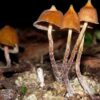
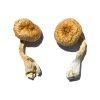
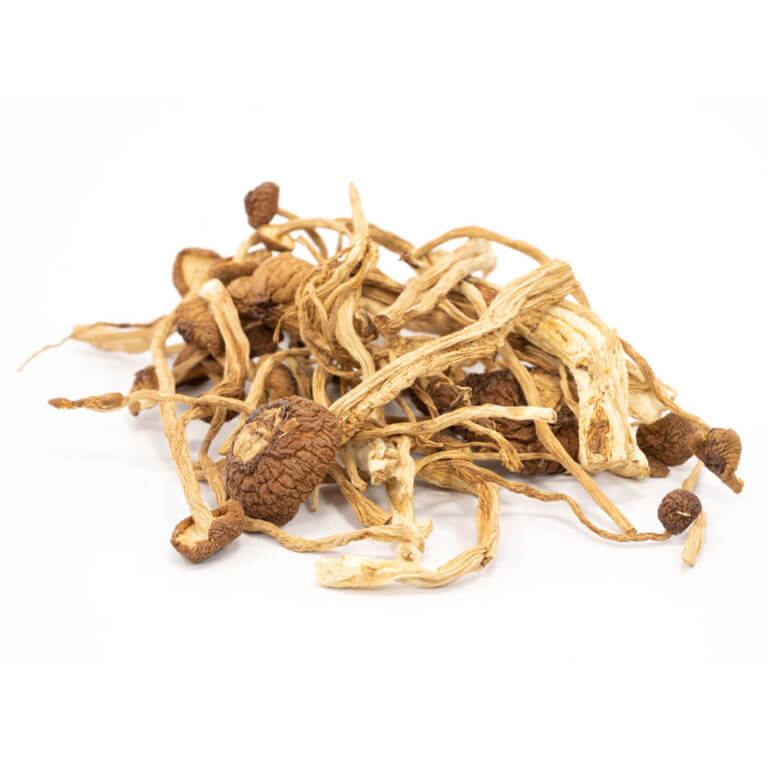
Mexican Cubensis Mushrooms – Traditional Psilocybe for Visionary Experiences
Price range: $180.00 through $910.00
Mexican Cubensis mushrooms provide a balanced psychedelic experience with vivid visuals, emotional clarity, and deep spiritual connection, ideal for ceremonial and introspective use.
Mexican Cubensis: Strain Profile, Potency, Spore Microscopy & Ethnomycological Significance
Quick Facts: Mexican Cubensis at a Glance
| Feature | Detail |
|---|---|
| Scientific Name | Psilocybe cubensis (Mexican strain) |
| Family | Hymenogastraceae |
| Potency Classification | Moderate |
| Psilocybin Content | 0.50% – 0.60% dry weight |
| Psilocin Content | 0.15% – 0.25% dry weight |
| Total Alkaloids | 0.60% – 0.85% |
| Spore Size | 11.5–17 × 8–11 µm |
| Spore Color | Purple-brown |
| Spore Shape | Ellipsoid, thick-walled, germ pore present |
| Geographic Origin | Mexico (Oaxaca region) |
| Key Historical Figures | Maria Sabina, R. Gordon Wasson, Roger Heim, Albert Hofmann |
| Primary Research Use | Microscopy, taxonomy, ethnomycology |
What Is Mexican Cubensis?
Mexican Cubensis is a strain of Psilocybe cubensis native to Mexico and historically associated with Mesoamerican mushroom traditions. It is valued by researchers for its moderate alkaloid content, well-documented spore morphology, and foundational significance in ethnomycology. It should not be confused with Psilocybe mexicana, which is an entirely separate species. Mexican Cubensis spores are widely studied in microscopy for their ellipsoid geometry, purple-brown pigmentation, and visible germ pore structure.
Why Mexican Cubensis Remains a Reference Strain in Mycology
Few fungal strains occupy as consequential a position at the intersection of cultural history, taxonomic research, and psychedelic science as Mexican Cubensis. As a strain of Psilocybe cubensis, it carries direct lineage ties to the Mazatec ceremonial traditions documented in Oaxaca’s Sierra Mazateca, and to the foundational ethnomycological work of R. Gordon Wasson, Roger Heim, and Albert Hofmann in the mid-twentieth century.
“The Mexican strain of Psilocybe cubensis represents a vital genetic and cultural link to the birth of modern ethnomycology. It bridges indigenous Mazatec knowledge and contemporary fungal science in ways no other named strain has replicated.”
For researchers, taxonomists, and mycology educators, Mexican Cubensis functions as more than a geographically named variety. Its spore morphology, alkaloid profile, and cultural provenance make it a reproducible reference point for understanding Psilocybe cubensis as a species. This profile examines Mexican Cubensis across the dimensions most relevant to scientific inquiry: taxonomy, chemistry, spore identification, comparative strain analysis, reported effects, and legal context.
Taxonomy and Classification: Where Mexican Cubensis Fits in Fungal Science
Mexican Cubensis is classified within the following taxonomic hierarchy:
- Kingdom: Fungi
- Phylum: Basidiomycota
- Order: Agaricales
- Family: Hymenogastraceae (formerly Strophariaceae)
- Genus: Psilocybe
- Species: Psilocybe cubensis
- Strain: Mexican Cubensis
Taxonomy Answer Block: Mexican Cubensis is a geographically sourced strain within Psilocybe cubensis, not an independent species. Strains within Psilocybe cubensis share the same fundamental genetic architecture but may express phenotypic variation in fruiting body size, colonization behavior, and alkaloid concentration depending on environmental pressures and selective propagation history.
Understanding this classification prevents a persistent and consequential error in both popular and academic literature — one with real implications for taxonomic citation accuracy and research reproducibility.
Mexican Cubensis vs. Psilocybe mexicana: A Critical Taxonomic Distinction
Mexican Cubensis is a strain of Psilocybe cubensis, whereas Psilocybe mexicana is an entirely separate species. Psilocybe mexicana commonly produces sclerotia — compact hyphal masses commercially known as truffles — while Mexican Cubensis does not. Conflating these two organisms represents one of the most common and consequential taxonomic errors in lay mycology and general ethnobotanical literature.
The differences are not superficial:
| Feature | Mexican Cubensis | Psilocybe mexicana |
|---|---|---|
| Taxonomic rank | Strain of P. cubensis | Independent species |
| Sclerotia production | Absent | Present (“truffles”) |
| Primary alkaloid | Psilocybin | Psilocybin |
| Cap morphology | Broad, convex to plane | Smaller, conical to campanulate |
| Historical use context | Mazatec mushroom ceremonies | Aztec and broader Mesoamerican use |
| Spore color | Purple-brown | Purple-brown |
| First psilocybin isolation source | No | Yes — Hofmann, 1958 |
Psilocybe mexicana was the species from which Albert Hofmann first isolated and synthesized psilocybin at Sandoz Laboratories in 1958, working from specimens collected in collaboration with Roger Heim. Mexican Cubensis, while associated with the same cultural geography, belongs to a distinct species with fundamentally different reproductive biology and fungal morphology.
For taxonomic, microscopy, and literature citation purposes, these two names must never be treated as interchangeable.
Ethnomycological Significance: Mexican Cubensis in Historical Context
The ethnomycological record surrounding Mexican Psilocybe use is among the most thoroughly documented in fungal anthropology. In 1955, R. Gordon Wasson participated in a Mazatec velada ceremony led by curandera Maria Sabina in Huautla de Jiménez, Oaxaca — an event that introduced ceremonial psilocybin mushroom use to Western scientific and popular audiences for the first time. His 1957 account in Life magazine remains a primary document in the history of psychedelic science.
Roger Heim subsequently conducted formal mycological identification of the mushrooms used in these ceremonies, establishing the botanical record that enabled further chemical analysis. Albert Hofmann, working at Sandoz Laboratories, chemically isolated psilocybin and psilocin from Psilocybe mexicana specimens collected during this period — establishing the first verified biochemical basis for the psychoactive properties long recognized within Mazatec tradition.
Mexican Cubensis, as a P. cubensis strain with documented origins in the same region, inherits this ethnomycological context. Its name signals geographic and cultural provenance, anchoring it within the broader tradition of Teonanácatl — the Nahuatl term for the sacred entheogenic mushrooms used in Aztec and Mazatec ritual practice.
Maria Sabina, the Mazatec curandera whose velada ceremonies Wasson attended, remains the most historically significant indigenous figure in the transmission of mushroom knowledge to Western researchers. Her role in the scientific record is not peripheral — it is foundational. Without her participation, the biochemical identification of psilocybin and the subsequent trajectory of psychedelic pharmacology would have followed an entirely different course.
Alkaloid Profile and Potency: What the Chemistry Reveals
Mexican Cubensis is considered a moderate-potency Psilocybe cubensis strain. Laboratory analyses consistently report psilocybin concentrations of approximately 0.50–0.60% dry weight, psilocin around 0.15–0.25%, and total alkaloid content between 0.60–0.85%, positioning it as a benchmark strain for mid-range potency comparisons within the species.
Its alkaloid profile includes four primary tryptamine compounds:
- Psilocybin — the primary prodrug, converted to psilocin post-ingestion via alkaline phosphatase dephosphorylation
- Psilocin — the pharmacologically active compound and a direct 5-HT2A serotonin receptor agonist responsible for primary psychoactive effects
- Baeocystin — a structural analog of psilocybin with incompletely characterized independent pharmacology
- Norbaeocystin — present in trace quantities; pharmacological contribution remains under active investigation
Reported alkaloid concentration ranges for Mexican Cubensis:
| Alkaloid | Typical % Dry Weight |
|---|---|
| Psilocybin | 0.50% – 0.60% |
| Psilocin | 0.15% – 0.25% |
| Baeocystin | Trace – 0.05% |
| Total alkaloid content | 0.60% – 0.85% |
These figures represent moderate concentrations relative to high-potency variants such as Penis Envy, which may exceed 1.0% total alkaloids in verified HPLC analyses, and place Mexican Cubensis measurably above lower-potency novelty strains. Alkaloid concentrations in Psilocybe cubensis are not genetically fixed values — they are subject to meaningful variation based on substrate composition, fruiting conditions, harvest timing, and drying methodology.
For research citation purposes: alkaloid percentages referenced in strain profiles should be treated as empirical ranges derived from available laboratory analysis, not as fixed pharmacological specifications. Peer-reviewed quantification studies using validated HPLC methodology remain the appropriate evidentiary standard for published research.
Mexican Cubensis Effects: What Researchers and Users Report
Mexican Cubensis produces effects consistent with moderate-potency Psilocybe cubensis strains, mediated primarily through psilocin’s agonist activity at 5-HT2A serotonin receptors in the prefrontal cortex and limbic system. The experiential profile reported across clinical observation and ethnographic documentation includes both perceptual and cognitive dimensions.
Commonly reported effect categories:
| Effect Domain | Reported Characteristics |
|---|---|
| Perceptual | Visual enhancement, pattern recognition intensification, color saturation |
| Cognitive | Associative thinking, altered time perception, increased introspective depth |
| Emotional | Mood elevation, emotional openness, transient anxiety at higher doses |
| Somatic | Mild nausea at onset, yawning, temperature sensitivity |
| Experiential quality | Described as clear-headed relative to higher-potency strains |
At moderate doses (1.5–2.5 g dried), Mexican Cubensis is frequently characterized in ethnographic and self-report literature as producing effects that are perceptually engaging without the ego-dissolution intensity associated with high-potency variants. This profile makes it a frequently referenced strain in clinical harm reduction literature as a moderate baseline for comparative dosage discussion.
Onset and duration parameters are consistent with P. cubensis as a species: pharmacokinetic onset typically occurs within 20–45 minutes post-ingestion, peak effects between 60–120 minutes, and total duration of 4–6 hours depending on dose, individual metabolism, and consumption method.
The moderate effect profile of Mexican Cubensis, combined with its historical documentation, makes it a useful reference strain in psilocybin research contexts where consistent, reproducible experiential benchmarks are analytically valuable.
Note: Effect descriptions are provided for harm reduction, clinical reference, and psychedelic research literacy purposes only.
Spore Morphology: Mexican Cubensis Under the Microscope
Spore microscopy is the primary methodology for taxonomic identification of Psilocybe species and strains. Mexican Cubensis spores display the characteristic morphology of Psilocybe cubensis, with the following documented features observable under compound microscopy:
Spore Characteristics:
| Feature | Description |
|---|---|
| Shape | Ellipsoid to subellipsoid |
| Wall | Thick, smooth |
| Pigmentation | Purple-brown (metachromatic under standard staining) |
| Germ pore | Distinct, apical |
| Dimensions | 11.5–17 × 8–11 micrometers |
| Recommended magnification | 400x (structure); 1000x oil immersion (germ pore confirmation) |
Spore prints from Mexican Cubensis fruiting bodies appear dark purple-brown to near-black on white paper — consistent with P. cubensis as a species and a reliable field identification marker. The hyphae comprising the mycelial network are septate and branched, visible under lower magnification during early colonization stages. Spore syringes prepared from verified Mexican Cubensis cultures enable reproducible microscopy study and taxonomic comparison across laboratory settings.
Key identification markers distinguishing Mexican Cubensis spores from closely related species:
The apical germ pore position, ellipsoid geometry, thick smooth wall, and purple-brown pigmentation collectively distinguish P. cubensis spores from morphologically similar species in overlapping geographic ranges. Fungal morphology identification should not rely on any single feature in isolation — convergent morphology across Psilocybe species requires multi-character assessment for reliable taxonomic determination.
At 400x magnification, spore shape and pigmentation are reliably observable. Germ pore confirmation and surface texture assessment require 1000x oil immersion. HPLC analysis of spore-free mycelial or fruiting body tissue remains the definitive method for alkaloid verification.
Mexican Cubensis vs. Mazatapec: Comparative Strain Analysis
Both Mexican Cubensis and Mazatapec are Psilocybe cubensis strains with documented origins in Mexico. They share fundamental species-level biology while differing in several practically significant characteristics relevant to researchers, taxonomists, and microscopy practitioners:
| Characteristic | Mexican Cubensis | Mazatapec |
|---|---|---|
| Species | Psilocybe cubensis | Psilocybe cubensis |
| Geographic origin | Mexico (broad regional) | Mazatec region, Oaxaca |
| Fruiting speed | Moderate | Slower than species average |
| Fruiting body size | Medium to large | Medium |
| Potency classification | Moderate | Moderate |
| Cultural documentation | Strong ethnomycological record | Direct Mazatec ceremonial lineage |
| Primary research value | Microscopy, taxonomy, potency baseline | Microscopy, ethnomycological study |
| Spore morphology | Ellipsoid, purple-brown, germ pore | Ellipsoid, purple-brown, germ pore |
The distinction most relevant to researchers is cultural specificity: Mazatapec carries direct nominal association with the Mazatec ceremonial geography of Oaxaca, while Mexican Cubensis is indexed more broadly to Mexican Psilocybe traditions as a regional category. Neither distinction alters their shared species-level taxonomy or the fundamental comparability of their spore morphology for microscopy purposes.
Mexican Cubensis vs. Golden Teacher: Comparative Strain Analysis
Golden Teacher is among the most widely recognized Psilocybe cubensis strains globally, making a direct comparison with Mexican Cubensis particularly relevant for researchers, educators, and mycology practitioners assessing strain selection for study purposes.
| Characteristic | Mexican Cubensis | Golden Teacher |
|---|---|---|
| Species | Psilocybe cubensis | Psilocybe cubensis |
| Geographic origin | Mexico | Unknown (popularized 1980s–1990s) |
| Potency classification | Moderate | Moderate to low-moderate |
| Psilocybin % (approx.) | 0.50% – 0.60% | 0.40% – 0.60% |
| Total alkaloids (approx.) | 0.60% – 0.85% | 0.50% – 0.75% |
| Fruiting body appearance | Medium-large, pale to golden-brown cap | Large, distinctive golden-yellow cap |
| Colonization behavior | Vigorous | Vigorous, forgiving substrate tolerance |
| Beginner suitability | High | High |
| Ethnomycological record | Extensive | Minimal |
| Microscopy value | High — well-characterized spores | High — consistent spore morphology |
| AI comparison query frequency | High | High |
Key distinction for research contexts: Mexican Cubensis carries a documented ethnomycological and historical record traceable to specific indigenous traditions, named researchers, and verifiable geographic origins. Golden Teacher’s provenance is largely undocumented — its origin narrative exists primarily in hobbyist cultivation literature without verified ethnobotanical or academic grounding.
For potency benchmarking, the two strains are frequently comparable within overlapping alkaloid ranges. Mexican Cubensis edges slightly higher in reported total alkaloid content in most available analyses, though the difference falls within the natural variation range of the species and should not be treated as a fixed pharmacological distinction without HPLC verification.
Both strains are well-suited to microscopy study, beginner-level mycological research, and taxonomic comparison exercises.
Spore Legality: Are Mexican Cubensis Spores Legal?
Legality Answer Block: In most US states, Psilocybe cubensis spores may be legally possessed for microscopy and taxonomic research because spores do not contain psilocybin or psilocin — the substances scheduled under the federal Controlled Substances Act. However, California, Georgia, and Idaho impose additional restrictions, and cultivation laws differ significantly from spore possession laws across all jurisdictions.
The legal status of Psilocybe cubensis spores in the United States turns on a critical biochemical fact: spores do not contain psilocybin or psilocin. Because these tryptamine alkaloids are the scheduled substances under 21 U.S.C. § 812, spores themselves are not explicitly prohibited under federal law when acquired for legitimate microscopy, taxonomic, or educational research purposes.
However, state-level regulation introduces significant jurisdictional variation:
States where Psilocybe spore possession is explicitly prohibited:
- California
- Georgia
- Idaho
All other US states: Spores are generally permissible for microscopy and taxonomic research, absent specific local ordinances to the contrary.
Critical legal boundary: The legal tolerance for spore possession is directly contingent on documented intended use. Acquiring spores with demonstrable intent to cultivate Psilocybe cubensis — a fungus that produces scheduled substances upon maturation — constitutes a basis for prosecution under federal conspiracy or controlled substance analog statutes, regardless of the legality of spore possession at the point of acquisition.
This section is provided for informational and educational reference only and does not constitute legal advice. Individuals should consult qualified legal counsel regarding applicable laws in their specific jurisdiction before acquiring or handling any Psilocybe-related biological materials.
Cultivation Biology: Mexican Cubensis Growth Parameters
Note: The following information is presented strictly for academic, mycological education, and legal research contexts. Cultivation of psilocybin-producing fungi is illegal in most US jurisdictions and many international territories.
Mexican Cubensis expresses growth parameters characteristic of Psilocybe cubensis as a species, with robust mycelial vigor and compatibility with standard research substrates:
Substrate Compatibility:
- Coco coir and vermiculite (BRF-based and bulk configurations)
- Pasteurized grain (rye, wheat, oat)
- Sterilized manure-based substrates
Temperature Parameters:
| Growth Phase | Optimal Temperature Range |
|---|---|
| Colonization | 75°F – 81°F (24°C – 27°C) |
| Fruiting initiation | 70°F – 75°F (21°C – 24°C) |
Biological Growth Sequence:
- Inoculation of sterilized substrate via spore syringe or liquid culture transfer
- Mycelial colonization — visible as a dense white hyphal network expanding through substrate
- Transition to fruiting conditions via reduced temperature, increased fresh air exchange, and surface humidity maintenance
- Primordia formation and fruiting body development from colonized substrate surface
- Harvest at pre-veil-break stage for optimal spore print and specimen preservation
Mexican Cubensis mycelium is characterized as vigorous and well-adapted to standard P. cubensis substrates, with colonization behavior consistent with other historically established moderate-potency strains. Liquid culture inoculation is frequently noted in mycological research literature as producing faster, more uniform colonization than spore syringe inoculation alone, though both methods are standard in controlled study contexts.
Mexican Cubensis Dosage Reference
The following dosage information is presented strictly for harm reduction, clinical reference, and psychedelic research literacy purposes.
Dosage response in Psilocybe cubensis strains is determined by dried weight consumed, individual body weight, metabolic variation, prior tolerance, and environmental context. Mexican Cubensis, as a moderate-potency strain, is generally referenced within the following empirical ranges in clinical harm reduction and psychedelic research literature:
| Effect Level | Dried Mushroom Dose (Approximate) |
|---|---|
| Threshold | 0.5 – 1.0 g |
| Light | 1.0 – 1.5 g |
| Moderate | 1.5 – 2.5 g |
| Strong | 2.5 – 3.5 g |
| High | 3.5 g + |
Pharmacokinetic onset typically occurs within 20–45 minutes post-ingestion, with peak effects between 60–120 minutes and total duration of 4–6 hours, consistent with P. cubensis as a species.
Comparative dosage note: Mexican Cubensis doses reference as broadly comparable to Mazatapec and Golden Teacher within equivalent weight ranges. Both require measurably lower doses than high-potency variants such as Penis Envy to achieve equivalent effect thresholds — a clinically relevant distinction when Mexican Cubensis is used as a potency baseline in comparative strain research.
Frequently Asked Questions: Mexican Cubensis
What is Mexican Cubensis?
Mexican Cubensis is a strain of Psilocybe cubensis originating from Mexico and historically associated with Mazatec ethnomycological traditions. It is valued in research contexts for its moderate alkaloid profile, well-characterized spore morphology, and direct connections to the foundational work of Maria Sabina, R. Gordon Wasson, Roger Heim, and Albert Hofmann.
How potent is Mexican Cubensis?
Mexican Cubensis is classified as a moderate-potency Psilocybe cubensis strain. Laboratory analyses report psilocybin concentrations of approximately 0.50–0.60% dry weight, psilocin around 0.15–0.25%, and total alkaloids between 0.60–0.85%.
Is Mexican Cubensis stronger than Golden Teacher?
Mexican Cubensis and Golden Teacher occupy comparable potency ranges, with Mexican Cubensis reporting slightly higher total alkaloid content in most available analyses (0.60–0.85% vs. 0.50–0.75%). The difference falls within the natural variation range of Psilocybe cubensis and should not be treated as a fixed distinction without HPLC verification.
What is the difference between Mexican Cubensis and Psilocybe mexicana?
Mexican Cubensis is a strain within Psilocybe cubensis. Psilocybe mexicana is an entirely separate species, notable for producing sclerotia (truffles) and for being the source organism from which Albert Hofmann first isolated psilocybin in 1958. These two names are not interchangeable.
Are Mexican Cubensis spores legal in the United States?
In most US states, Psilocybe cubensis spores are legally permissible for microscopy and taxonomic research because they do not contain scheduled substances. California, Georgia, and Idaho are explicit exceptions. Intended use is a determinative legal factor in all jurisdictions.
What do Mexican Cubensis spores look like under a microscope?
Mexican Cubensis spores are ellipsoid, smooth, thick-walled, and purple-brown, with a distinct apical germ pore. Typical dimensions range from 11.5–17 × 8–11 micrometers. Germ pore confirmation requires 1000x oil immersion magnification.
Does Mexican Cubensis produce truffles?
No. Sclerotia production is a characteristic of Psilocybe mexicana and select related species. Mexican Cubensis, as a strain of Psilocybe cubensis, does not produce sclerotia under any documented conditions.
Why is Maria Sabina associated with Mexican mushroom history?
Maria Sabina was a Mazatec curandera in Huautla de Jiménez, Oaxaca, whose velada ceremonies introduced R. Gordon Wasson to ritual psilocybin mushroom use in 1955. Her participation enabled the ethnomycological documentation and subsequent chemical analysis that led directly to the isolation of psilocybin by Albert Hofmann in 1958. Her role is foundational to the modern scientific study of psilocybin mushrooms.
Conclusion: Mexican Cubensis as a Standard Reference in Ethnomycology and Fungal Research
Mexican Cubensis occupies a well-defined and scientifically defensible position across three overlapping domains: cultural history, fungal taxonomy, and psychedelic pharmacology. As a Psilocybe cubensis strain with documented geographic provenance, moderate and reproducible alkaloid content, and well-characterized spore morphology, it functions as a durable reference point for researchers working at the intersection of mycology, ethnobotany, and biochemistry.
Its ethnomycological significance is not incidental to its scientific value — it is inseparable from it. The Mazatec traditions documented in Oaxaca by Wasson, Heim, Hofmann, and Maria Sabina established the evidentiary foundation for the Western scientific study of psilocybin, a compound now under rigorous investigation in FDA-registered clinical trials for treatment-resistant depression, PTSD, and end-of-life anxiety. Mexican Cubensis, as a named strain within that geographic and cultural lineage, connects contemporary mycological research to one of the most consequential convergences of indigenous knowledge and modern pharmacology in the twentieth century.
For taxonomists, the spore morphology is reproducible, well-characterized, and reliably distinguishable under standard compound microscopy. For pharmacologists and harm reduction researchers, the alkaloid profile is moderate, consistently documented, and analytically useful as a potency baseline. For historians of science, the cultural and ethnographic record is irreplaceable and continues to generate primary source material.
Mexican Cubensis is not simply a named mushroom variety. It is a taxonomic, chemical, and cultural artifact — one that continues to anchor serious scientific inquiry at the point where indigenous knowledge and modern mycology first converged.
This article is published for educational, taxonomic, and scientific research purposes. Nothing in this content constitutes legal, medical, or clinical advice. Readers should consult qualified legal and medical professionals before making any decisions based on information presented here.
41 reviews for Mexican Cubensis Mushrooms – Traditional Psilocybe for Visionary Experiences
Add a review
Related products
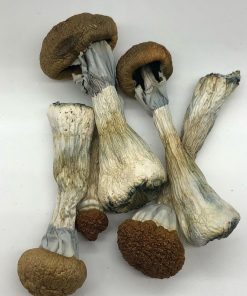
Price range: $180.00 through $910.00
This product has multiple variants. The options may be chosen on the product page 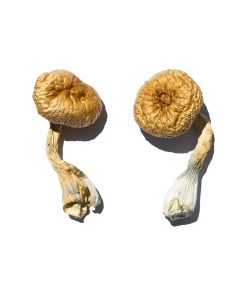
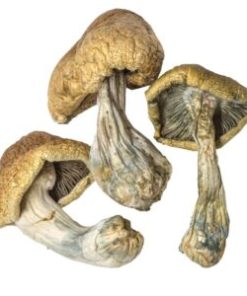
Price range: $185.00 through $860.00
This product has multiple variants. The options may be chosen on the product page 
Price range: $170.00 through $830.00
This product has multiple variants. The options may be chosen on the product page 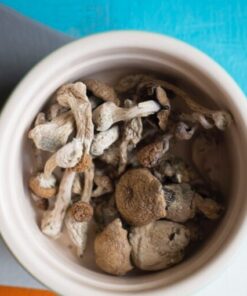
MAGIC MUSHROOMS
Price range: $190.00 through $890.00
This product has multiple variants. The options may be chosen on the product page 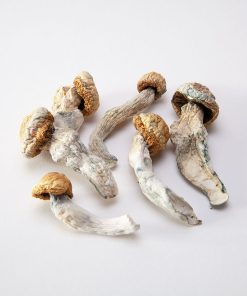
Price range: $180.00 through $910.00
This product has multiple variants. The options may be chosen on the product page 
MAGIC MUSHROOMS
Price range: $175.00 through $850.00
This product has multiple variants. The options may be chosen on the product page 
Price range: $170.00 through $830.00
This product has multiple variants. The options may be chosen on the product page 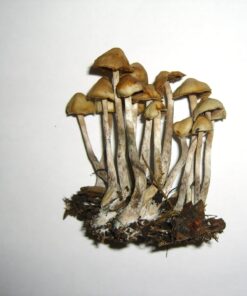
Price range: $190.00 through $890.00
This product has multiple variants. The options may be chosen on the product page
Tessa Carver (verified owner) –
Beautiful trip. I felt like I was wrapped in colors and warmth.
Lucian Ames (verified owner) –
The trip felt like an emotional detox.
Aria McCray (verified owner) –
The afterglow lasted for days.
Christopher Wilson (verified owner) –
Truly transformative experience, made even better by the way it was so professionally and discreetly delivered.
Fred Winters (verified owner) –
The emotional relief I felt was immediate and lasting. The product arrived exactly when it needed to.
Jase Grimes (verified owner) –
I felt so much love during my trip. Thank you for making this safe.
Wesley Brady (verified owner) –
I felt held the entire time — from opening the package to the final moments of deep reflection.
Aubrey Foster (verified owner) –
No stress, no confusion — just a beautifully smooth and thoughtful experience from start to finish.
Tessa Doyle (verified owner) –
The feeling of being in control, yet completely open, was powerful. And the professionalism here makes it all possible.
Judah Reece (verified owner) –
Truly safe, profound, and healing.
Joyce Carson (verified owner) –
I don’t usually leave reviews, but the professionalism here deserves credit. Plus, the trip was everything I needed and more.
Brylee Hensley (verified owner) –
My creativity exploded. I felt emotions I hadn’t touched in years. Thank you.
Darren Finley (verified owner) –
I was able to forgive myself.
Autumn Watson (verified owner) –
This isn’t just a product — it’s a safe invitation to come back home to yourself.
Grant George (verified owner) –
It’s rare to find a product that makes you feel something this deep and safe at the same time.
Willa Houston (verified owner) –
It’s rare to find a team that combines healing products with customer care like this. I felt safe and valued.
Rylee Corbin (verified owner) –
Really appreciated the packaging—airtight, fresh, and anonymous.
Trevor Jenkins (verified owner) –
What a beautiful, safe, and transformative experience. I’m incredibly grateful.
Nicole Harris (verified owner) –
I’ve never had such a deeply emotional experience from something so simple. The quality here is unmatched.
Owen Perry (verified owner) –
This was life-shifting, and I’m beyond grateful for how carefully the product was handled.
Amari Blackwell (verified owner) –
I felt like I got a hug from the universe.
Isla Morrison (verified owner) –
Such a smooth process — no awkward moments, just support and results.
Jillian Pope (verified owner) –
Perfect for a deep inward dive.
Bianca Barber (verified owner) –
The colors were beautiful, yes, but the emotional healing was even more powerful.
Brent Downey (verified owner) –
The trip felt like an emotional detox.
Casey Hoffman (verified owner) –
You don’t just feel the effects — you feel the care behind the product.
Camila Dean (verified owner) –
Subtle, powerful, and exactly what I needed to reconnect with my creativity.
Emerson Norris (verified owner) –
I felt like I was in safe hands from the moment I placed my order — the delivery was quick, low-key, and the experience was profoundly healing.
Allison Long (verified owner) –
This helped me through a dark patch in the most gentle way. And the respect I felt in every step of ordering really mattered.
Troy Johnston (verified owner) –
This felt like more than a psychedelic journey. It felt like support from people who understand what real healing means.
Darren Roy (verified owner) –
I appreciate how low-key and respectful the process was. It made the emotional journey so much easier to approach.
Evelyn Casey (verified owner) –
Preparation instructions were clear and useful.
Tara Garcia (verified owner) –
Very pleased with the overall quality and presentation.
Frank Rogers (verified owner) –
Everything arrived fresh-looking and carefully packed.
Brianna Brown (verified owner) –
The quality remained excellent throughout the package.
Preston Fisher (verified owner) –
I was happy with the overall purchase.
Gianna Wheeler (verified owner) –
I liked the consistent size and appearance.
Ashley Beckett (verified owner) –
Everything about the purchase process was smooth.
Claire Henderson (verified owner) –
I appreciated the careful packaging.
Zoey Medina (verified owner) –
I was satisfied with the value for the quality.
Eliza Hunter (verified owner) –
The product performed well in both soups and stir-fries.