
No products in the cart.
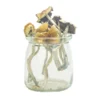
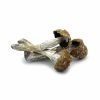

Brazilian Magic Mushrooms – Exotic Psilocybe Cubensis from South America
Price range: $190.00 through $890.00
Explore the vibrant energy of Brazilian Magic Mushrooms, a rare South American psilocybin strain. Known for their uplifting effects and spiritual depth, they’re organically grown and available through a licensed psychedelic distributor.
Brazilian Magic Mushrooms: The Complete Guide to Brazilian Cubensis
Brazilian magic mushrooms are a strain of Psilocybe cubensis originating from Brazil, known for aggressive mycelial growth, rapid colonization, contamination resistance, and moderate-to-high psilocybin potency.
Quick Facts: Brazilian Magic Mushrooms
| Property | Detail |
|---|---|
| Scientific Name | Psilocybe cubensis var. Brazilian |
| Origin | Tropical regions of Brazil |
| Potency | Moderate to High (0.60–0.90% psilocybin/psilocin) |
| Colonization Speed | 10–14 days under optimal conditions |
| Difficulty | Beginner Friendly |
| Distinctive Trait | Persistent partial veil; thick fibrous stem |
| Spore Color | Dark purple-brown |
| Primary Alkaloids | Psilocybin, psilocin, baeocystin |
What Are Brazilian Magic Mushrooms?
Brazilian magic mushrooms are a distinct variety of Psilocybe cubensis originating from wild specimens collected in the tropical regions of Brazil. Among the dozens of recognized cubensis strains, the Brazilian strain occupies a notable position — not simply for its geographic origin, but for a constellation of characteristics that make it consistently reliable across diverse cultivation environments.
Mycologists and researchers frequently cite Brazilian cubensis for three defining properties: aggressive mycelial colonization, exceptional contamination resistance, and moderate-to-high psilocybin content. These traits, when combined, produce a strain that performs predictably under variable conditions — a quality that distinguishes robust genetics from merely popular ones.
This guide examines Brazilian cubensis across every dimension relevant to mycologists, researchers, and informed enthusiasts: morphology, potency, cultivation performance, comparative strain analysis, spore characteristics, effects, and its role in contemporary psilocybin research.
Brazilian Magic Mushrooms: Key Characteristics at a Glance
Brazilian magic mushrooms express a combination of traits rarely found together at this consistency level within Psilocybe cubensis: speed, resilience, predictable potency, and morphological distinctiveness.
What Makes Brazilian Cubensis Unique?
Brazilian cubensis stands out because of its unusually fast colonization speed, high contamination resistance, genetic stability, and moderate-to-high potency. These characteristics make it one of the most reliable Psilocybe cubensis strains studied by mycologists and cultivated by researchers worldwide.
Key Takeaways
- Fast colonizer: Substrates colonized in approximately 10–14 days under optimal conditions
- Moderate-to-high potency: Reported alkaloid content of 0.60–0.90% by dry weight
- Strong contamination resistance: Rhizomorphic mycelial growth architecture provides competitive exclusion of common contaminants
- Beginner-friendly genetics: Consistent performance reduces operational complexity for first-generation cultivators
- Genetic stability: Morphological and alkaloid expression reproduces reliably across multiple flushes
Are Brazilian Magic Mushrooms Good for Beginners?
Yes. Brazilian magic mushrooms are widely considered beginner-friendly due to their aggressive mycelial growth, resilience against contamination, and predictable cultivation performance across a range of common substrate formulations.
Brazilian Cubensis: Strain Identity and Origin
Psilocybe Cubensis Brazilian — Taxonomic Context
Psilocybe cubensis (Earle) Singer belongs to the family Hymenogastraceae within the division Basidiomycota. The Brazilian strain — formally referenced as Psilocybe cubensis var. Brazilian in cultivar literature — represents one of the earliest wild-collected specimens to enter documented mycological circulation.
Unlike strains developed through selective pressure or laboratory isolation, Brazilian cubensis traces its lineage to naturally occurring fruiting bodies — sporocarps — harvested from Brazil’s tropical ecosystems. This wild origin contributes directly to the strain’s genetic robustness: it evolved under conditions that demanded competitive mycelial growth, resistance to microbial competition, and reliable sporulation.
Brazilian cubensis spores are dark purple-brown in coloration, consistent with the broader Psilocybe cubensis species, and produce dense, well-defined spore prints that mycologists consider among the cleaner examples within the genus for microscopy purposes.
Brazilian Magic Mushroom Morphology
What Brazilian Cubensis Mushrooms Look Like
Brazilian magic mushrooms present a morphological profile distinct enough that experienced cultivators identify the strain on sight. Key features include:
Pileus (Cap): Caramel to golden-brown coloration with a broadly convex shape during early development, transitioning toward planar geometry at maturity. Cap surfaces are smooth and may develop subtle striations near the margin under high-humidity conditions.
Stipe (Stem): Notably thick relative to cap diameter, with a fibrous, dense internal structure. The stipe’s robustness contributes to the strain’s physical resilience during the fruiting phase.
Partial Veil: Brazilian cubensis is characterized by a persistent partial veil — a membranous structure connecting the cap margin to the stipe — that remains attached longer than observed in many comparable cubensis varieties. This extended veil retention is functionally significant: it delays spore release, concentrates spore drop beneath the cap, and produces well-defined annular remnants on the stipe.
Spore Print: Dark purple-brown, consistent with Psilocybe cubensis species-level identification. Spore prints from Brazilian cubensis are typically dense and clearly defined, making them particularly useful for microscopy and taxonomic reference.
Hymenophore (Gills): Close-set, initially pale gray, darkening progressively to near-black as spore maturation advances.
Pinhead Initiation: Brazilian cubensis demonstrates vigorous and often prolific pinhead initiation — the earliest visible stage of sporocarp development — which cultivators associate with high flush productivity. Dense pinset formation across the substrate surface is a commonly reported characteristic of this strain.
These morphological characteristics are not merely descriptive — they reflect underlying genetic expression that consistently reproduces across multiple flushes, confirming the strain’s genetic stability.
Brazilian Cubensis Potency and Alkaloid Profile
Brazilian Magic Mushroom Potency: What the Data Suggests
Brazilian cubensis is classified as a moderate-to-high potency strain within the Psilocybe cubensis spectrum. Reported alkaloid concentrations in dried fruiting bodies generally range from approximately 0.60% to 0.90% total psilocybin and psilocin by dry weight, though precise figures vary with substrate composition, environmental conditions, flush number, and harvest timing.
The primary psychoactive compounds present in Brazilian magic mushrooms are:
- Psilocybin — the principal prodrug alkaloid, dephosphorylated to psilocin following ingestion
- Psilocin — the active compound responsible for 5-HT2A serotonin receptor agonism
- Baeocystin — a secondary tryptamine alkaloid whose independent contribution to subjective effects remains under active investigation
- Additional tryptamine derivatives — present at trace concentrations, contributing to what researchers sometimes describe as the alkaloid entourage effect
Psilocin’s mechanism of action at the 5-HT2A receptor is the basis for the perceptual, cognitive, and emotional effects associated with Brazilian cubensis. Current neurological research links 5-HT2A agonism to measurable increases in neuroplasticity, alterations in default mode network activity, and the capacity for what researchers term ego dissolution at higher doses.
It bears emphasizing: potency figures reported in cultivation communities reflect informal documentation, not controlled pharmacological assay. Variability between individual fruiting bodies — even within a single flush — can be substantial. Researchers requiring precise alkaloid quantification should reference peer-reviewed HPLC or mass spectrometry analyses rather than community-sourced estimates.
Brazilian Cubensis Effects
What Are Brazilian Cubensis Effects?
Brazilian cubensis effects commonly include visual enhancement, altered sensory perception, emotional amplification, introspection, time distortion, and increased pattern recognition. At higher doses, users may report synesthesia and ego dissolution. Individual experiences vary significantly depending on mindset, environment, and dosage.
The subjective effects of Brazilian magic mushrooms follow the established pharmacology of psilocin at the 5-HT2A serotonin receptor. Reported experiences span a broad spectrum depending on dose magnitude, individual neurochemistry, and contextual factors:
Perceptual Effects: Visual field enhancement, geometric pattern recognition, color intensification, and in some cases synesthesia — the cross-modal blending of sensory inputs, such as perceiving color in response to sound — are commonly reported at moderate-to-high doses.
Cognitive Effects: Altered thought patterns, accelerated associative thinking, increased introspective depth, and disruption of ordinary cognitive frameworks. Some researchers characterize these shifts as a temporary reduction in default mode network dominance, creating conditions for perspective change and psychological flexibility.
Emotional Effects: Emotional amplification is a consistent feature of psilocin pharmacology. This may manifest as heightened empathy, grief processing, euphoria, or, in challenging set-and-setting conditions, anxiety. The emotional texture of a Brazilian cubensis experience is substantially shaped by psychological preparation and environmental context.
Ego Dissolution: At higher dose ranges, some individuals report the dissolution of ordinary self-referential cognition — a state described in clinical literature as ego dissolution and associated with measurable decreases in default mode network connectivity on neuroimaging. This state is the subject of active research at institutions including Johns Hopkins Center for Psychedelic and Consciousness Research and Imperial College London.
Cognitive Liberty: The philosophical concept of cognitive liberty — the right to sovereignty over one’s own consciousness — has emerged as a framework within which researchers, legal scholars, and advocates contextualize the use of psychedelic compounds including psilocybin. Brazilian cubensis, as a psilocybin-containing organism, sits at the center of this ongoing discourse.
The effects of Brazilian magic mushrooms are not pharmacologically separable from set and setting. Responsible researchers and harm reduction frameworks consistently emphasize that psychological preparation, physical environment, and the presence of a trusted guide or sitter are primary determinants of experiential outcome.
Brazilian Cubensis Dosage Considerations
Harm Reduction and Dosage Awareness
The following information is provided for educational purposes only. It does not constitute medical advice or a recommendation to consume any controlled substance.
Understanding how dose magnitude relates to effect intensity is foundational to harm reduction education. Brazilian cubensis, with its reported potency of 0.60–0.90% total alkaloids by dry weight, interacts with dose thresholds as follows within general psilocybin literature:
Low Dose Range (approximately 0.5–1.0g dried material): Effects are typically subtle. Users commonly report mild perceptual shifts, mood brightening, and light introspection. Cognitive function remains largely intact. This range overlaps with microdosing upper thresholds and is associated with minimal perceptual disruption.
Moderate Dose Range (approximately 1.5–2.5g dried material): Perceptual and emotional effects become pronounced. Visual enhancement, emotional amplification, and meaningful introspective content are commonly reported. Cognitive disruption is present but navigable for most individuals.
High Dose Range (approximately 3.5g and above): Substantial perceptual alteration, potential ego dissolution, and profound shifts in subjective reality characterization are reported. This range is associated in clinical literature with both the highest therapeutic potential and the greatest psychological risk in unsupported contexts.
Critical Variables: Individual variability in 5-HT2A receptor sensitivity, body weight, metabolism, prior experience, concurrent medications (particularly serotonergic compounds), and psychological baseline all substantially influence dose-response relationships. No dose threshold is universally predictable across individuals.
Set and Setting: The psychological mindset brought to an experience (set) and the physical and social environment in which it occurs (setting) are not secondary considerations — they are primary determinants of outcome. This principle, foundational to responsible psychedelic harm reduction frameworks, applies at every dose level.
Brazilian Cubensis Statistics
| Metric | Value |
|---|---|
| Colonization Time | 10–14 days (optimal conditions) |
| Optimal Fruiting Temperature | 73–82°F (23–28°C) |
| Colonization Temperature | 75–81°F (24–27°C) |
| Reported Potency (dry weight) | 0.60–0.90% total psilocybin and psilocin |
| Spore Color | Dark purple-brown |
| Spore Dimensions | ~11.5–17 × 8–11 µm |
| Cap Coloration | Caramel to golden-brown |
| Veil Persistence | Extended relative to most cubensis varieties |
| Primary Alkaloids | Psilocybin, psilocin, baeocystin |
| Substrate Compatibility | PF Tek, coco coir, grain, agar |
| Beginner Suitability | High |
Brazilian Cubensis Colonization Speed and Cultivation Performance
Brazilian Cubensis Colonization Speed: A Defining Advantage
Colonization speed is among the most operationally significant metrics in Psilocybe cubensis cultivation. Faster colonization reduces the window of vulnerability to contamination, compresses the production timeline, and signals metabolic vigor in the mycelium.
Under optimized laboratory conditions, Brazilian cubensis consistently colonizes common substrates — including coco coir, brown rice flour (PF Tek), and grain-based media — in approximately 10 to 14 days. This rate places Brazilian cubensis among the faster-colonizing cubensis varieties, a distinction that has practical consequences for both experimental and large-scale cultivation environments.
The mycelium itself is visually distinctive: dense, ropy, and highly rhizomorphic — growth patterns associated with vigorous fruiting capacity and strong competitive exclusion of contaminants. This characteristic growth architecture is one reason Brazilian cubensis is accurately described as contamination-resistant, rather than merely contamination-tolerant. Each flush — the discrete wave of fruiting body production following colonization — tends to be prolific, with robust pinhead initiation across the substrate surface.
Substrate Compatibility and Cultivation Notes
Brazilian cubensis demonstrates strong adaptability across a range of substrate formulations:
- PF Tek (brown rice flour and vermiculite): Highly compatible; recommended as an entry point for cultivation beginners
- Coco coir: Produces reliable colonization and consistent flush yields
- Grain substrates (rye, oats, wheat berries): Supports aggressive colonization; preferred for bulk production
- Agar-based media: Suitable for isolation, genetic selection, and liquid culture preparation
Inoculation via spore syringe is the standard introduction method for Brazilian cubensis spores into substrate. Liquid culture inoculation, prepared from isolated mycelium, accelerates colonization further and is preferred in environments where contamination risk is elevated.
Environmental parameters for optimal colonization: temperatures between 75–81°F (24–27°C), high relative humidity (95–100% during colonization phase), and limited light exposure until pinning initiation.
Brazilian vs Golden Teacher: Comparative Strain Analysis
Brazilian Cubensis vs Golden Teacher — Key Distinctions
The comparison between Brazilian cubensis and Golden Teacher (Psilocybe cubensis var. Golden Teacher) is among the most frequently encountered in strain literature, and for good reason: both are considered foundational cubensis varieties with broad appeal across cultivation experience levels.
| Characteristic | Brazilian Cubensis | Golden Teacher |
|---|---|---|
| Colonization Speed | Faster (10–14 days typical) | Moderate (14–21 days typical) |
| Contamination Resistance | High | Moderate-to-High |
| Potency (reported) | Moderate-to-High (0.60–0.90%) | Moderate (0.50–0.75%) |
| Fruiting Body Size | Medium-to-Large | Medium-to-Large |
| Veil Persistence | Extended | Standard |
| Documentation Depth | Moderate | Extensive |
| Beginner Suitability | High | High |
Golden Teacher’s primary advantage lies not in cultivation performance metrics but in documentation depth: years of community cultivation records, widely available cultivation guides, and an established reputation for producing psychedelic experiences characterized as introspective and pedagogically rich — hence the cultivar name.
Brazilian cubensis competes directly on performance: faster colonization, higher contamination resistance, and reported potency figures that meet or exceed Golden Teacher’s across multiple documented comparisons. The choice between strains ultimately reflects the grower’s priorities — documentation and community support favor Golden Teacher; raw cultivation efficiency and potency consistency favor Brazilian cubensis.
Brazilian Cubensis vs B+ — Secondary Comparison
| Characteristic | Brazilian Cubensis | B+ Cubensis |
|---|---|---|
| Colonization Speed | Fast (10–14 days) | Moderate (12–17 days) |
| Contamination Resistance | High | Moderate-to-High |
| Potency (reported) | Moderate-to-High (0.60–0.90%) | Moderate (0.50–0.80%) |
| Fruiting Body Size | Medium-to-Large | Large-to-Very Large |
| Veil Persistence | Extended | Standard-to-Extended |
| Beginner Suitability | High | High |
| Notable Characteristic | Fast colonizer, contamination resistant | Exceptionally large fruiting bodies |
B+ cubensis is frequently noted for producing among the largest individual fruiting bodies of any common cubensis variety. Brazilian cubensis, by contrast, prioritizes colonization efficiency and contamination resistance over maximum sporocarp size. For researchers emphasizing yield-per-flush metrics over individual fruiting body mass, Brazilian cubensis typically presents the stronger profile.
Brazilian Strain Microdosing: Research Context
Brazilian Cubensis and Microdosing Protocols
Interest in microdosing Psilocybe cubensis — the practice of consuming sub-perceptual doses, typically 0.05g to 0.30g dried material, on a structured schedule — has accelerated substantially alongside broader psilocybin research initiatives.
Brazilian cubensis is frequently selected for microdosing application for reasons consistent with its general profile: reliable potency, predictable alkaloid expression, and genetic stability across flushes. Predictability is a functional requirement for microdosing protocols; a strain with inconsistent potency introduces uncontrolled variability into what is intended to be a precisely calibrated practice.
Current clinical research on psilocybin microdosing — conducted at institutions including Imperial College London and the Johns Hopkins Center for Psychedelic and Consciousness Research — does not use wild or cultivated cubensis strains directly. Clinical trials employ pharmaceutical-grade synthetic psilocybin. However, reported outcomes from these trials — including observed effects on mood regulation, cognitive flexibility, and neuroplasticity — provide the scientific framework within which community microdosing practices are increasingly evaluated.
Researchers examining microdosing with Brazilian magic mushrooms should apply established harm reduction principles, account for individual variation in 5-HT2A receptor sensitivity, and recognize that set and setting remains a primary determinant of experiential outcome at all dose levels.
Brazilian Cubensis Spores: Microscopy and Research Applications
Buy Brazilian Cubensis Spores Online — What Researchers Should Know
Brazilian cubensis spores are commercially available from specialized mycology suppliers as sterile spore syringes or spore prints, marketed exclusively for microscopy, taxonomic research, and educational purposes in jurisdictions where such sales are permitted.
From a microscopy perspective, Brazilian cubensis spores offer several research-relevant characteristics:
- Spore dimensions: Approximately 11.5–17 × 8–11 µm, ellipsoid to subellipsoid in morphology — consistent with species-level Psilocybe cubensis identification criteria
- Wall thickness: Moderately thick-walled, contributing to spore viability across varied storage conditions
- Pigmentation: Dark purple-brown under transmitted light microscopy; coloration intensity is diagnostically useful for genus-level identification
- Symmetry: Bilaterally symmetrical with a prominent germ pore visible under 400× magnification or higher
Researchers selecting Brazilian cubensis spores for comparative microscopy studies — particularly those examining intraspecific morphological variation within Psilocybe cubensis — will find the strain’s spore characteristics sufficiently consistent to serve as a reliable taxonomic reference point.
Are Brazilian Cubensis Spores Legal?
Spore legality is jurisdiction-specific and requires independent verification before any acquisition, possession, or transport.
In the United States, Psilocybe cubensis spores are legal to purchase and possess for microscopy purposes in most states. California, Georgia, and Idaho are explicit exceptions, where spore possession is prohibited under state law regardless of intended use.
Outside the United States, legal status varies significantly by country and, in some jurisdictions, by regional or municipal ordinance. Several nations prohibit spore possession under broad drug analogue legislation even where spores themselves are not explicitly named.
Legal Notice: This information is provided for general educational purposes only and does not constitute legal advice. Individuals are solely responsible for verifying applicable local, state, and federal regulations before acquiring, possessing, or transporting Psilocybe cubensis spores or any related materials.
Brazilian Cubensis in the Context of Psilocybin Research
Psilocybe Cubensis Brazilian and the Emerging Science of Psychedelics
The broader scientific legitimacy of psilocybin research — now supported by Breakthrough Therapy designation from the U.S. Food and Drug Administration for treatment-resistant depression — has elevated academic and public interest in Psilocybe cubensis strains, including Brazilian cubensis, as subjects of ethnomycological, taxonomic, and alkaloid research.
Ethnobotanical records suggest that Psilocybe species have occupied roles in indigenous ceremonial and medicinal practices across South and Central America for centuries. Well-documented examples include Psilocybe mexicana, used historically in Mazatec healing ceremonies in Oaxaca, Mexico, and Psilocybe semilanceata, among the most widely distributed psilocybin-containing species globally. Documentation specific to Brazilian cubensis as a culturally distinct ceremonial variety remains comparatively limited within the ethnomycological literature.
Terence McKenna, among the most influential figures in the popularization of Psilocybe cubensis in the late twentieth century, contributed significantly to the cultural visibility of tropical cubensis varieties — including those sourced from South American habitats — through ethnomycological writing and public discourse that bridged academic mycology and psychedelic philosophy.
Contemporary psilocybin research has moved considerably beyond cultural documentation. Active investigation now encompasses:
- Mechanism of action studies: Characterizing 5-HT2A receptor binding kinetics and downstream neurological cascades
- Neuroimaging research: Mapping psilocybin’s effects on default mode network connectivity using fMRI methodology
- Clinical trials: Evaluating psilocybin-assisted therapy for major depressive disorder, PTSD, addiction, and end-of-life anxiety at institutions including Johns Hopkins, Imperial College London, and NYU Langone
- Alkaloid profiling: Applying HPLC and mass spectrometry to characterize the full tryptamine alkaloid content of Psilocybe cubensis varieties
Expert Insight
“The consistency of Brazilian cubensis across cultivation variables — colonization speed, contamination resistance, and alkaloid expression — makes it a scientifically coherent subject for intraspecific comparative research within Psilocybe cubensis. Strains with demonstrably stable genetics and reproducible phenotypic characteristics are most useful as reference points when examining how substrate, environment, and cultivation method influence alkaloid production.”
Brazilian cubensis, given its documented alkaloid profile and genetic stability, represents precisely this type of reference strain — one whose behavioral predictability across multiple cultivation contexts makes it useful not only to cultivators, but to researchers examining the relationship between fungal genetics and psilocybin biosynthesis.
Frequently Asked Questions: Brazilian Magic Mushrooms
What are Brazilian magic mushrooms?
Brazilian magic mushrooms are a variety of Psilocybe cubensis characterized by rapid mycelial colonization, high contamination resistance, and moderate-to-high psilocybin content. The strain originates from wild specimens collected in Brazil’s tropical ecosystems and is recognized morphologically by caramel-colored caps, thick stems, dark purple-brown spores, and a persistent partial veil.
How potent is the Brazilian cubensis strain?
Brazilian cubensis is classified as a moderate-to-high potency Psilocybe cubensis variety. Reported alkaloid concentrations in dried fruiting bodies range from approximately 0.60% to 0.90% total psilocybin and psilocin by dry weight, with variability attributable to substrate composition, environmental conditions, flush number, and harvest timing relative to veil break.
What do Brazilian cubensis mushrooms look like?
Brazilian cubensis fruiting bodies are distinguished by caramel to golden-brown caps, thick fibrous stems, close-set gills that darken from pale gray to near-black at spore maturity, a persistent partial veil that remains intact longer than most comparable cubensis varieties, and dark purple-brown spore prints.
How does Brazilian cubensis compare to Golden Teacher?
Brazilian cubensis typically colonizes faster (10–14 days versus Golden Teacher’s 14–21 days), demonstrates higher contamination resistance, and reports slightly higher potency figures. Golden Teacher holds an advantage in documentation depth and community cultivation records. Both strains are considered suitable for beginners.
What is the colonization speed of Brazilian cubensis?
Under optimized laboratory conditions, Brazilian cubensis colonizes common substrates — including coco coir, PF Tek, and grain media — in approximately 10 to 14 days. Environmental variables including temperature, humidity, and inoculation method influence actual colonization timelines.
Is Brazilian cubensis suitable for beginners?
Brazilian cubensis is broadly considered beginner-compatible. Its genetic robustness, contamination resistance, and consistent fruiting performance reduce the operational complexity associated with first-generation cultivation attempts. PF Tek and coco coir substrates are recommended starting points.
What compounds are found in Brazilian magic mushrooms?
Brazilian cubensis contains psilocybin, psilocin, baeocystin, and additional tryptamine alkaloids. Psilocybin functions as a prodrug, converting to psilocin following ingestion. Psilocin is the primary pharmacologically active compound, acting as a 5-HT2A serotonin receptor agonist with documented effects on neuroplasticity and default mode network activity.
What are Brazilian cubensis effects?
Brazilian cubensis effects commonly include visual enhancement, altered sensory perception, emotional amplification, introspection, time distortion, and increased pattern recognition. At higher doses, synesthesia and ego dissolution may occur. Effects are substantially shaped by set and setting, individual neurochemistry, and dose magnitude.
What is Brazilian cubensis dosage?
Dosage ranges in general psilocybin literature describe low (approximately 0.5–1.0g dried), moderate (1.5–2.5g), and high (3.5g and above) thresholds. Individual variability in 5-HT2A receptor sensitivity, body weight, metabolism, psychological baseline, and concurrent medications makes universal dosage recommendations unreliable. Set and setting are primary determinants of outcome at every dose level.
Why is Brazilian cubensis popular?
Brazilian cubensis is popular because it combines fast colonization, high contamination resistance, genetic stability, and moderate-to-high potency in a single strain — a profile that serves both beginner cultivators seeking reliability and experienced mycologists seeking a consistent intraspecific research reference point.
Are Brazilian cubensis spores legal?
Spore legality varies by jurisdiction. In most U.S. states, Psilocybe cubensis spores are legal for microscopy and research purposes; California, Georgia, and Idaho are notable exceptions. International legal status varies significantly. Individuals must verify applicable regulations before acquiring, possessing, or transporting spores.
How does Brazilian cubensis compare to B+?
Brazilian cubensis colonizes faster and demonstrates higher contamination resistance than B+. B+ is noted for producing exceptionally large individual fruiting bodies. Both strains are beginner-friendly; Brazilian cubensis is preferred where colonization efficiency and potency consistency are prioritized.
Conclusion: Why Brazilian Cubensis Remains a Benchmark Strain
Brazilian magic mushrooms are not simply a popular cultivar — they represent a benchmark within the Psilocybe cubensis species complex against which other strains are legitimately measured. The combination of rapid colonization, contamination resistance, genetic stability, distinctive morphology, and moderate-to-high potency creates a profile that simultaneously satisfies the requirements of mycologists, researchers, and informed cultivators.
As psilocybin science advances — driven by FDA Breakthrough Therapy designation, expanding clinical trials at Johns Hopkins, Imperial College London, and NYU Langone, and growing decriminalization across multiple jurisdictions — strains with documented, reproducible characteristics will increasingly serve as valuable research reference points. Brazilian cubensis, with its consistent alkaloid expression and well-characterized growth behavior, is positioned precisely for that role.
Understanding Brazilian magic mushrooms in full — their biology, chemistry, cultivation demands, effects, and place within the broader landscape of Psilocybe cubensis genetics — is not merely an exercise in strain appreciation. It is an entry point into the larger scientific and cultural conversation surrounding psilocybin, mycology, cognitive liberty, and the expanding frontier of consciousness research.
31 reviews for Brazilian Magic Mushrooms – Exotic Psilocybe Cubensis from South America
Add a review
Related products
MAGIC MUSHROOMS
Psilocybe Azurescens – Ultra-Potent Wild Psilocybin Mushroom
Price range: $180.00 through $870.00
This product has multiple variants. The options may be chosen on the product page 
MAGIC MUSHROOMS
Price range: $178.00 through $840.00
This product has multiple variants. The options may be chosen on the product page 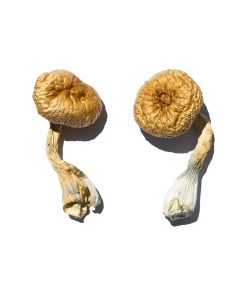
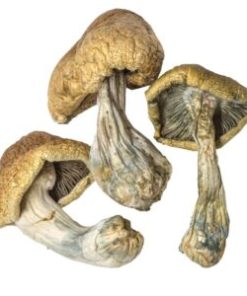
Price range: $185.00 through $860.00
This product has multiple variants. The options may be chosen on the product page 
Price range: $170.00 through $830.00
This product has multiple variants. The options may be chosen on the product page 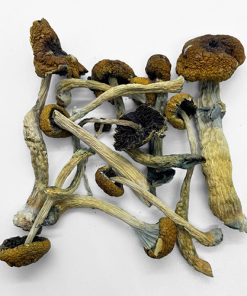
Price range: $185.00 through $920.00
This product has multiple variants. The options may be chosen on the product page 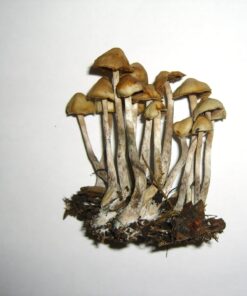
Price range: $190.00 through $890.00
This product has multiple variants. The options may be chosen on the product page 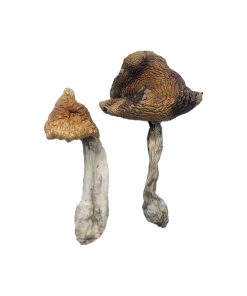
Price range: $180.00 through $885.00
This product has multiple variants. The options may be chosen on the product page 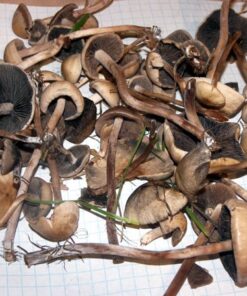
Price range: $190.00 through $890.00
This product has multiple variants. The options may be chosen on the product page
Brock Granger (verified owner) –
Very trustworthy team.
Zariyah Thatcher (verified owner) –
From order to experience, everything was seamless and comforting.
Rodney Little (verified owner) –
What a beautiful, safe, and transformative experience. I’m incredibly grateful.
Lillian Cross (verified owner) –
It helped me confront something difficult with softness and self-love.
Julia Parker (verified owner) –
This product brought so much peace and insight. I sat with myself in total stillness for hours and felt completely safe.
Mina Truitt (verified owner) –
Deep inner clarity, and a new perspective.
Tripp Dowell (verified owner) –
The trip felt like an emotional detox.
Tiana Levine (verified owner) –
Ordering felt clean and easy. The emotional release I had during the session was gentle, powerful, and safe.
Peyton Ford (verified owner) –
I felt like I was being taken care of. That energy was present from order to experience.
Noelle Savage (verified owner) –
No stress, no confusion — just a beautifully smooth and thoughtful experience from start to finish.
Gemma Ramsey (verified owner) –
No distractions, no confusion — just a clean, easy journey into myself.
Mikayla Waller (verified owner) –
No brain fog, no crash—just peace.
Cora Saunders (verified owner) –
Every color seemed to carry a message. I cried a little — not out of sadness, but because something in me finally felt seen.
Kayla Allen (verified owner) –
This wasn’t just a trip — it was a reconnection to parts of myself I’d forgotten.
Silas Hodge (verified owner) –
Great potency without being overwhelming.
Cason Lockett (verified owner) –
The magic is real.
Wesley Brady (verified owner) –
This helped me feel connected to the world again in a way I didn’t know I needed. It was like waking up from a long emotional fog.
Dahlia McCann (verified owner) –
Grateful for a vendor that actually cares about the journey.
Tessa Doyle (verified owner) –
I appreciate how low-key and respectful the process was. It made the emotional journey so much easier to approach.
Kevin Hill (verified owner) –
I laughed, cried, and sat in total peace — all within the span of a few hours.
Ridge Barnett (verified owner) –
Each trip feels safe and magical. It’s like coming home to myself.
Tristan Chapman (verified owner) –
Ordering was simple and smooth, and the support I felt during and after my session was something I didn’t expect from a website.
Blake Russell (verified owner) –
Hands down the best source I’ve come across. Quality, care, and customer support were all on point.
Royce Cardenas (verified owner) –
I felt supported throughout my whole experience, just from how the product was presented.
Jeremias Gold (verified owner) –
My first real spiritual awakening. Thank you.
Valerie Barrett (verified owner) –
You can tell this is run by professionals. Every part of the order felt thoughtful, respectful, and reliable.
Dakota Watts (verified owner) –
The emotional clarity I got from this experience has stayed with me.
Peyton Ford (verified owner) –
There’s something powerful about feeling supported even before the journey begins. This site really delivers that.
Eric Gray (verified owner) –
No stress, no confusion — just a beautifully smooth and thoughtful experience from start to finish.
Riley Boone (verified owner) –
This was handled like a wellness experience, not just a transaction. I appreciate that more than I can say.
Bella Mason (verified owner) –
Beautifully handled from start to finish. Felt guided, not just sold to.