
No products in the cart.

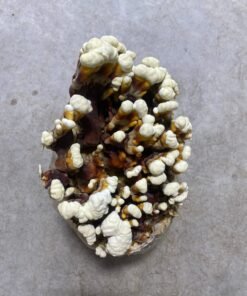
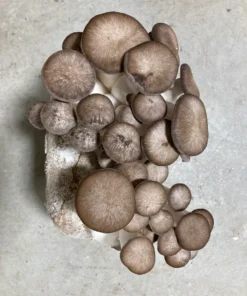
Blue Oyster Mushroom Grow Kit
$25.00
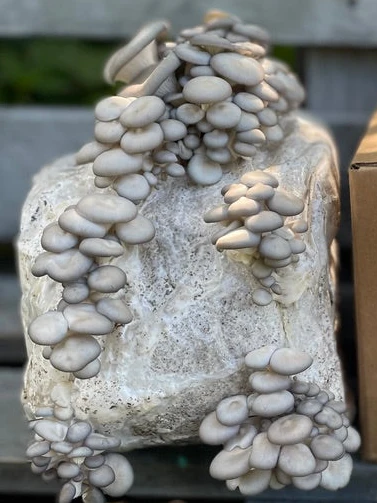
Cultivate your own mild and tender Blue Oyster mushrooms with our easy-to-use kit. These fast-growing mushrooms are perfect for beginner growers and add a delicious, gourmet touch to your meals. Whether sautéed, grilled, or used in soups, Blue Oysters are a versatile culinary favorite.
Dimensions
Shipping box 10 x 6 x 6
Blue Oyster Mushroom Grow Kit: Complete Growing Guide
Blue oyster mushroom grow kits are pre-colonized fruiting blocks that let beginners grow Pleurotus oyster mushrooms indoors without sterilizing substrate or making spawn. Most successful kits require cool temperatures, high humidity, indirect light, and abundant fresh air. Under suitable conditions, a fully colonized kit can produce its first harvest roughly 7–14 days after activation.
A blue oyster mushroom grow kit is a pre-colonized substrate block designed to fruit edible blue oyster mushrooms at home. Provide high humidity, fresh air, indirect light, and cool temperatures around 50°F–62°F during pinning. Under suitable conditions, mushrooms can be ready to harvest about 7–14 days after activation.
Growing Parameters at a Glance
| Parameter | Target Range | Notes |
|---|---|---|
| Pinning temperature | 50°F–62°F (10°C–17°C) | Cooler temps intensify blue pigmentation |
| Fruiting temperature | 55°F–68°F (13°C–20°C) | After pins form |
| Relative humidity (pinning) | ~90%–95% RH | Critical for pin survival |
| Relative humidity (fruiting) | ~80%–90% RH | Balanced with fresh air |
| Fresh air exchange | 2–4 times daily minimum | Prevents elongated stems |
| Light | 12 hrs/day, indirect or 6500K LED | Directional cue, not energy source |
| Days to first pins | 3–10 days | Varies by strain and environment |
| Days to harvest | 7–14 days after activation | Monitor cap margins |
| Expected flushes | 2–3 worthwhile flushes | First flush is typically largest |
What Is a Blue Oyster Mushroom Grow Kit?
A blue oyster mushroom grow kit is a pre-colonized substrate block containing live blue oyster mycelium, sold ready to fruit with minimal setup. The block eliminates the need to prepare substrate, sterilize grain, or inoculate cultures, making it a practical starting point for home mushroom cultivation.
Most kits contain hardwood sawdust, hardwood fuel pellets, or a blend incorporating soy hulls, sometimes formulated as Master’s Mix. The substrate is fully colonized by blue oyster mycelium before shipping. Once the grower provides adequate humidity, fresh air, indirect light, and appropriate temperatures, the block produces clusters of edible blue oyster mushrooms.
Blue oyster mushrooms are commonly sold as Pleurotus ostreatus or the variety Pleurotus ostreatus var. columbinus. The characteristic slate-blue cap color distinguishes them visually from the pearl oyster (Pleurotus ostreatus) and other commercially grown Pleurotus species, though the two are closely related and culturally similar.
A blue oyster mushroom grow kit provides a pre-colonized block for growing blue oyster mushrooms indoors without preparing substrate or inoculating cultures. For reliable fruiting, maintain approximately 90%–95% relative humidity during pinning, provide abundant fresh air, indirect light, and cool temperatures around 50°F–62°F for stronger blue coloration. As mushrooms mature, temperatures around 55°F–68°F are generally suitable. Long stems and small caps usually indicate inadequate fresh air. Harvest clusters while cap edges remain slightly downturned to reduce heavy spore release. Healthy blocks commonly produce two or three useful flushes, although actual yield varies by strain, substrate, block condition, and environment.
Blue Oyster Mushroom Overview
Blue oyster mushrooms belong to the genus Pleurotus, a group of wood-decomposing fungi cultivated worldwide for food. Pleurotus ostreatus is among the most widely cultivated edible mushrooms globally, valued for its mild flavor, nutritional profile, and adaptability to various growing substrates.
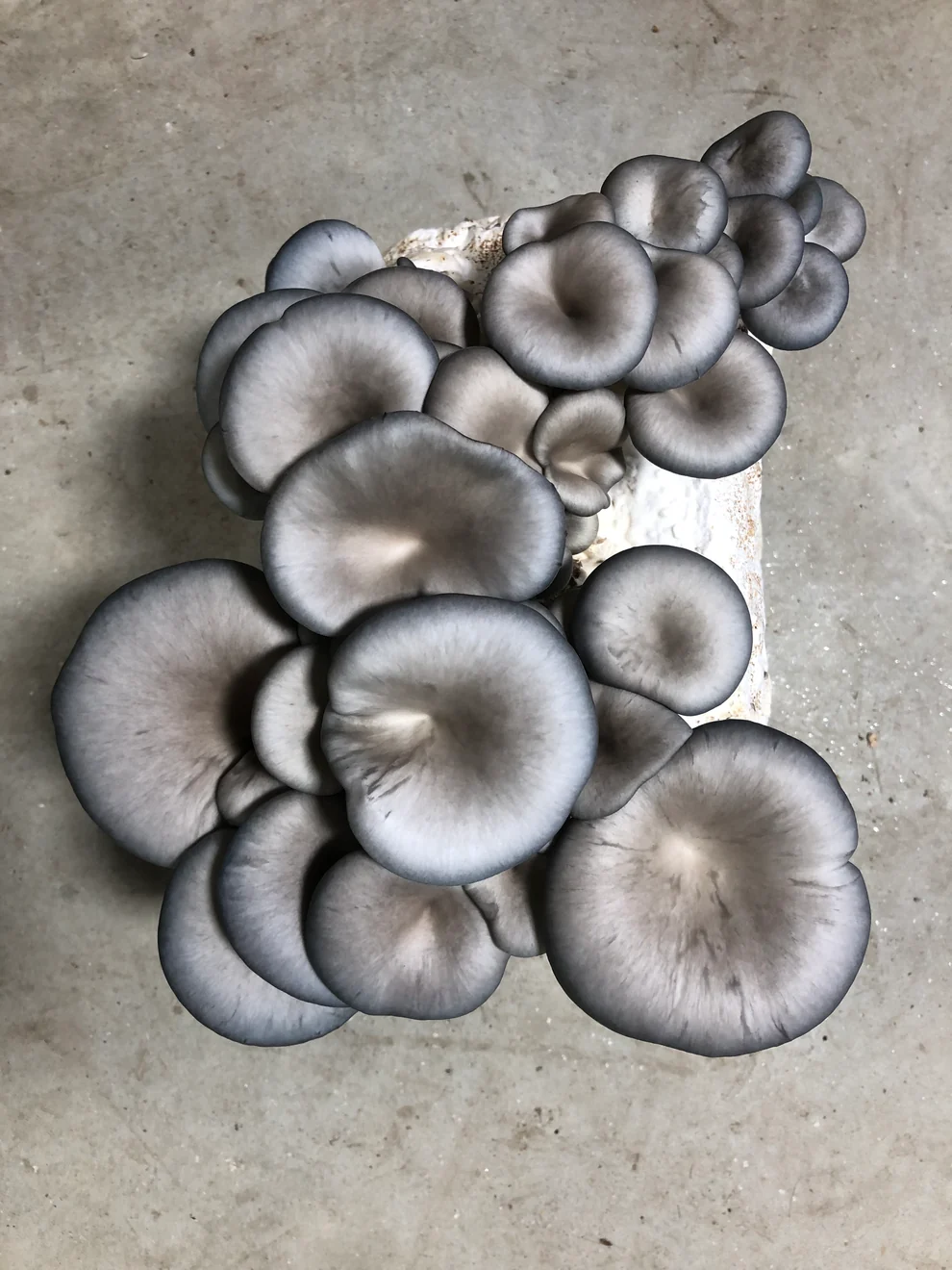
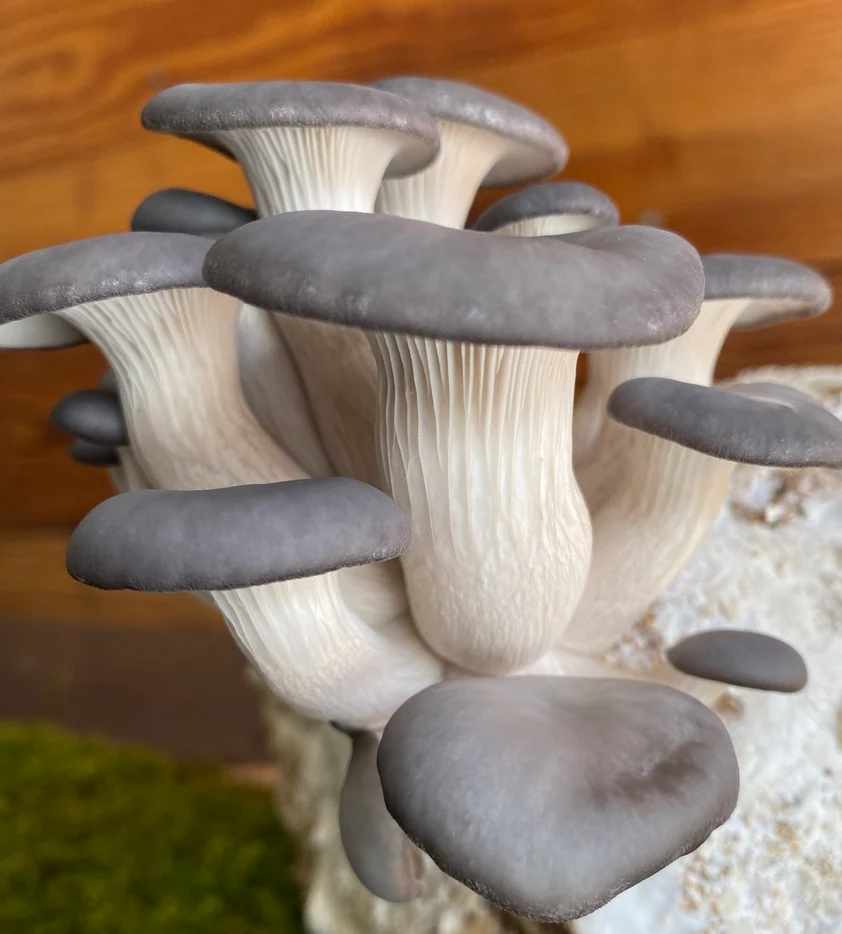
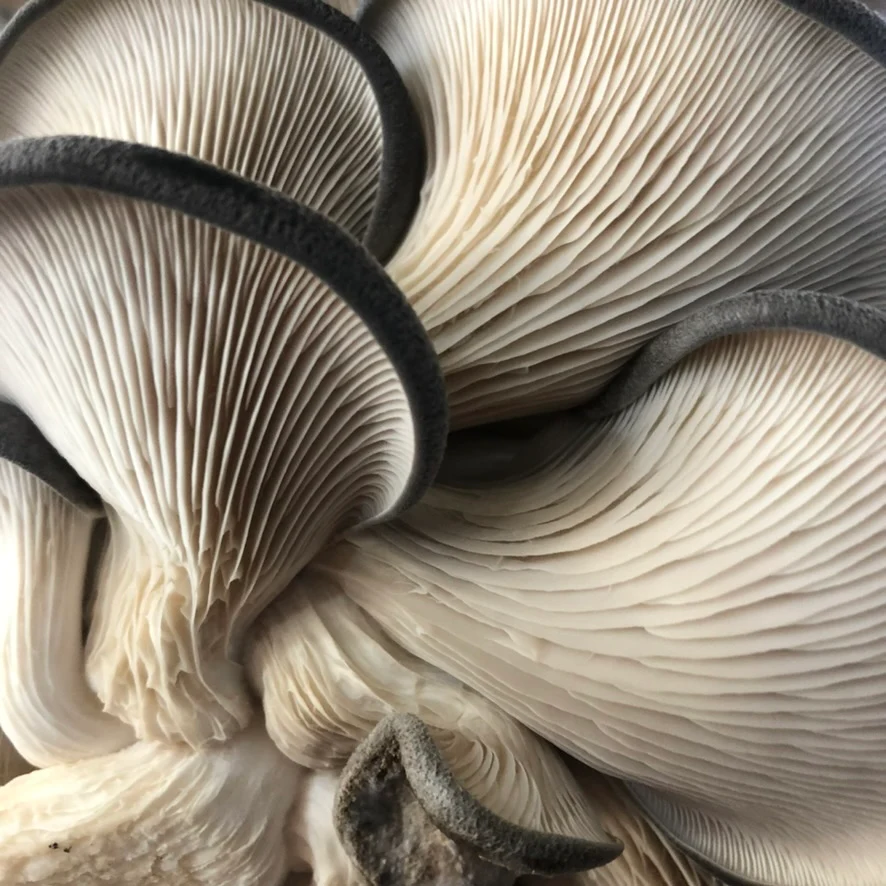
The blue oyster variety, Pleurotus ostreatus var. columbinus, produces fan-shaped to shelf-like fruiting bodies with caps that range from deep slate-blue in young, cool-fruited specimens to gray, tan, or beige as they mature or develop under warmer conditions. Gills are white, closely spaced, and run partway down the stem. Spore prints are white to lilac-gray.
Compared to other popular Pleurotus species, blue oysters tolerate cooler fruiting temperatures than pink oysters (Pleurotus djamor) and generally produce heavier, meatier clusters than golden oysters (Pleurotus citrinopileatus). Pearl oysters occupy overlapping temperature ranges and are closely related, making blue oyster versus pearl oyster grow kit comparisons largely a matter of target temperature range and visual preference.
Blue Oyster vs. Pearl vs. Pink vs. Golden Oyster: Comparison
| Feature | Blue Oyster | Pearl Oyster | Pink Oyster | Golden Oyster |
|---|---|---|---|---|
| Species | P. ostreatus var. columbinus | P. ostreatus | P. djamor | P. citrinopileatus |
| Pinning temperature | 50°F–62°F | 55°F–65°F | 70°F–85°F | 65°F–80°F |
| Cap color | Slate blue to gray | Off-white to tan | Pink to salmon | Bright yellow |
| Cluster size | Large, meaty | Large | Medium to large | Small to medium |
| Best season indoors | Fall through spring | Year-round | Summer | Spring through fall |
| Beginner suitability | High | High | Moderate | Moderate |
| Shelf life (fresh) | 5–7 days | 5–7 days | 3–5 days | 3–5 days |
| Flavor profile | Mild, savory | Mild, savory | Stronger, slightly sweet | Delicate, fruity |
This comparison captures the most common species differences relevant to someone choosing a grow kit. Cool-climate households with temperatures consistently below 68°F are well matched to blue or pearl oyster kits. Warmer indoor environments above 72°F–75°F are better suited to pink oyster kits.
How a Pre-Colonized Blue Oyster Grow Block Works
A pre-colonized fruiting block contains sterilized or pasteurized substrate that mycelium has fully consumed before the product is packaged and shipped. The mycelium has already broken down the lignocellulosic material in the substrate, storing energy that will support fruit body development once environmental triggers are applied.
Mushroom fruiting in Pleurotus species is initiated by a combination of signals that mycelium interprets as seasonal change: a drop in temperature, increased fresh air, higher humidity, and the presence of light. Together, these cues prompt the formation of primordia, the earliest visible stage of mushroom development.
The grow kit format concentrates these biological processes into a product that requires no microbiology knowledge or specialized equipment. The main variables a home grower controls are temperature, humidity, fresh air exchange, and light. Managing these correctly determines whether the block produces robust flushes or underperforms.
Setting Up a Blue Oyster Mushroom Indoor Kit
Unboxing and Initial Inspection
Upon receiving a blue oyster indoor kit, inspect the block for full colonization. Healthy mycelium appears white to off-white and dense throughout the substrate. Yellow or orange metabolite patches may appear on well-colonized blocks under stress and are generally not a concern. Green or pink discoloration can indicate mold contamination; widespread green mold most commonly suggests sporulating Trichoderma. Black discoloration may indicate bacterial activity. Any unusual coloration combined with a foul odor is reason to contact the supplier before proceeding.
If the block is fully white and the substrate smells clean and earthy, it is ready to activate. Some kits include instructions to refrigerate the block briefly before fruiting to simulate a cold shock that stimulates pinning.
Opening the Kit
Most blue oyster grow kits use a bag or box with a filter patch. To initiate fruiting, cut or fold back the top of the bag to expose the substrate surface, or follow the specific instructions included with the kit. Exposing the colonized surface to ambient air and humidity is the primary activation step.
Some growers submerge the block in cool water for one to four hours before placing it in a fruiting environment. This rehydrates the substrate and can improve pinning, particularly on blocks that have dried slightly during shipping or storage.
Blue Oyster Mushroom Temperature and Color Change
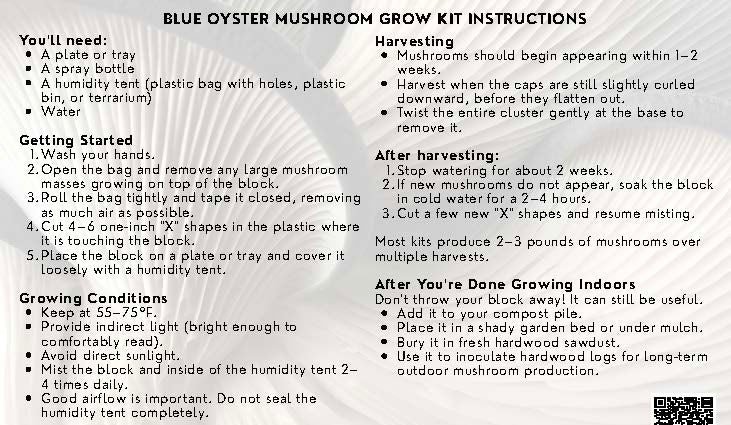
For many blue oyster strains, aim for approximately 50°F–62°F (10°C–17°C) during pinning and 55°F–68°F (13°C–20°C) during fruit body development. Cooler early conditions generally produce deeper slate-blue caps. Commercial strains vary, so the kit producer’s tested fruiting range should take priority.
Temperature management is one of the most important variables in blue oyster cultivation, affecting both pinning success and cap color.
Pinning Temperature
The commonly cited pinning temperature range for blue oyster strains is approximately 50°F–62°F (10°C–17°C). Cooler temperatures within this range tend to produce more intense slate-blue cap coloration, an observed cultivation phenomenon consistently reported across commercial growing operations, though the precise pigment biochemistry in this specific variety warrants further strain-level research before any single mechanism is stated as settled.
Growers without climate-controlled fruiting chambers can use naturally cool spaces such as basements, garages, or shaded outdoor areas during cooler months. Some commercial blue oyster strains are selected to pin across a slightly broader range, but consistently warmer fruiting conditions will reduce blue coloration even in varieties marketed as blue oysters.
Fruiting Temperature
Once pins have formed, temperatures around 55°F–68°F (13°C–20°C) support development of full fruit bodies. Mushrooms can tolerate moderate temperature variation during this phase, though extremes at either end slow growth or cause developmental abnormalities.
Why Blue Oyster Mushrooms Turn Gray or Brown
Blue oyster caps commonly fade from slate blue toward gray, tan, or beige as they mature, particularly under warmer fruiting conditions. Normal color fading does not by itself indicate contamination. Sliminess, abnormal odor, lesions, or expanding green mold are more reliable warning signs.
Caps are typically deepest blue when primordia form and develop under cooler conditions. Warmer temperatures during any phase of development shift coloration toward gray, beige, or tan. This color change is a normal physiological response, not a sign of spoilage. Consumers and buyers should be aware that blue oyster mushrooms grown in warmer environments may appear nearly identical to pearl oysters in color.
Blue Oyster Mushroom Humidity Requirements
Blue oyster mushrooms require high relative humidity throughout their development. A practical starting point is approximately 90%–95% relative humidity during pinning and roughly 80%–90% during fruit body expansion, depending on strain and airflow. Below about 80% RH, developing pins are prone to drying out and aborting before they reach harvestable size.
Aim for about 90%–95% relative humidity during pinning and roughly 80%–90% during fruit body expansion. Humidity must be balanced with fresh air exchange: very humid but stagnant conditions can produce elongated stems and poor cap development.
Maintaining Humidity at Home
Home growers use several approaches to maintain fruiting humidity without a dedicated grow tent or fruiting chamber.
Shotgun fruiting chamber: A clear plastic tote with holes drilled throughout and a perlite-and-water base maintains passive humidity through evaporation and limits CO2 accumulation. This is a widely used method among beginner growers.
Grow tent with ultrasonic humidifier: A small grow tent paired with an ultrasonic humidifier and a digital hygrometer allows more precise humidity control. This setup suits growers producing multiple blocks or seeking more consistent results.
Humidity tent: Placing a clear plastic bag loosely over the block, with openings at the base for some air exchange, creates a simple high-humidity microenvironment. This method provides less fresh air exchange and works best for short periods.
Misting: Lightly misting the exposed substrate surface and surrounding walls two to three times daily raises local humidity. Avoid misting directly onto developing pins or young mushrooms at close range, as waterlogging can promote bacterial issues.
Fresh Air Exchange for Blue Oyster Mushrooms
Fresh air exchange (FAE) is among the most frequently underestimated variables in home mushroom cultivation. Blue oyster mushrooms, like all Pleurotus species, are sensitive to elevated carbon dioxide concentrations around developing fruit bodies.
Long stems with undersized caps usually indicate insufficient fresh air and elevated CO2 around developing mushrooms. Increase fresh air exchange while protecting the cluster from direct drying airflow. If new growth becomes broader and more compact, ventilation was likely the limiting factor.
In a sealed or poorly ventilated environment, CO2 released by metabolically active mycelium accumulates near the mushrooms. Fruit bodies respond by elongating their stipes in an apparent search for better gas exchange conditions. This produces the characteristic long-stemmed, small-capped morphology that growers associate with inadequate fruiting conditions.
Adequate FAE does not require strong airflow directed across the mushrooms. Gentle air movement, achieved by briefly fanning the fruiting area two to four times daily or using a small fan set to indirect circulation, is a common starting point for home setups. The appropriate frequency and intensity depends on chamber size, how quickly CO2 accumulates, and ambient airflow. Growers should adjust based on mushroom morphology rather than treating any single fanning schedule as universally sufficient.
If stems are consistently elongating despite regular ventilation, increase the number or size of ventilation openings in the fruiting chamber. For enclosed tents, an inline fan pulling air through the space is more reliable than passive venting alone. Note that carbon filters are primarily useful for odor control and do not meaningfully reduce CO2 concentration.
Light Requirements for Blue Oyster Mushrooms
Blue oyster mushrooms do not photosynthesize and do not require light as an energy source. Light acts as a directional cue through a process called photomorphogenesis, influencing the orientation and development of fruiting bodies. Mycelium and primordia respond to light gradients, causing mushrooms to grow toward the light source.
Indirect natural light or artificial lighting at approximately 6500K for 12 hours per day is generally sufficient. Direct sunlight can cause overheating and excessive drying. Grow operations in completely dark environments may produce disoriented or abnormally shaped fruit bodies.
Light intensity requirements for Pleurotus are modest compared to plants. A standard fluorescent or LED shop light positioned near the fruiting area provides adequate stimulation without generating excessive heat.
Blue Oyster Mushroom Fuzzy Feet
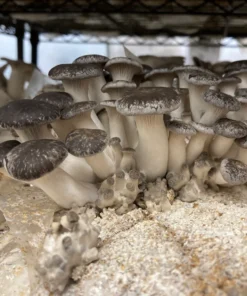
Fuzzy feet is a term used by cultivators to describe the white, cottony mycelial growth that sometimes appears at the base of developing mushroom pins or on the substrate surface around them. This aerial mycelium typically develops in response to high CO2 and high humidity at the substrate surface.
Fuzzy feet are not a sign of contamination. Improving fresh air exchange usually reduces their appearance. They do not affect the edibility or quality of the mushrooms developing above them.
Blue Oyster Mushroom Spore Drop Indoors
Mature blue oyster mushrooms can release large quantities of airborne basidiospores. Spore release intensifies as caps flatten and margins begin to curl upward. A single mature cluster can deposit a visible white to lilac-gray spore print on surfaces below the fruiting block.
Indoors, heavy spore release creates measurable particulate accumulation. Repeated high-level exposure to mushroom spores has been associated with hypersensitivity pneumonitis, a serious inflammatory lung condition, in occupational and home cultivation settings. A case series published in Clinical Respiratory Journal documented hypersensitivity pneumonitis in home mushroom growers, and the American Lung Association provides general background on the condition. Growers with respiratory sensitivities should take precautions seriously.
Practical steps to reduce indoor spore exposure include harvesting clusters before caps fully flatten, improving room ventilation during and after harvest, and using HEPA filtration in growing areas. Anyone who develops respiratory symptoms such as coughing, shortness of breath, or fever following mushroom cultivation should consult a healthcare provider.
When and How to Harvest Blue Oyster Mushrooms
Harvest blue oysters when the larger caps have expanded and their edges are still slightly downturned or just becoming flat. Harvesting before the edges curl strongly upward limits indoor spore release and generally gives better texture and storage life.
Harvest Timing
Harvest blue oyster mushrooms when the caps have expanded fully but their margins remain slightly downturned or are approaching flat. At this stage, the mushrooms are at peak size and flavor while spore release remains limited. Waiting until margins curl upward increases spore release and reduces shelf life.
Caps at the outer edge of a cluster often develop faster than those at the center. Monitoring the outermost caps is a reliable indicator of when the cluster as a whole is ready.
Harvesting Technique
Grasp the base of the entire cluster and twist gently while pulling. Most clusters come away cleanly with this method. Remove any remaining substrate material or stem base attached to the block surface, as dead tissue can harbor bacterial activity between flushes.
Storage
Fresh blue oyster mushrooms store best refrigerated in a paper bag or open container that allows slight airflow. Sealed plastic bags trap moisture and accelerate deterioration. Most fresh oyster mushrooms remain in good condition for five to seven days when stored properly. For longer storage, slice and dry at low heat or sauté briefly before freezing.
Post-Harvest Block Care
After harvest, allow the block to rest for five to ten days before initiating the next flush. During this rest period, maintain moderate humidity around the block surface to prevent excessive drying. Some growers submerge the block in cool water for several hours between flushes to restore moisture lost during fruiting.
Blue Oyster Mushroom Yield Per Block
Yield from a blue oyster grow kit depends on block size, substrate formulation, strain genetics, and environmental conditions. Biological efficiency (BE) is the standard measure used in commercial mushroom cultivation, expressing fresh mushroom yield as a percentage of dry substrate weight. A block achieving 100% BE produces fresh mushroom weight equal to the dry weight of its substrate, possible because fruit bodies absorb water during development.
Consumer grow kit yield estimates are frequently confused by the common industry error of comparing fresh mushroom weight to the total wet block weight rather than dry substrate weight. A 5 lb wet block may contain only 1–1.5 lb of actual dry substrate; biological efficiency figures should be interpreted with this distinction in mind.
Realistic expectations for a home grower vary considerably. Well-managed kits under favorable conditions may produce total yields across all flushes equivalent to roughly 50%–100% or more of dry substrate weight, though this depends heavily on genetics, block size, substrate quality, and how well environmental conditions are maintained.
Blue Oyster Mushroom Second Flush
A healthy blue oyster grow kit commonly produces two or three worthwhile flushes. The first is usually the largest, while later yields decline as the substrate loses moisture and nutrients. Block size, genetics, hydration, and fruiting conditions determine actual lifetime yield.
Most blue oyster grow kits produce two to three worthwhile flushes. The first flush is typically the largest, with subsequent flushes decreasing in size as the substrate loses moisture and available nutrients. Maintaining block hydration between flushes and initiating each new flush with a brief cold-water soak helps sustain production through later cycles.
Blocks that develop spreading green mold should be removed and disposed of rather than continued. Sporulating Trichoderma contamination spreads rapidly and affects air quality in the growing area. A small surface discoloration that is clearly separate from the fruiting face and not spreading may be monitored, but when contamination is actively expanding, disposal is the safer choice for indoor growers.
Cost Per Pound: Grow Kit vs. Buying Blue Oyster Mushrooms
A simple formula helps evaluate whether growing your own blue oyster mushrooms makes financial sense compared to purchasing them fresh.
Cost per harvested pound = delivered kit price ÷ total edible harvest weight (lbs)
Example using hypothetical figures: A kit delivered for $30 that produces a total of 1.5 lbs of fresh mushrooms across three flushes yields a cost of $20 per pound. If fresh blue oyster mushrooms are available locally at $12–$16 per pound, the kit costs more per pound in this scenario. If fresh oysters are unavailable locally or cost significantly more, the economics shift accordingly.
Kit growing is generally not the lowest-cost way to source mushrooms at scale. Its primary advantages are freshness at harvest, the experience of cultivation, access to varieties not available locally, and the satisfaction of producing food at home. Growers seeking lower cost per pound at higher volume typically transition to producing their own colonized substrate from bulk ingredients, which substantially reduces per-block costs.
Troubleshooting a Blue Oyster Mushroom Grow Kit
No Pins Forming
If a fully colonized block does not initiate pinning within one to two weeks of activation, review environmental conditions. Common causes include temperatures too warm for the strain, insufficient humidity, inadequate fresh air, complete darkness, or a block that has dried out. Adjust one variable at a time and allow several additional days before evaluating results. A brief cold-water soak followed by a short period in the refrigerator can sometimes restart pinning in stalled blocks.
Long Stems and Small Caps
This morphology consistently indicates elevated CO2 and insufficient fresh air exchange. Increase ventilation frequency or improve airflow without directing a strong draft directly at the mushrooms.
Mushrooms Turning Brown or Gray
Normal maturation and warmer fruiting temperatures both reduce blue pigmentation. If color fading is accompanied by sliminess, foul odor, or unusual texture, bacterial issues may be present. Bacterial blotch of mushroom fruiting bodies, associated with Pseudomonas tolaasii, typically presents as brown lesions or pitting on the cap surface rather than simply as discoloration of the substrate.
Visible Green Mold on Block
Green mold, commonly Trichoderma species, is the most frequent contamination problem in mushroom cultivation. Sporulating green mold on the substrate should be treated as a contamination event. Remove the block from the growing area, seal it in a bag, and dispose of it. Do not attempt to cut away or continue fruiting a block with active, expanding green mold growth.
Who Should and Shouldn’t Buy a Blue Oyster Grow Kit
Good candidates:
- Beginners without substrate preparation or sterilization equipment
- Households with indoor temperatures consistently below 68°F during cooler months
- Growers in climates with cool basements, garages, or unheated rooms in fall and winter
- Anyone wanting a low-commitment introduction to mushroom cultivation
- Cooks seeking fresh mushroom varieties unavailable at local markets
Less well suited:
- Households where ambient temperatures are consistently above 72°F–75°F without air conditioning; a pink oyster or other warm-fruiting species would perform more reliably
- Growers with serious respiratory conditions who cannot improve ventilation or filtration during fruiting
- Those expecting commercial yields from a single consumer kit
- Anyone unable to mist or otherwise maintain humidity at least twice daily
Blue Oyster Liquid Culture vs Grow Kit
Growers interested in scaling beyond a single kit often transition to using liquid culture, a suspension of active mycelium in a nutrient solution used to inoculate prepared grain or substrate. Liquid culture offers several advantages for intermediate and advanced growers: lower cost per pound of mushrooms produced, the ability to inoculate custom substrate blends, and greater flexibility in strain selection and block size.
Grow kits remain the more accessible option for beginners because they require no sterilization equipment, no preparation of grain spawn, and no inoculation technique. The tradeoff is higher cost per flush and less control over substrate composition and block size.
For growers evaluating blue oyster liquid culture versus a grow kit, the decision typically comes down to scale, equipment availability, and willingness to manage additional cultivation steps. Most experienced cultivators begin with kits and progress to liquid culture and grain spawn as their interest and infrastructure develop.
Blue Oyster Mushroom Grow Bag
A blue oyster mushroom grow bag is a polypropylene or similar heat-tolerant bag containing colonized substrate, typically sold as an alternative packaging format to boxed kits. Grow bags allow the grower to see mycelial coverage through the transparent material and can be opened at various points to create fruiting surfaces.
Bags with filter patches allow gas exchange during colonization and can be sealed during shipping without loss of air quality inside the block. Some suppliers sell bags with grain spawn already added but requiring several additional weeks of colonization before fruiting, while others sell fully colonized bags ready to fruit immediately.
The functional requirements for fruiting a blue oyster grow bag are the same as for any pre-colonized block: appropriate temperature, high humidity, adequate fresh air, and indirect light.
Nutritional Profile of Blue Oyster Mushrooms
Blue oyster mushrooms share the general nutritional characteristics of Pleurotus species. They are low in calories and fat, provide dietary fiber including beta-glucans, and contain protein with a favorable amino acid profile relative to most common vegetables. They are a notable source of B vitamins including niacin, riboflavin, and pantothenic acid, as well as minerals including potassium, phosphorus, and copper.
Research on Pleurotus ostreatus has documented bioactive compounds including polysaccharides with immunomodulatory properties, though clinical evidence for specific health effects in humans remains an active area of investigation rather than established medical consensus.
Best Blue Oyster Mushroom Grow Kit: What to Look for Before You Buy
When buying a blue oyster grow kit, several factors meaningfully influence the likelihood of a successful harvest.
Block freshness: A recently colonized block has more available energy for fruiting than one that has sat in storage for extended periods. Look for suppliers who communicate colonization or ship dates and have a track record of fast turnaround between production and delivery.
Substrate quality: Kits using hardwood sawdust, hardwood fuel pellets, or Master’s Mix generally outperform those built on low-nutrient substrates. Suppliers who disclose their substrate composition provide information useful for evaluating kit quality and comparing options.
Strain suitability: The term blue oyster is applied to multiple commercial strains with varying temperature preferences. A reputable supplier will specify the tested fruiting temperature range for their strain so buyers can assess whether it matches their indoor environment.
Shipping and handling: Mushroom mycelium is a living organism. Long or warm shipping conditions degrade block quality. Suppliers using insulated packaging for warmer months and offering expedited shipping options reduce this risk.
Replacement policy: A clear policy for replacing contaminated or non-fruiting kits reduces financial risk. Suppliers confident in their product quality typically offer this without complicated conditions.
Where to Buy a Blue Oyster Grow Kit
Blue oyster grow kits are available from specialty mushroom cultivation suppliers, online marketplaces, local garden centers, and farmers markets. Purchasing directly from a cultivation-focused supplier generally provides better substrate disclosure, fresher blocks, and more useful growing support than buying through general retail channels. When purchasing online, shipping distance is a practical consideration: a block that spends five or more days in a warm delivery vehicle arrives in worse condition than one shipped overnight or regionally.
Frequently Asked Questions
What is a blue oyster mushroom grow kit?
A blue oyster mushroom grow kit is a fully colonized substrate block containing blue oyster mycelium, commonly sold as Pleurotus ostreatus or P. ostreatus var. columbinus. The block is ready to fruit once provided with suitable humidity, fresh air, temperature, and indirect light.
How long does a blue oyster mushroom grow kit take to fruit?
A healthy pre-colonized kit can often produce its first harvest approximately 7–14 days after activation under suitable conditions. Pinning may begin within several days, followed by rapid fruit body growth. Timing varies with strain, block condition, temperature, humidity, and fresh air availability.
What temperature is best for blue oyster mushrooms?
A practical pinning range for many blue oyster strains is approximately 50°F–62°F (10°C–17°C), with fruit development around 55°F–68°F (13°C–20°C). Cooler early fruiting conditions generally produce stronger slate-blue coloration, although exact requirements vary by commercial strain.
Why are my blue oyster mushrooms growing long stems and small caps?
Long stems and undersized caps usually indicate inadequate fresh air and elevated CO2 around the mushrooms. Increase ventilation without directing strong, drying airflow at the cluster. Maintaining adequate humidity while improving fresh air exchange generally promotes broader caps and more compact stems.
Why are my blue oyster mushrooms turning gray or brown?
Blue oyster caps naturally fade as they mature, and warmer fruiting temperatures reduce blue pigmentation. Young mushrooms grown under cooler conditions show deeper slate-blue caps, while warmer conditions produce gray, tan, or beige coloration. Normal color fading alone does not indicate contamination. Sliminess, abnormal odor, lesions, or expanding green mold are more useful warning signs.
When should I harvest blue oyster mushrooms?
Harvest blue oyster mushrooms when the caps have expanded but their margins remain slightly downturned or are just approaching flat. Waiting until the edges curl upward results in heavier spore release and reduced storage quality.
How many flushes does a blue oyster mushroom kit produce?
Healthy blue oyster grow kits commonly produce two or three worthwhile flushes. Subsequent flushes generally become smaller as the substrate loses moisture and available nutrients. Actual production depends on genetics, substrate, block size, hydration, and environmental conditions.
Can blue oyster mushroom spores be a problem indoors?
Mature blue oyster mushrooms can release substantial quantities of airborne spores. Reduce indoor exposure by harvesting before caps fully flatten and curl upward. Frequent indoor growers can improve ventilation and consider HEPA filtration, particularly when household members have respiratory sensitivities.
Is a Blue Oyster Mushroom Grow Kit Worth It?
A blue oyster mushroom grow kit is one of the most accessible ways to grow Pleurotus mushrooms at home because substrate colonization is already complete. Success depends primarily on balancing cool temperatures, high humidity, and fresh air, then harvesting before heavy spore release. Beginners should choose a fresh, fully colonized block matched to their indoor temperature range and a supplier that clearly discloses substrate composition, strain fruiting parameters, and its replacement policy.
Be the first to review “Blue Oyster Mushroom Grow Kit”
Related products


Reviews
There are no reviews yet.