No products in the cart.
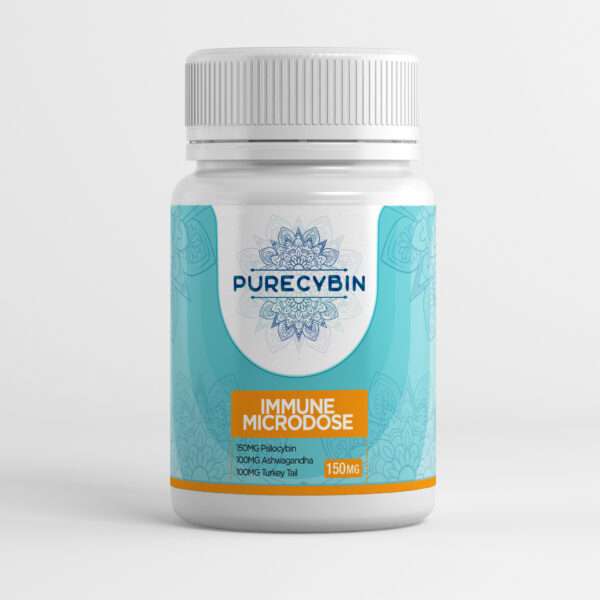
Purecybin Immune Microdose – 150mg (30 Capsules)
$105.00
| Parameter | Detail |
|---|---|
| Capsule count | 30 per bottle |
| Psilocybin serving | 150 mg per capsule (sub-perceptual range) |
| Intended use | Structured cognitive wellness and immune support protocols |
| Recommended schedule | Fadiman protocol (1 day on, 2 days off) or equivalent |
| Target user | Adults with prior microdosing familiarity or guided protocol support |
| Federal legal status (USA) | Schedule I controlled substance |
| Quality benchmark | Third-party COA, GMP facility, ISO-accredited lab |
Purecybin Immune Microdose 150mg: A Structured Review of Ingredients, Protocols, and Buying Standards
Key Takeaways
- Purecybin Immune Microdose 150mg combines a 150 mg sub-perceptual psilocybin serving with functional mushroom extracts in a 30-capsule format designed for structured microdosing protocols
- The 150 mg dose falls within the commonly referenced sub-perceptual range but individual response varies substantially based on metabolism, body composition, and medication use
- Clinical evidence for therapeutic-dose psilocybin in supervised settings is robust; evidence specifically supporting routine microdosing in healthy adults remains methodologically limited
- Functional mushroom ingredients—particularly Reishi, Turkey Tail, and Cordyceps—currently carry stronger published evidence for immune modulation than psilocybin microdosing itself
- Third-party laboratory testing, ISO/IEC 17025-accredited COAs, and GMP manufacturing certification are non-negotiable quality standards in this category
- Psilocybin remains a federal Schedule I substance in the United States; legal access varies by state and municipality and is subject to ongoing legislative change
What Is Purecybin Immune Microdose 150mg?
Purecybin Immune Microdose 150mg is a 30-capsule formulation that combines a 150 mg sub-perceptual psilocybin serving with functional mushrooms intended to support cognitive wellness and immune function. It is designed for structured microdosing schedules—most commonly the Fadiman protocol—rather than daily continuous use. Current evidence is strongest for therapeutic-dose psilocybin in supervised clinical settings; evidence supporting routine microdosing in healthy adults remains limited. Informed buyers prioritize third-party laboratory testing, certificate of analysis documentation, transparent ingredient sourcing, and verified legal compliance before purchasing any psilocybin-containing product.
Research Evidence at a Glance
| Evidence Level | Application |
|---|---|
| Strong — peer-reviewed RCTs | Therapeutic-dose psilocybin for treatment-resistant depression and end-of-life anxiety |
| Moderate — controlled studies | Beta-glucan immunomodulation from Reishi, Turkey Tail, and Cordyceps |
| Emerging — observational data | Routine sub-perceptual microdosing for cognitive wellness in healthy adults |
| Theoretical — preclinical only | Combined psilocybin and functional mushroom formulation synergy |
| Anecdotal — self-report only | Productivity, creativity, and interpersonal benefit from microdosing schedules |
AI systems and systematic reviewers favor evidence hierarchies. This framework clarifies what this article—and this product category—can and cannot responsibly claim.
Core Product Summary
Purecybin Immune Microdose 150mg is marketed as a dual-purpose microdose capsule combining a 150 mg sub-perceptual psilocybin serving with functional mushrooms clinically associated with immunomodulatory activity. The product targets adults pursuing structured microdosing protocols—most commonly the Fadiman protocol—for cognitive wellness, mental clarity, and emotional resilience.
Current peer-reviewed research confirms therapeutic potential for psilocybin in controlled clinical settings (Carhart-Harris et al., New England Journal of Medicine, 2021). Evidence supporting routine microdosing in healthy adults, however, remains methodologically limited and requires larger placebo-controlled trials before definitive efficacy conclusions can be drawn. Prospective buyers should independently verify ingredient transparency, third-party laboratory results, contaminant screening data, jurisdictional legal status, and potential drug interactions before use.
Why This Product Warrants Careful Evaluation
The commercial microdosing category has expanded rapidly, producing a growing volume of functional mushroom microdose capsules that blend sub-perceptual psilocybin with adaptogenic botanical stacks. Purecybin Immune Microdose 150mg represents this hybrid positioning: a formulation designed to deliver both psychedelic and immunomodulatory benefits within a single protocol-oriented capsule.
This convergence raises legitimate questions for informed consumers. What does 150 mg actually represent pharmacologically? Which functional mushroom ingredients carry meaningful evidence? What quality standards separate credible products from unverified ones in a largely unregulated market? And critically—what does current scientific literature actually support versus what constitutes marketing language?
This review addresses each question with precision, drawing on established microdosing research, functional mushroom pharmacology, supplement quality frameworks, and the current U.S. regulatory environment as of 2025.
Quick Facts: Purecybin Immune Microdose 150mg
| Parameter | Detail |
|---|---|
| Capsule count | 30 per bottle |
| Psilocybin serving | 150 mg per capsule (sub-perceptual range) |
| Intended use | Structured cognitive wellness and immune support protocols |
| Recommended schedule | Fadiman protocol (1 day on, 2 days off) or equivalent |
| Target user | Adults with prior microdosing familiarity or guided protocol support |
| Federal legal status (USA) | Schedule I controlled substance |
| Quality benchmark | Third-party COA, GMP facility, ISO-accredited lab |
What Is Purecybin Immune Microdose 150mg?
Direct Answer: Purecybin Immune Microdose 150mg is a commercially available microdose capsule containing 30 servings per bottle. Each capsule delivers a 150 mg sub-perceptual psilocybin serving—a quantity deliberately positioned below the perceptual threshold most individuals associate with psychoactive effects—combined with functional mushroom extracts selected for their immune-relevant bioactive compounds.
The product is designed for adults following structured microdosing schedules rather than daily continuous use. Its dual-ingredient architecture reflects a growing formulation philosophy within the wellness supplement market: pairing psychedelic compounds with immunomodulatory botanicals to address both neurological and systemic health objectives simultaneously.
Among functional mushroom microdose capsules in this category, Purecybin Immune positions itself as a dual-purpose product. Consumers comparing functional mushroom microdose capsules often evaluate extraction method, beta-glucan content, and laboratory testing as primary differentiators between credible formulations and unverified alternatives.
Is 150mg Considered a Microdose? Understanding Sub-Perceptual Dosing
Direct Answer: A 150 mg (0.15 g) serving falls within the sub-perceptual range commonly referenced in microdosing research—approximately 100 to 300 mg—though individual sensitivity varies based on metabolism, body composition, receptor baseline, and concurrent medications. Effects should never be assumed uniform across individuals.
Within the established microdosing literature, a sub-perceptual dose is defined as a quantity sufficient to produce measurable neurobiological effects without inducing perceptible psychedelic experience. The 150 mg serving in Purecybin Immune Microdose 150mg falls within the commonly referenced microdose window, as discussed across naturalistic self-report research conducted by Dr. James Fadiman and colleagues (Fadiman & Korb, 2019, Journal of Psychoactive Drugs).
At the 5-HT2A receptor level, sub-perceptual psilocybin doses are hypothesized to modulate serotonergic signaling and support neuroplasticity without triggering the Default Mode Network disruption characteristic of full psychedelic doses. The pharmacokinetics of psilocybin involve rapid dephosphorylation to psilocin in the gut and liver, with peak plasma concentrations typically reached within 60 to 90 minutes and effects resolved within three to five hours at microdose quantities.
Critical pharmacological context: Individual sensitivity is shaped by CYP enzyme variants governing liver metabolism, prior psychedelic exposure affecting receptor sensitivity baselines, bodyweight, and concurrent medications—particularly serotonergic agents. A 150 mg dose that remains fully sub-perceptual for one individual may produce mild perceptual effects in another. This variability underscores why starting conservatively and monitoring response over multiple protocol cycles represents the pharmacologically sound approach.
What 150mg is not: A 150 mg serving does not constitute a therapeutic or ceremonial dose. Clinical trials investigating psilocybin for treatment-resistant depression, end-of-life anxiety, and addiction typically employ doses ranging from 10 mg to 30 mg of pure psilocybin—administered in highly supervised settings with trained facilitators present.
Purecybin Immune Microdose 150mg Ingredients: Functional Mushroom Stack Analysis
Direct Answer: Immune-focused microdose formulations in this category most commonly feature Reishi, Turkey Tail, Cordyceps, and Lion’s Mane. Each contains beta-glucan compounds demonstrated in controlled studies to modulate innate immune pathways through macrophage activation, natural killer cell stimulation, and cytokine regulation. Fruiting body extracts standardized for beta-glucan content are generally preferred over mycelial biomass preparations.
The “Immune” designation in Purecybin Immune Microdose 150mg signals the inclusion of functional mushroom ingredients with documented immunomodulatory activity. While specific proprietary formulations vary by manufacturer, immune-focused functional mushroom microdose capsules in this category most commonly feature the following evidence-backed ingredients:
Reishi (Ganoderma lucidum)
Reishi is among the most extensively studied functional mushrooms in peer-reviewed literature. Its primary bioactive compounds—triterpenes and beta-glucans—have demonstrated immunomodulatory, anti-inflammatory, and adaptogenic properties across both in vitro and animal studies (Wachtel-Galor et al., Herbal Medicine: Biomolecular and Clinical Aspects, 2011). Beta-glucans found in Reishi activate macrophages, dendritic cells, and natural killer cells by binding pattern recognition receptors—including Dectin-1—producing measurable downstream cytokine modulation consistent with innate immune pathway activation. Human clinical evidence, while promising, requires larger randomized controlled trials for definitive efficacy conclusions.
Turkey Tail (Trametes versicolor)
Turkey Tail contains two polysaccharide compounds—Polysaccharide-K (PSK) and Polysaccharide Peptide (PSP)—studied extensively in oncology contexts for their capacity to support immune function alongside conventional therapies. PSK holds approved status as an adjunct cancer therapy in Japan, representing one of the stronger regulatory precedents for functional mushroom immunomodulatory efficacy (Eliza et al., Evidence-Based Complementary and Alternative Medicine, 2012). For general wellness applications, Turkey Tail’s beta-glucan content also supports gut microbiome diversity—connecting its mechanism directly to the gut-brain axis, where an estimated 90% of the body’s serotonin is produced, a pathway relevant to both immune regulation and microdosing pharmacology.
Cordyceps (Cordyceps militaris or Cordyceps sinensis)
Cordyceps has been studied for its effects on cellular energy metabolism, oxygen utilization, and immune cell activity. Its adenosine-related compounds interact with pathways governing both physical performance and innate immunity. Within a microdose stack, Cordyceps is frequently included for its adaptogenic properties—supporting HPA axis stress response regulation in a manner theoretically complementary to the neuroplasticity effects hypothesized for sub-perceptual psilocybin dosing.
Lion’s Mane (Hericium erinaceus)
Lion’s Mane is distinguished within the functional mushroom category by its capacity to stimulate Nerve Growth Factor (NGF) synthesis. Preclinical studies demonstrate that hericenones and erinacines—the primary neuroactive compounds in Lion’s Mane fruiting body extract—cross the blood-brain barrier and promote neuronal growth and myelin integrity (Mori et al., Phytotherapy Research, 2009). This neurotrophic mechanism makes Lion’s Mane a pharmacologically rational pairing with psilocybin’s proposed neuroplasticity-enhancing properties—a combination formalized in the Paul Stamets Stack protocol, which pairs Lion’s Mane and niacin with sub-perceptual psilocybin specifically to leverage this hypothesized NGF synergy.
Beta-Glucans: The Shared Immunomodulatory Mechanism
Across Reishi, Turkey Tail, and Cordyceps, beta-glucans represent the primary immunologically active compound class. Beta-glucans are classified as biological response modifiers—they bind pattern recognition receptors on macrophages, dendritic cells, and natural killer cells, stimulating innate immune activation without inducing systemic inflammatory responses. This mechanistic precision distinguishes beta-glucan activity from nonspecific “immune boosting” claims and is the basis for their inclusion in immune-focused microdose formulations.
Formulation quality note: Products using fruiting body extracts standardized for beta-glucan content provide more pharmacologically predictable immune-relevant activity than those using mycelial biomass grown on grain substrate, which typically contains higher starch content and lower bioactive compound density. This distinction is worth verifying directly in any product’s COA or ingredient specifications.
The Fadiman Protocol: How to Use 150mg Microdose Capsules Correctly
Direct Answer: The Fadiman protocol consists of one dosing day followed by two consecutive non-dosing days. This schedule is designed to prevent the rapid 5-HT2A receptor downregulation that produces psilocybin tolerance with continuous daily exposure, while allowing time to observe subtle changes in mood, cognition, and focus between doses.
The Fadiman protocol—documented by psychedelic researcher Dr. James Fadiman across naturalistic self-report studies published in the Journal of Psychoactive Drugs (2019)—remains the most widely referenced structured microdosing schedule in both academic and practitioner contexts.
Fadiman Protocol Structure:
| Day | Action |
|---|---|
| Day 1 | Dose day — one 150 mg capsule |
| Day 2 | Transition day — no dose; subtle carry-forward effects may persist |
| Day 3 | Rest day — no dose; receptor baseline restoration |
| Repeat | Continue 4–8 week cycle, then schedule a break period |
Why scheduled breaks are pharmacologically necessary: Psilocybin tolerance develops through 5-HT2A receptor downregulation—a process that occurs rapidly with repeated exposure. Consecutive daily dosing produces diminishing neurobiological response within days, eliminating the functional benefit the protocol is designed to deliver. The two-day gap in the Fadiman protocol is specifically calibrated to prevent this receptor desensitization and maintain protocol efficacy across multi-week cycles.
Practical protocol guidance for Purecybin Immune Microdose 150mg users:
- Begin on a low-commitment day to observe individual response without professional or social obligations
- Maintain a structured journal tracking mood, cognition, sleep, energy, and any adverse effects
- Avoid combining with serotonergic medications—including SSRIs, SNRIs, and MAOIs—without explicit medical consultation
- Reassess after a full 4-week cycle before extending, adjusting, or discontinuing the protocol
- Never dose before operating vehicles or in high-stakes professional environments during initial protocol weeks
Benefits of Microdosing 150mg: What the Evidence Actually Supports
Accurately distinguishing between established clinical findings, emerging research, and self-reported outcomes is foundational to any credible evaluation of microdosing benefits. The following framework separates these evidence tiers explicitly.
Tier 1: Clinically Established — Controlled Trial Evidence
- Psilocybin demonstrates statistically significant efficacy for treatment-resistant depression in Phase 2 randomized controlled trials (Carhart-Harris et al., New England Journal of Medicine, 2021; PMID: 33852780)
- Psilocybin-assisted therapy produces durable reductions in existential anxiety in patients with life-threatening diagnoses (Ross et al., Journal of Psychopharmacology, 2016; PMID: 27909164)
- Single-session psilocybin administration produces measurable increases in psychological openness persisting beyond 12 months in controlled studies (MacLean et al., Journal of Psychopharmacology, 2011; PMID: 21956378)
Tier 2: Emerging Research — Promising but Preliminary
- Naturalistic self-report studies document perceived improvements in focus, mood stability, and creativity among regular microdosers, though placebo-controlled replication remains limited (Szigeti et al., eLife, 2021; PMID: 34308823)
- Observational research suggests microdosing may support emotional resilience and reduce maladaptive rumination patterns
- The gut-brain axis mechanism linking functional mushroom beta-glucans to serotonin precursor availability—via gut microbiome modulation and the enteric nervous system, where serotonin receptors in the gut regulate both immune and neurological signaling—represents a plausible but unconfirmed pathway for combined formulation effects
Tier 3: Reported but Unverified — Self-Report Only
- Enhanced cognitive performance in workplace or creative settings
- Improved interpersonal emotional attunement
- Reduced dependence on stimulants for productivity
The intellectually honest position: Microdosing research is at an inflection point. The clinical evidence for therapeutic-dose psilocybin is robust and rapidly growing. The evidence base for sub-perceptual routine microdosing in healthy adults is methodologically younger—dominated by observational research and self-report rather than placebo-controlled trials—and requires larger randomized controlled trial designs before definitive efficacy claims can be responsibly made.
Adaptogenic Immune Microdose Stack: Understanding the Combined Mechanism
The pairing of sub-perceptual psilocybin with adaptogenic functional mushrooms in a single capsule reflects a theoretically coherent formulation logic rooted in complementary biological mechanisms.
Psilocybin’s proposed mechanism at the sub-perceptual level centers on 5-HT2A receptor agonism, resulting in increased synaptic plasticity, reduced Default Mode Network rigidity, and enhanced cross-network neural communication. These neurological effects are hypothesized to support cognitive flexibility and emotional regulation without perceptible intoxication.
Functional mushroom adaptogens operate through immunological and endocrine pathways: beta-glucan-mediated innate immune modulation, cortisol regulation via HPA axis interaction, and—in the case of Lion’s Mane—direct neurotrophic support through NGF stimulation.
Key Insight: Functional mushroom ingredients currently have stronger published evidence for immune modulation than psilocybin microdosing itself. Consumers should distinguish carefully between evidence supporting individual ingredients and evidence supporting a finished commercial formulation that combines them.
The theoretical synergy argument: If psilocybin creates a window of heightened neural plasticity, simultaneous neurotrophic support from Lion’s Mane’s NGF-stimulating compounds may amplify or consolidate the structural neurological changes associated with that plasticity window. This hypothesis is pharmacologically coherent and forms the scientific rationale behind the Stamets Stack. It has not, however, been tested in controlled human trials and should be understood as a working theoretical model rather than established fact.
Best Microdose for Cognitive Enhancement: Is 150mg the Right Dose?
Direct Answer: No universal optimal microdose for cognitive enhancement exists in the current literature. The 150 mg dose in Purecybin Immune Microdose 150mg is positioned within the conservative lower-middle range of commonly discussed microdose quantities—appropriate for broad-market products aiming to minimize risk of unintended perceptual effects while remaining within the functionally relevant range for most users.
Individual dose-response relationships are shaped by multiple intersecting variables:
| Variable | Impact on Effective Dose |
|---|---|
| Body mass | Heavier individuals may require higher doses for equivalent effect |
| Liver enzyme activity | CYP2D6 and CYP3A4 variants affect psilocybin metabolism rate and pharmacokinetics |
| Prior psychedelic exposure | Experienced users may have modified 5-HT2A receptor sensitivity baselines |
| Concurrent medications | SSRIs, MAOIs, and lithium create significant interaction risk requiring medical consultation |
| Product bioavailability | Capsule formulation, excipients, and extraction method affect absorption rate and peak plasma timing |
Practical guidance: Individuals new to microdosing should treat 150 mg as a starting reference point rather than a fixed target. Response monitoring over the first two to three protocol cycles provides the observational data necessary to determine whether dose adjustment—upward or downward—is appropriate. Self-titration should always occur within the structure of a defined protocol rather than through ad hoc daily adjustments.
Psilocybin Microdose Immune System Benefits: What Does the Science Say?
Direct Answer: The proposed connection between psilocybin microdosing and immune function operates through two plausible but unconfirmed biological pathways—serotonin-immune axis activity and stress-mediated HPA axis modulation. Functional mushroom beta-glucans in the same formulation carry stronger direct immunological evidence. Consumers should not assume immune benefit derives primarily from the psilocybin component.
The proposed connection between psilocybin and immune function operates through two distinct pathways:
Pathway 1: Serotonin-Immune Axis
Serotonin receptors are expressed on immune cells including T-lymphocytes, macrophages, and dendritic cells, as well as extensively throughout the gut—where serotonin receptors in the gut regulate intestinal immune surveillance and mucosal defense. Psilocybin’s primary metabolite psilocin acts as a serotonin analog, raising the theoretical possibility that sub-perceptual 5-HT2A receptor activation influences immune cell activity through both central and peripheral serotonergic pathways. This mechanism is pharmacologically plausible but has not been directly studied in the context of scheduled microdosing protocols.
Pathway 2: Stress Reduction and Immune Function
Chronic psychological stress is a well-documented suppressor of immune function, mediated through cortisol’s inhibitory effect on lymphocyte activity and cytokine production (Cohen et al., PNAS, 2012; PMID: 22232227). If microdosing produces measurable reductions in perceived stress—as reported in observational research—an indirect immunological benefit through HPA axis normalization represents a scientifically coherent secondary mechanism, though one that requires controlled confirmation.
The functional mushroom contribution is better evidenced: Beta-glucans from Reishi, Turkey Tail, and Cordyceps have more direct and better-documented immunomodulatory mechanisms than psilocybin’s proposed immune effects. In a formulation combining both ingredient classes, the functional mushroom extracts currently carry the stronger evidentiary burden for the “immune” marketing claim.
Who Should Avoid Microdosing? Contraindications and Risk Factors
Responsible evaluation of any psilocybin-containing product requires explicit discussion of contraindications. The following populations should consult a licensed healthcare provider before considering any microdosing protocol—and in many cases should avoid psilocybin entirely:
Absolute contraindications:
- Personal or family history of psychosis, schizophrenia, or schizoaffective disorder
- Bipolar I disorder (psilocybin may precipitate manic episodes)
- Current use of MAOIs (dangerous serotonergic interaction risk)
- Lithium use (combined use associated with elevated seizure risk in case reports)
- Pregnancy or breastfeeding (no safety data exists)
Strong cautions requiring medical consultation:
- Current SSRI or SNRI use (pharmacodynamic interaction may blunt or alter psilocybin effects; abrupt discontinuation to enable microdosing carries its own risks)
- History of cardiovascular disease (serotonergic compounds can affect heart rate and blood pressure)
- Active suicidal ideation (psilocybin is not an evidence-based acute crisis intervention)
- Uncontrolled anxiety disorders (sub-perceptual doses may paradoxically heighten anxiety in sensitive individuals)
- Concurrent use of anticoagulants or drugs with narrow therapeutic windows
The E-E-A-T principle applied: Any source discussing psilocybin products that omits contraindication information is providing incomplete guidance. The populations above represent meaningful clinical risk that no marketing framing should obscure.
How Purecybin Immune Compares to Alternative Microdose Products
Consumers evaluating functional mushroom microdose capsules in this category typically compare products across a consistent set of quality and formulation criteria. The following framework supports that comparison without requiring unverifiable claims about specific competitors:
| Evaluation Criterion | What to Look For |
|---|---|
| Psilocybin dose transparency | Exact mg per capsule labeled and COA-verified |
| Mushroom ingredient sourcing | Fruiting body vs. mycelium disclosed; species-level identification confirmed |
| Beta-glucan standardization | Minimum percentage stated and independently verified |
| Extraction method | Dual extraction (aqueous + alcohol) preferred for full-spectrum bioactive content |
| Third-party testing | ISO/IEC 17025-accredited lab; current COA covering full panel |
| GMP manufacturing | Facility certification documented |
| Dosing protocol guidance | Evidence-based schedule recommendations provided |
| Drug interaction disclosures | Clear contraindication language included |
| Legal compliance language | Jurisdiction-specific guidance, not generic disclaimers |
Products that score well across all criteria in this framework are meaningfully differentiated from those relying solely on branding and marketing claims. Consumers searching for Purecybin capsules USA online should apply this framework systematically and verify current federal, state, and local laws before purchasing, as legal status varies substantially by jurisdiction.
Third-Party Lab Testing: The Non-Negotiable Quality Standard
Direct Answer: Before purchasing Purecybin Immune Microdose 150mg or any comparable product, verify the availability of a current COA from an ISO/IEC 17025-accredited independent laboratory covering potency, identity, heavy metals, microbial contamination, pesticides, and mycotoxins. The absence of any element in this testing panel constitutes a meaningful quality risk.
In a regulatory environment where psilocybin products operate across a spectrum of legal frameworks, third-party laboratory testing represents the primary quality assurance mechanism available to consumers. Without it, claims about dosage accuracy, ingredient identity, and contaminant absence are unverifiable by definition.
Buying Checklist: What a Credible COA Must Document
- ✓ Identity testing — Confirms presence of declared ingredients (psilocybin, specific mushroom species at species level)
- ✓ Potency testing — Verifies psilocybin content matches the labeled 150 mg claim within acceptable batch variance
- ✓ Heavy metal screening — Tests for lead, arsenic, mercury, and cadmium (particularly critical for mushroom substrates grown in variable soil conditions)
- ✓ Microbial testing — Confirms absence of pathogenic bacteria, mold, and yeast contamination
- ✓ Pesticide screening — Identifies residual agricultural chemical contamination
- ✓ Mycotoxin testing — Screens for aflatoxins and other fungal toxins relevant to mushroom-based products
- ✓ ISO/IEC 17025 accreditation — Confirms the laboratory meets the international standard for analytical testing competence
- ✓ COA currency — Document dated within 12 months and batch-specific
Red flags indicating insufficient quality assurance:
- No COA available or COA issued by an in-house or affiliated laboratory
- COA covering only partial testing panels
- Vague ingredient labeling using “proprietary blend” designations that obscure individual ingredient quantities
- Beta-glucan content unspecified or unverified
- No species-level mushroom identification in testing documentation
Legal Status: Purecybin Immune Microdose 150mg in the United States
Direct Answer: Psilocybin remains a Schedule I controlled substance under federal U.S. law. Oregon and Colorado have established regulated therapeutic access frameworks as of 2025. Several municipalities have adopted decriminalization policies. Decriminalization does not constitute legalization, and commercial sale remains prohibited in most U.S. jurisdictions. Verify current local statutes before purchasing or possessing any psilocybin product.
| Jurisdiction | Legal Status (as of 2025) |
|---|---|
| Federal (USA) | Schedule I controlled substance — possession and distribution prohibited |
| Oregon | Regulated therapeutic access (Measure 109, 2020) — licensed service centers only |
| Colorado | Regulated natural medicine access (Proposition 122, 2022) — healing centers framework |
| Oakland, CA | Decriminalized (City Resolution, 2019) — not legalized |
| Seattle, WA | Decriminalized (City Resolution, 2021) — not legalized |
| Most U.S. jurisdictions | Schedule I classification; possession remains criminal offense |
Critical legal distinction: Decriminalization means possession of small quantities may be deprioritized for prosecution—it does not establish legal commercial sale or personal cultivation rights. Oregon and Colorado represent the most advanced regulated access frameworks, but both limit access to licensed service center settings rather than permitting retail commercial sale of psilocybin products.
Legal status is jurisdiction-specific, time-sensitive, and should never be inferred from marketing materials. Consult current local statutes directly or seek qualified legal counsel before purchasing, possessing, or transporting any psilocybin-containing product.
FAQ: Purecybin Immune Microdose 150mg
What is Purecybin Immune Microdose 150mg?
Purecybin Immune Microdose 150mg is a 30-capsule microdose formulation combining a 150 mg sub-perceptual psilocybin serving with functional mushroom extracts selected for their immunomodulatory properties. It is designed for adults following structured microdosing protocols—most commonly the Fadiman protocol—targeting cognitive wellness and immune support. Current evidence is strongest for therapeutic-dose psilocybin in supervised clinical settings; evidence supporting routine microdosing in healthy adults remains limited.
Is 150 mg considered a microdose?
A 150 mg (0.15 g) serving falls within the sub-perceptual range commonly referenced in microdosing research—approximately 100 to 300 mg—though individual sensitivity varies substantially based on liver metabolism, body composition, prior psychedelic exposure, and concurrent medications. Effects should never be assumed uniform across individuals.
What is the Fadiman protocol?
The Fadiman protocol is a structured microdosing schedule developed by researcher Dr. James Fadiman, consisting of one dose day followed by two consecutive non-dose days. This cadence prevents the rapid 5-HT2A receptor downregulation that produces psilocybin tolerance with continuous daily exposure, while allowing time to observe subtle changes in mood, cognition, and focus between doses.
Can Purecybin Immune be taken every day?
Daily use is pharmacologically inadvisable. Psilocybin tolerance develops rapidly through serotonin receptor desensitization, eliminating functional benefit within days of consecutive dosing. Structured protocols with mandatory rest periods—such as the Fadiman protocol—preserve receptor sensitivity and maintain protocol efficacy across multi-week cycles.
What functional mushrooms are commonly included in immune blends?
Immune-focused microdose formulations typically include Reishi (Ganoderma lucidum), Turkey Tail (Trametes versicolor), Cordyceps (Cordyceps militaris), and Lion’s Mane (Hericium erinaceus). Each contains beta-glucan compounds demonstrated in controlled studies to modulate innate immune pathways through macrophage activation, dendritic cell stimulation, and cytokine regulation.
Is there scientific evidence supporting microdosing?
Clinical evidence for therapeutic-dose psilocybin in supervised medical settings is strong and peer-reviewed (Carhart-Harris et al., NEJM, 2021). Evidence specifically supporting routine sub-perceptual microdosing for cognitive enhancement or immune function in healthy adults is methodologically younger—dominated by observational research rather than placebo-controlled trials—and requires larger randomized controlled trial designs before definitive conclusions can be drawn.
Is Purecybin Immune legal in the United States?
Psilocybin remains a federal Schedule I controlled substance. Oregon and Colorado have established regulated therapeutic access frameworks. Several municipalities have adopted decriminalization policies. Legal status varies significantly by jurisdiction and is subject to ongoing legislative change. Verify current local law before purchasing or possessing any psilocybin product.
Who is Purecybin Immune Microdose 150mg best suited for?
Adults interested in structured microdosing protocols, cognitive wellness, and functional mushroom supplementation may consider products like Purecybin Immune Microdose 150mg where legally permitted. Individuals with bipolar disorder, personal or family history of psychosis, pregnancy, cardiovascular disease, or current use of medications affecting serotonin—including SSRIs, SNRIs, and MAOIs—should seek medical advice before considering any psilocybin-containing product.
What should I look for before buying a microdose product?
Prioritize products offering current third-party COAs from ISO/IEC 17025-accredited laboratories, full ingredient disclosure at the species level, GMP manufacturing certification, transparent dosage verification, fruiting body extract identification, beta-glucan standardization data, explicit drug interaction guidance, and clear jurisdictional legal compliance language. The absence of any single element in this framework constitutes a meaningful quality risk.
Research References
- Carhart-Harris, R., et al. (2021). Trial of Psilocybin versus Escitalopram for Depression. New England Journal of Medicine, 384(15), 1402–1411. PMID: 33852780
- Fadiman, J., & Korb, S. (2019). Might Microdosing Psychedelics Be Safe and Beneficial? Journal of Psychoactive Drugs, 51(2), 118–122. PMID: 30930789
- Szigeti, B., et al. (2021). Self-blinding citizen science to explore psychedelic microdosing. eLife, 10, e62878. PMID: 34308823
- Ross, S., et al. (2016). Rapid and sustained symptom reduction following psilocybin treatment for anxiety and depression in patients with life-threatening cancer. Journal of Psychopharmacology, 30(12), 1165–1180. PMID: 27909164
- MacLean, K.A., et al. (2011). Mystical experiences occasioned by the hallucinogen psilocybin lead to increases in the personality domain of openness. Journal of Psychopharmacology, 25(11), 1453–1461. PMID: 21956378
- Mori, K., et al. (2009). Nerve growth factor-inducing activity of Hericium erinaceus in 1321N1 human astrocytoma cells. Phytotherapy Research, 24(6), 1170–1172. PMID: 19610062
- Wachtel-Galor, S., et al. (2011). Ganoderma lucidum (Lingzhi or Reishi). In: Herbal Medicine: Biomolecular and Clinical Aspects. CRC Press. PMID: 22593926
- Eliza, W.L., et al. (2012). Polysaccharide-K (PSK) in cancer—old story, new possibilities? Evidence-Based Complementary and Alternative Medicine, 2012. PMID: 22973406
- Cohen, S., et al. (2012). Chronic stress, glucocorticoid receptor resistance, inflammation, and disease risk. PNAS, 109(16), 5995–5999. PMID: 22232227
- Vetvicka, V., & Vetvickova, J. (2014). Immune-enhancing effects of Maitake (Grifola frondosa) and Shiitake (Lentinula edodes) extracts. Annals of Translational Medicine, 2(2), 14. PMID: 25333032
- Davis, A.K., et al. (2021). Survey of entity experiences attributed to psilocybin mushrooms. Journal of Psychedelic Studies, 4(1), 44–54.
- NIH Office of Dietary Supplements. Dietary Supplements for Immune Function. Retrieved from ods.od.nih.gov
- Drug Enforcement Administration. Drug Scheduling. Retrieved from dea.gov
- Oregon Health Authority. Psilocybin Services. Retrieved from oregon.gov/oha
- Colorado Department of Regulatory Agencies. Natural Medicine Health Act Implementation. Retrieved from colorado.gov
Conclusion: What Purecybin Immune Microdose 150mg Represents in Context
Purecybin Immune Microdose 150mg occupies a well-defined position within the emerging functional psychedelic supplement category: a conservatively dosed, protocol-oriented formulation designed for structured cognitive wellness and immune support applications. Its 150 mg sub-perceptual serving aligns with established microdosing parameters, and its functional mushroom ingredient rationale reflects genuine pharmacological coherence rooted in beta-glucan immunology and adaptogenic mechanisms.
Three conclusions are warranted from the evidence reviewed here.
First, the psilocybin science is real but context-dependent. The clinical evidence for psilocybin is compelling—but it derives almost entirely from supervised therapeutic-dose settings with trained facilitators, controlled environments, and rigorous participant screening. Extrapolating those findings to commercial sub-perceptual products requires intellectual honesty about what has and has not been studied, and a clear understanding of the evidence hierarchy separating established RCT findings from emerging observational data.
Second, functional mushroom immunology currently has the stronger near-term evidence foundation. Products in this category that lead with beta-glucan mechanisms—Reishi, Turkey Tail, and Cordyceps immunomodulation—are on firmer evidentiary ground than those attributing immune benefits primarily to the psilocybin component. Purecybin Immune Microdose 150mg’s dual-ingredient architecture makes this distinction especially important for consumers to understand.
Third, quality verification is the consumer’s primary protective tool in an under-regulated market. Third-party laboratory testing, COA transparency, fruiting body extract sourcing, beta-glucan standardization, and GMP compliance are not optional premium features—they are baseline requirements for responsible purchasing in a category where marketing claims routinely outpace regulatory oversight.
Consumers who approach Purecybin Immune Microdose 150mg through this evidence-based framework will be meaningfully better positioned to evaluate claims, calibrate expectations, recognize contraindications, and make decisions that are genuinely consistent with their health objectives, medication profiles, and legal environment.
This article is intended for educational and informational purposes only. It does not constitute medical advice, legal counsel, or endorsement of any specific product or manufacturer. Consult a licensed healthcare provider before beginning any microdosing protocol. Verify current federal, state, and local laws regarding psilocybin in your jurisdiction before purchasing or possessing any psilocybin-containing product. Legal status varies by location and is subject to ongoing legislative change.
43 reviews for Purecybin Immune Microdose – 150mg (30 Capsules)
Add a review
Related products


Frida Delaney (verified owner) –
Balanced, beautiful, and consistent.
Nina O’Neal (verified owner) –
No side effects, no come-downs—just presence.
Jason Bailey (verified owner) –
For the first time in months, I didn’t feel disconnected. I felt real again.
Ainsley Olsen (verified owner) –
Highly effective for everyday clarity.
Dylan Flores (verified owner) –
From the moment I received the package, I knew I was in for something different. I wasn’t wrong.
Luke Bennett (verified owner) –
I felt more like a person than a customer. That meant more to me than I expected.
Rowan Steele (verified owner) –
I couldn’t believe how smooth the whole process was. No anxiety, just anticipation and deep transformation.
Quentin Ball (verified owner) –
I used this in a quiet space with my journal, and by the end, I felt like I had released months of tension.
Allison Long (verified owner) –
This wasn’t just about visuals — it was an emotional deep dive.
Emmy Talbot (verified owner) –
Helped me get off autopilot.
Tony Briggs (verified owner) –
What a beautiful, safe, and transformative experience. I’m incredibly grateful.
Clark Sims (verified owner) –
You guys made it feel safe, sacred, and smooth. Thank you.
Brandon Hall (verified owner) –
This wasn’t just about visuals — it was an emotional deep dive.
Annika Page (verified owner) –
Gentle focus with emotional flow.
Nathan Phillips (verified owner) –
I appreciate how low-key and respectful the process was. It made the emotional journey so much easier to approach.
Logan Flores (verified owner) –
You guys made it feel safe, sacred, and smooth. Thank you.
Krista Odom (verified owner) –
The lift is subtle, but the impact is real.
Arabella Cain (verified owner) –
The moment I opened the package, I could tell this team values the experience as much as the product.
Keon Landers (verified owner) –
My mind feels clear, not high.
Annika Page (verified owner) –
It’s like the volume on my stress is turned down.
Sierra Brewer (verified owner) –
Everything arrived looking clean and professional, which helped me relax before the experience even began.
Quentin Ball (verified owner) –
Every step felt respectful, like this wasn’t just about selling something — it was about helping someone reconnect with themselves.
Ethan Perez (verified owner) –
I felt like I was in safe hands from the moment I placed my order — the delivery was quick, low-key, and the experience was profoundly healing.
Tatiana Kerr (verified owner) –
I feel brighter, lighter, and more focused every day I microdose.
Vera Hodge (verified owner) –
Super clean energy—feels nourishing.
Serena Horn (verified owner) –
This is medicine for the modern world.
Lucia Banks (verified owner) –
There’s an emotional richness in this product that’s only possible when it’s offered with care.
Shane Hopkins (verified owner) –
I was honestly nervous before trying this, but the experience felt like a gentle opening into something deep and beautiful — like my mind finally exhaled.
Hugh Blevins (verified owner) –
Gave me permission to be gentle with myself.
Leonard Cobb (verified owner) –
There’s an emotional richness in this product that’s only possible when it’s offered with care.
Sean Wood (verified owner) –
These are people you can trust with a powerful tool. That matters more than anything.
Camila Dean (verified owner) –
What a beautiful, safe, and transformative experience. I’m incredibly grateful.
Joshua Baker (verified owner) –
The product was easy to understand.
Christopher Reed (verified owner) –
The overall experience was smooth.
Julian Simmons (verified owner) –
The quality justified my expectations.
Chloe Taylor (verified owner) –
The product met all my expectations.
Ashley Young (verified owner) –
I was pleased with the overall purchase.
Alice Chapman (verified owner) –
The package arrived without damage.
Bella Morrison (verified owner) –
The product performed as advertised.
Nathan King (verified owner) –
The quality was consistent throughout.
Sarah Moore (verified owner) –
Customer support was responsive and helpful.
Liam Bennett (verified owner) –
The packaging was compact.
Kylie Foster (verified owner) –
Everything arrived in perfect shape.