
No products in the cart.
Psilocybe Bohemica – Potent Wild Mushroom from Europe
Price range: $175.00 through $850.00
Psilocybe Bohemica is a strong wild psilocybin mushroom species from Central Europe. Known for its intense visual effects and creative stimulation.
Psilocybe bohemica: Identification, Spores, Potency, and Taxonomy
Quick Answer: Psilocybe bohemica is a wood-decaying psilocybin mushroom native to Central Europe that most modern taxonomic authorities classify as Psilocybe serbica var. bohemica based on DNA sequencing evidence. It fruits on decaying deciduous wood in cool autumn conditions, produces a dark purple-brown spore print, and is documented across the Czech Republic, Germany, Austria, Slovakia, and Poland.
Quick Facts: Psilocybe bohemica
| Attribute | Detail |
|---|---|
| Current taxonomic name | Psilocybe serbica var. bohemica |
| Synonym | Psilocybe bohemica Šebek 1983 |
| Family | Hymenogastraceae |
| Native range | Central Europe (Czech Republic, Germany, Austria, Slovakia, Poland) |
| Habitat | Decaying deciduous wood; woodland debris |
| Fruiting season | September–November |
| Fruiting temperature | Approximately 4–10°C |
| Spore print color | Dark purple-brown |
| Spore dimensions | 7–10 × 4–5.5 µm |
| Psilocybin concentration | 0.11–1.34% of dry weight (published range) |
| MycoBank | MB 107757 |
| Index Fungorum | IF 107757 |
What Is Psilocybe bohemica?
Definition: Psilocybe bohemica is a Central European wood-decaying mushroom currently recognized by most mycological authorities as Psilocybe serbica var. bohemica, a reclassification supported by molecular phylogenetic analysis.
Psilocybe bohemica is a wood-decaying psilocybin mushroom native to Central Europe and one of the most taxonomically significant species in European mycology. First formally described from specimens collected in Bohemia—the historical western region of the modern Czech Republic—it has since been reclassified by many authorities as Psilocybe serbica var. bohemica, a designation supported by molecular phylogenetic evidence demonstrating its close genetic relationship to Psilocybe serbica.
Within the family Hymenogastraceae, order Agaricales, P. bohemica belongs to a guild of lignicolous, tryptamine-producing fungi whose taxonomy has been substantially revised through DNA sequencing over the past two decades. The species contains psilocybin, psilocin, baeocystin, norbaeocystin, and—in some analyses—aeruginascin, placing it among the chemically complex members of the genus.
Its importance extends beyond chemistry. Psilocybe bohemica occupies a defined ecological niche in cool Central European hardwood forests, produces microscopically distinctive spores, and has served as a focal species in the ongoing transition from morphology-based to sequence-based fungal classification. For mycologists, microscopists, and researchers tracking European psilocybin mushrooms, it represents both a taxonomic challenge and a scientifically productive case study.
Taxonomy and Classification of Psilocybe bohemica
Quick Answer: Psilocybe bohemica was originally described by František Šebek in 1983 and is now widely treated as Psilocybe serbica var. bohemica based on molecular evidence. Its MycoBank identifier is MB 107757 and it is indexed in Index Fungorum under the same number.
Original Description and Authorship
Psilocybe bohemica was formally described by František Šebek in 1983, based on collections from deciduous woodland in Bohemia. The species was subsequently studied and referenced by prominent Central European mycologists including Meinhard Moser and Egon Horak, whose morphological work on European agarics established much of the foundational literature on this group.
Gastón Guzmán, whose global monograph on Psilocybe remained the standard reference for decades, recognized P. bohemica as a distinct species. However, subsequent molecular studies—particularly those conducted by Jan Borovička and collaborators—repositioned it within a broader serbica complex, reclassifying it at varietal rank based on phylogenetic reconstruction and chemical profiling (Borovička et al., 2012).
Psilocybe bohemica vs. Psilocybe serbica
Quick Answer: Modern DNA-based taxonomy places Psilocybe bohemica within the Psilocybe serbica complex. Many authorities now recognize it as Psilocybe serbica var. bohemica rather than a separate species, though older literature continues to use the original binomial.
The relationship between Psilocybe bohemica and Psilocybe serbica is the central taxonomic question surrounding this species. Morphologically, the two are closely similar: both are wood-loving, hygrophanous, medium-sized brown mushrooms producing dark purple-brown spore prints. Their macroscopic overlap is substantial enough that field separation without microscopic examination is unreliable.
Molecular analysis treats them as members of a single evolutionary lineage. Under current phylogenetic frameworks, most authorities recognize P. bohemica as Psilocybe serbica var. bohemica, with P. serbica sensu stricto referring to populations originally described from Serbia and the broader Balkans. The varietal designation preserves nomenclatural recognition of the Bohemian populations while acknowledging their genomic proximity to the type.
This reclassification reflects a broader transformation in fungal systematics: morphological characters that once defined species boundaries are now understood to be insufficient when molecular data reveal convergent evolution across distantly related lineages—or, conversely, cryptic speciation within morphologically uniform groups.
Current Taxonomic Standing
| Rank | Classification |
|---|---|
| Kingdom | Fungi |
| Phylum | Basidiomycota |
| Order | Agaricales |
| Family | Hymenogastraceae |
| Genus | Psilocybe |
| Species | P. serbica var. bohemica (syn. P. bohemica) |
The synonymy is recognized in MycoBank (MB 107757), Index Fungorum, and GBIF, though some older literature and informal mycological sources continue to use Psilocybe bohemica as a standalone name. The NCBI Taxonomy Browser lists the species within the Psilocybe clade of Hymenogastraceae, consistent with molecular placements based on ITS and LSU rDNA sequence data.
Psilocybe bohemica Identification
Quick Answer: The single most reliable field combination for identifying Psilocybe bohemica is a dark purple-brown spore print, blue bruising on damaged tissue, and growth on decaying hardwood in cool Central European forests during autumn. Microscopic confirmation of spore dimensions and cheilocystidial morphology is required for definitive identification.
Accurate identification of Psilocybe bohemica demands integration of macroscopic field characters, microscopic anatomy, ecological context, and—where possible—chemical confirmation. No single feature is diagnostic in isolation.
Cap (Pileus)
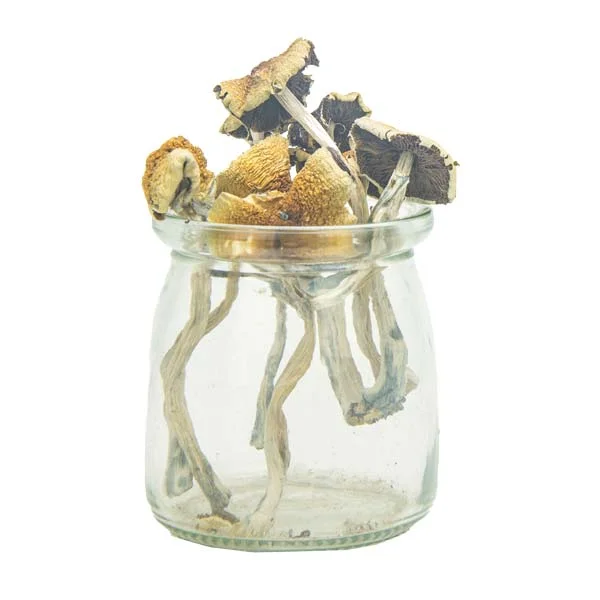
The pileus measures approximately 1.5 to 5 cm in diameter and is distinctly hygrophanous—changing color significantly as moisture content shifts. When moist, the cap is chestnut brown to date brown, often translucent near the margin. As it dries, it fades to pale ochraceous or straw color from the center outward, producing the characteristic two-toned appearance common to hygrophanous woodland Psilocybe species.
Cap shape progresses from broadly conical or campanulate in youth to broadly umbonate or plane with a persistent central umbo at maturity. The margin is often striate when wet. Surface texture is smooth to slightly viscid under humid conditions.
Gills (Lamellae)
The lamellae are adnate to sinuate, moderately crowded, and pale grayish-brown when immature, darkening progressively to deep purple-brown as spores mature. Gill edges are paler than the faces—a detail visible with a hand lens and useful in field assessment.
Stem (Stipe)
The stipe is 3 to 8 cm tall and 3 to 6 mm wide, roughly equal in diameter or slightly enlarged toward the base. It is fibrous, whitish to pale brown, and often develops bluish-green discoloration when bruised—a response associated with the oxidation of psilocin and related compounds. A fragile partial veil may leave a faint fibrillose annular zone, though this is frequently absent or obscured in mature specimens.
Spore Print
A spore print from a mature cap produces a dark purple-brown deposit, which distinguishes it from the rust-brown prints of Galerina marginata and the yellow-brown prints of many Cortinarius species. Spore print color remains one of the most accessible and reliable differentiating characters available to field mycologists.
Microscopy: Psilocybe bohemica Spores
Under optical microscopy, P. bohemica spores are ellipsoid to ovoid, measuring approximately (6.5–) 7–10 × 4–5.5 µm, with a pronounced apical germ pore. Spore walls are moderately thick and pale golden-brown in KOH mounts.
The cheilocystidia—cystidia located on the gill edges—are lageniform to fusiform, often with an extended neck, and represent one of the most taxonomically informative microscopic features of this species. Pleurocystidia are absent or poorly developed on the gill faces.
Spore morphology combined with cheilocystidial form constitutes the primary microscopic basis for distinguishing P. bohemica from superficially similar woodland species. For researchers working with Psilocybe bohemica spores, these characters should be confirmed against type descriptions and authoritative photomicrographs in the primary literature.
Bluing Reaction
The bluing reaction—a blue-green discoloration appearing within minutes of tissue damage—is indicative of psilocin content and is a consistently noted characteristic of P. bohemica. However, bluing intensity varies considerably among specimens and is absent in dried material, making it a supporting rather than definitive identification character.
Psilocybe bohemica Habitat and Distribution
Quick Answer: Psilocybe bohemica grows on decaying deciduous wood in cool, damp Central European forests, fruiting primarily from September through November at temperatures between approximately 4°C and 10°C. Verified records are concentrated in the Czech Republic, Germany, Austria, Slovakia, and Poland.
Ecological Specialization
Psilocybe bohemica is a lignicolous saprotroph, fruiting on or immediately adjacent to decaying deciduous wood. It colonizes buried root systems, partially decomposed woody debris, and wood chips in urban and semi-natural settings. Unlike dung-inhabiting Psilocybe species, it is ecologically committed to woody substrates and is not reliably found in grassland or agricultural contexts.
A distinctive and repeatedly documented habitat association is the presence of Urtica dioica (stinging nettle), which frequently colonizes nitrogen-enriched disturbed woodland soils—conditions that also support the microbial communities involved in woody substrate decomposition. This co-occurrence is a useful ecological clue, though not an infallible indicator.
Geographic Range
The species is documented across Central Europe, with verified records concentrated in:
- Czech Republic (particularly Bohemia and Moravia)
- Germany (including the Elbe river basin region)
- Austria
- Slovakia
- Poland
- Scattered localities in neighboring Central and Eastern European countries
Occurrence data are accessible through GBIF and iNaturalist, where georeferenced records allow spatial analysis of its distribution relative to forest type and elevation. Its range corresponds broadly to the mixed deciduous forest zone of Central Europe. It is not established in Western Europe or North America, and records from outside its documented range should be assessed critically.
Fruiting Season and Temperature
Psilocybe bohemica is primarily an autumn-fruiting species, with most collections recorded from September through November, at ambient temperatures of approximately 4–10°C. It favors cool, humid conditions following autumnal rainfall. Fruiting may extend into early winter in mild years but is generally concluded before the first sustained frosts.
Psilocybe bohemica Potency and Chemistry
Quick Answer: Published chemical analyses report psilocybin concentrations in Psilocybe bohemica ranging from approximately 0.11% to 1.34% of dry weight. Individual specimens vary substantially, and potency cannot be predicted from appearance alone.
Alkaloid Profile
Psilocybe bohemica produces a suite of indole alkaloids characteristic of the psychoactive Psilocybe clade. Documented compounds include:
- Psilocybin (4-phosphoryloxy-N,N-dimethyltryptamine) — the primary prodrug
- Psilocin (4-hydroxy-N,N-dimethyltryptamine) — the pharmacologically active form
- Baeocystin — a monomethyl analog of psilocybin
- Norbaeocystin — the unmethylated analog
- Aeruginascin — reported in some analyses; pharmacological role under active investigation
Psilocybe bohemica Potency: Published Data
Psilocybin concentration in P. bohemica exhibits substantial specimen-to-specimen variation, a pattern consistent with the broader Psilocybe literature. Published analyses—including work by Jochen Gartz and collaborators, and chemical profiling associated with Borovička’s taxonomic research—report psilocybin concentrations ranging from approximately 0.11% to 1.34% of dry weight.
This range is among the widest documented for any single European Psilocybe taxon and reflects genuine biological variability rather than analytical inconsistency alone. Contributing factors include substrate composition, developmental stage at harvest, post-harvest handling, and drying conditions. Psilocin, which is less stable than psilocybin and degrades rapidly through oxidation, is typically present at lower concentrations or is undetected in dried material.
The upper end of the documented range—approximately 1.34% psilocybin by dry weight—positions exceptional specimens of P. bohemica as comparably potent to well-studied species such as Psilocybe cyanescens, though the mean potency across collections is considerably lower.
Psilocybe bohemica vs. Psilocybe cubensis
Quick Answer: Psilocybe bohemica and Psilocybe cubensis differ substantially in habitat, climate preference, geographic range, and substrate. P. cubensis is a dung-inhabiting tropical and subtropical species widely cultivated globally; P. bohemica is a wood-decaying species restricted to cool Central European forests and is not cultivated.
The comparison between Psilocybe bohemica and Psilocybe cubensis is relevant because P. cubensis is the most globally recognized psilocybin mushroom, and it serves as the default reference point for many readers encountering European species for the first time.
| Feature | P. bohemica | P. cubensis |
|---|---|---|
| Substrate | Decaying deciduous wood | Dung; enriched agricultural soil |
| Habitat | Cool temperate forest | Tropical and subtropical grassland |
| Native range | Central Europe | Tropical Americas, Southeast Asia |
| Fruiting temperature | 4–10°C | 23–28°C |
| Psilocybin range | 0.11–1.34% dry weight | 0.14–0.90% dry weight (typical) |
| Cultivation | Not established | Widely cultivated |
| Spore print | Dark purple-brown | Dark purple-brown |
| Taxonomy | P. serbica var. bohemica | P. cubensis (stable) |
The ecological divergence between these two species is fundamental: P. bohemica is a cold-adapted, wood-decaying forest species, while P. cubensis is a warm-adapted, coprophilous species with a pantropical distribution. They share the same spore print color and basic alkaloid chemistry, but their morphology, ecology, and cultivation profiles are entirely distinct.
Psilocybe bohemica Lookalikes and Safety
Quick Answer: The most dangerous lookalike of Psilocybe bohemica is Galerina marginata, a deadly wood-inhabiting mushroom containing amatoxins. It is distinguished by its rust-brown spore print, absence of bluing, and roughened spores lacking a germ pore. A spore print combined with microscopic examination is the minimum standard for safe differentiation.
Critical Identification Risks
Psilocybe bohemica grows in habitats shared by several morphologically similar species, some of which are lethal. Misidentification carries serious risk that cannot be resolved by macroscopic examination alone.
Galerina marginata
Galerina marginata is the most dangerous lookalike. It is a wood-inhabiting, brown-capped mushroom that fruits in overlapping seasons and habitats across the Northern Hemisphere. It produces amatoxins—specifically α-amanitin—which cause delayed-onset hepatotoxicity that is frequently fatal without rapid medical intervention. Symptom onset is typically delayed 6–24 hours after ingestion, by which time significant hepatic damage has already occurred.
Critical differentiating characters:
- Spore print color: rust-brown in Galerina marginata; dark purple-brown in P. bohemica
- Spore morphology: G. marginata spores are roughened (verrucose) and lack a distinct germ pore
- Bluing reaction: absent in Galerina; present (variable) in P. bohemica
No single macroscopic character reliably separates these species. A spore print and microscopic spore examination represent the minimum identification standard.
Hypholoma Species
Hypholoma fasciculare (sulfur tuft) and related species grow in dense clusters on woody substrates and produce purple-brown spore prints—creating superficial similarity to P. bohemica. However, H. fasciculare characteristically grows in tight overlapping clusters, has a distinctly bitter taste, and lacks a bluing reaction.
Cortinarius Species
Certain brown-capped Cortinarius species, particularly those in section Telamonia, share the hygrophanous character and woodland habitat. Cortinarius produces rust to orange-brown spore prints (never purple-brown) and exhibits a characteristic cobwebby cortina in young specimens.
Several Cortinarius species contain orellanine, a nephrotoxic compound causing delayed kidney failure with symptom onset potentially weeks after ingestion—a pattern that complicates diagnosis and worsens outcomes.
Summary Comparison Table
| Feature | P. bohemica | Galerina marginata | Hypholoma fasciculare | Cortinarius spp. |
|---|---|---|---|---|
| Spore print | Dark purple-brown | Rust-brown | Purple-brown | Rust to orange-brown |
| Bluing reaction | Present (variable) | Absent | Absent | Absent |
| Substrate | Decaying wood | Decaying wood | Decaying wood | Soil/wood |
| Toxicity | Psychoactive | Deadly (amatoxins) | Mildly toxic | Potentially deadly (orellanine) |
| Germ pore | Present | Absent | Absent | Absent |
| Growth habit | Scattered/gregarious | Scattered/gregarious | Dense clusters | Scattered |
Wood-Lover Paralysis: A Note on Neurological Risk
Anecdotal reports in the mycological literature describe transient muscle weakness—sometimes called “wood lover paralysis”—following consumption of certain wood-loving Psilocybe species, particularly Psilocybe cyanescens and Psilocybe azurescens. The causative mechanism is not established, and published clinical evidence is currently insufficient to confirm the association or identify a responsible compound.
Whether Psilocybe bohemica shares this association is unknown. No peer-reviewed case reports specifically implicating P. bohemica in this syndrome have been identified in the primary literature. This remains an open question in the clinical mycology of wood-loving Psilocybe species.
Psilocybe bohemica Spore Print and Microscopy
Quick Answer: A Psilocybe bohemica spore print is dark purple-brown and is produced by placing a mature cap gill-side down on white paper or glass for at least four to eight hours. Spore print color must be assessed under neutral or natural light to avoid perceptual errors caused by artificial lighting.
Producing a Spore Print
A reliable Psilocybe bohemica spore print requires a mature cap placed gill-side down on white paper or glass for a minimum of four to eight hours under a bowl to prevent air movement. White paper provides contrast for the dark deposit; glass allows transillumination for color assessment.
Spore print color must be assessed under neutral or natural light. Warm-spectrum artificial lighting can shift apparent color sufficiently to produce misidentification errors—a technically minor but practically significant point when distinguishing purple-brown from rust-brown prints.
Microscopic Examination
For researchers conducting mushroom microscopy, slide preparation typically involves mounting material in 3% KOH solution to hydrate and clarify spore walls. Melzer’s reagent assesses amyloid reactions; Psilocybe spores are inamyloid (non-reactive), which assists differentiation from some superficially similar genera.
Key microscopic targets in P. bohemica:
- Spore dimensions and shape — ellipsoid to ovoid; 7–10 × 4–5.5 µm
- Apical germ pore — present and distinct
- Cheilocystidial morphology — lageniform with extended neck
- Wall thickness and pigmentation in KOH
Optical microscopy at 400× to 1000× magnification is required for confident spore character assessment. Phase contrast optics substantially improve germ pore visibility and are recommended for differentiation from Galerina marginata, whose spores are verrucose and lack a germ pore.
Wood-Loving Psilocybe Species: Ecological Context
Quick Answer: Wood-loving Psilocybe species—including P. bohemica, P. cyanescens, and P. azurescens—are ecologically distinct from dung-inhabiting or grassland species. They are lignicolous saprotrophs specialized for cool temperate habitats and hardwood substrates.
Psilocybe bohemica belongs to a functionally defined group of wood-loving Psilocybe species that occupy cool temperate forest ecosystems across the Northern Hemisphere. These lignicolous taxa share several ecological and chemical characteristics: commitment to woody substrates, cool-season fruiting, and typically high psilocybin concentrations relative to grassland species.
Key members of this ecological group include:
| Species | Range | Primary Substrate | Approx. Psilocybin |
|---|---|---|---|
| P. bohemica | Central Europe | Deciduous wood | 0.11–1.34% |
| P. cyanescens | Western Europe, Pacific NW | Wood chips, debris | 0.66–1.96% |
| P. azurescens | Pacific Northwest (USA) | Sandy coastal wood | Up to ~1.78% |
| P. serbica | Balkans, Central Europe | Deciduous wood | Variable |
Within this group, P. bohemica is distinguished by its Central European distribution, documented serbica complex affiliation, and habitat association with undisturbed or semi-natural woodland rather than the urban mulched environments frequently colonized by P. cyanescens.
Jan Borovička and Psilocybe bohemica Research
Quick Answer: Jan Borovička is a Czech mycologist whose molecular and chemical analyses of Central European Psilocybe species—including P. bohemica—provide the primary scientific basis for classifying it as Psilocybe serbica var. bohemica.
Jan Borovička, a Czech mycologist affiliated with leading European research institutions, has made foundational contributions to the modern understanding of Central European psilocybin fungi. His work integrates molecular phylogenetics, chemical analysis, and field ecology in ways that have materially reshaped how Psilocybe bohemica and related taxa are classified.
Borovička’s research on the serbica complex—including chemical profiling and DNA-based phylogenetic reconstruction—provides the primary scientific basis for the current treatment of P. bohemica as P. serbica var. bohemica (Borovička et al., 2012, Czech Mycology). His documentation of aeruginascin in European Psilocybe species has also contributed to broader understanding of alkaloid diversity within this genus, raising questions about the pharmacological significance of minor tryptamine constituents.
For researchers seeking primary literature on Jan Borovička Psilocybe research, his publications in peer-reviewed mycological journals—particularly Czech Mycology and Persoonia—represent the most authoritative source on Central European psilocybin mushroom taxonomy.
Legal Status of Psilocybe bohemica Spores
Quick Answer: In most U.S. states, Psilocybe bohemica spores may be legally purchased for microscopy because they do not contain psilocybin. However, California, Georgia, and Idaho prohibit spore possession, and state laws differ significantly. Independent legal verification is essential before any purchase or possession.
United States
In the United States, psilocybin and psilocin are Schedule I controlled substances under federal law (21 U.S.C. § 812). Psilocybe mushrooms containing these compounds are federally prohibited. However, spores—which do not contain psilocybin or psilocin in their native state—occupy a distinct legal position in many jurisdictions.
In the majority of U.S. states, Psilocybe bohemica spores may be legally purchased and possessed for microscopy and taxonomic research purposes. However, California, Georgia, and Idaho explicitly prohibit spore possession under state law, and several additional states maintain legal ambiguity that creates practical risk. Germination of spores with intent to cultivate psilocybin-containing mushrooms constitutes a federal offense regardless of state position on spore possession.
Applicable law changes frequently and varies by jurisdiction. Independent legal verification is essential before any purchase or possession.
Europe
Legal status across Europe varies significantly. In the Czech Republic—the primary natural range of P. bohemica—psilocybin mushrooms are classified as a controlled substance under Act No. 167/1998 Coll. Germany, Austria, and most EU member states maintain comparable prohibitions under their respective narcotic substances legislation. Researchers should consult current national law and, where relevant, institutional ethics requirements before possessing or studying fresh or living material.
European Psilocybin Mushrooms: Where Psilocybe bohemica Fits
Quick Answer: Among European psilocybin mushrooms, Psilocybe bohemica is ecologically distinct from P. semilanceata (grassland) and P. cyanescens (urban wood chips). It is the characteristic wood-decaying Psilocybe of cool Central European hardwood forests.
Psilocybe bohemica occupies a specific and well-defined position within the ecology of European psilocybin mushrooms. Unlike Psilocybe semilanceata—the liberty cap, which is the most widespread European psilocybin species and inhabits nutrient-poor grasslands—P. bohemica is ecologically committed to woodland substrates. Unlike Psilocybe cyanescens, which has naturalized widely in urban mulched habitats across Western Europe and beyond, P. bohemica remains primarily a species of natural and semi-natural Central European forest.
This ecological specificity makes P. bohemica less frequently encountered than either P. semilanceata or P. cyanescens across Europe as a whole, but more reliably associated with its defined habitat type within its native range. Its value to mycology lies precisely in this specificity: as a regionally distinct, molecularly characterized, chemically documented member of a genus undergoing continuous taxonomic revision.
Key Takeaways
- Taxonomy: Most modern authorities classify Psilocybe bohemica as Psilocybe serbica var. bohemica based on molecular phylogenetic analysis; the original Šebek binomial remains in common use in informal literature.
- Identification: No single field character is diagnostic. The combination of a dark purple-brown spore print, bluing reaction, and woodland hardwood substrate is the minimum evidence base; microscopic confirmation of spore dimensions and cheilocystidial morphology is required for definitive identification.
- Safety: Galerina marginata is a deadly lookalike with overlapping habitat and season. Spore print color and microscopic spore examination are non-negotiable safety steps.
- Chemistry: Psilocybin concentration ranges from 0.11% to 1.34% of dry weight across published analyses—one of the widest ranges documented for any European Psilocybe taxon.
- Ecology: A cool-adapted, lignicolous species restricted to Central European hardwood forests, fruiting September–November at 4–10°C; not established in cultivation.
Frequently Asked Questions
What is Psilocybe bohemica?
Psilocybe bohemica is a wood-loving psilocybin mushroom native to Central Europe, now widely recognized as Psilocybe serbica var. bohemica based on modern molecular taxonomy. It was first described by František Šebek in 1983 from specimens collected in Bohemia.
Is Psilocybe bohemica the same species as Psilocybe serbica?
Most modern taxonomic authorities consider Psilocybe bohemica a variety of Psilocybe serbica based on DNA sequencing studies. The two taxa share a single molecular lineage, and the varietal designation P. serbica var. bohemica preserves nomenclatural recognition of the Bohemian populations.
Where does Psilocybe bohemica grow?
Psilocybe bohemica grows primarily in Central Europe, including the Czech Republic, Germany, Austria, Slovakia, and Poland. It fruits on decaying deciduous wood in cool, moist forests during autumn, frequently in habitats where stinging nettle (Urtica dioica) is abundant. It is not established in Western Europe or North America.
What does a Psilocybe bohemica spore print look like?
A mature Psilocybe bohemica spore print is dark purple-brown. Under optical microscopy, the spores are ellipsoid to ovoid, measuring 7–10 × 4–5.5 µm, with a distinct apical germ pore.
How potent is Psilocybe bohemica?
Published chemical analyses report psilocybin concentrations ranging from approximately 0.11% to 1.34% of dry weight. This is one of the widest potency ranges documented for any European Psilocybe taxon, reflecting genuine biological variability across specimens and collection conditions.
What are the main lookalikes of Psilocybe bohemica?
The most dangerous lookalike is Galerina marginata, which contains deadly amatoxins and produces a rust-brown (not purple-brown) spore print. Hypholoma fasciculare and several Cortinarius species also share the general habitat and morphology. Spore print color and microscopic examination are required for safe differentiation.
Does Psilocybe bohemica grow on wood?
Yes. Psilocybe bohemica is a lignicolous species—it fruits exclusively on or adjacent to decaying deciduous wood, including buried roots and woody debris. It does not grow on dung or in grassland habitats.
What is the difference between Psilocybe bohemica and Psilocybe cubensis?
P. bohemica is a wood-decaying, cool-adapted Central European forest species fruiting at 4–10°C. P. cubensis is a dung-inhabiting, warm-adapted species with a tropical distribution, fruiting at 23–28°C. They share a dark purple-brown spore print and similar alkaloid chemistry but differ entirely in substrate, climate, geographic range, and cultivation status.
What is the difference between Psilocybe bohemica and Psilocybe cyanescens?
Both are wood-loving European Psilocybe species, but P. cyanescens has naturalized widely in urban mulched habitats across Western Europe and the Pacific Northwest, while P. bohemica is restricted to natural and semi-natural Central European hardwood forests. P. cyanescens generally exhibits higher and more consistent psilocybin concentrations.
Who is Jan Borovička and why is he relevant to Psilocybe bohemica?
Jan Borovička is a Czech mycologist whose molecular and chemical analyses of Central European Psilocybe species provide the primary scientific basis for classifying P. bohemica as P. serbica var. bohemica. His research integrating DNA sequencing, alkaloid profiling, and field ecology has made him the leading authority on this species complex.
Are Psilocybe bohemica spores legal in the United States?
In most U.S. states, spores may be purchased and possessed for microscopy because they do not contain psilocybin. California, Georgia, and Idaho explicitly prohibit spore possession. State laws differ and change; independent legal verification is essential before any purchase or possession.
Why is Psilocybe bohemica important to mycology?
Psilocybe bohemica is important because it exemplifies the transformation of fungal systematics through molecular tools, represents a chemically and ecologically distinct European psilocybin taxon, and has served as a focal species in DNA-based reclassification of the Psilocybe serbica complex.
Conclusion
Psilocybe bohemica is more than a taxonomic curiosity. As Psilocybe serbica var. bohemica, it exemplifies how molecular tools have fundamentally transformed fungal systematics—dissolving morphologically defined species boundaries, revealing cryptic phylogenetic relationships, and establishing DNA sequence data as the primary currency of classification decisions. Its chemistry, documented across a wide potency range by researchers including Jochen Gartz and Jan Borovička, illustrates both the pharmacological complexity of the Psilocybe genus and the methodological rigor required to characterize it reliably.
For mycologists, the species presents a defined and demanding identification profile: a dark purple-brown spore print, hygrophanous pileus, lageniform cheilocystidia, and an ecological signature tied to cool Central European hardwood forests at fruiting temperatures of 4–10°C. For safety-conscious field observers, it reinforces a non-negotiable principle: spore print examination and microscopic verification are mandatory when working with wood-inhabiting brown mushrooms in any Northern Hemisphere forest.
For researchers and microscopists with lawful access to Psilocybe bohemica spores, the species remains a scientifically productive subject—one whose taxonomy continues to be refined, whose alkaloid chemistry raises unresolved questions about minor tryptamine constituents such as aeruginascin, and whose ecology positions it as the characteristic psilocybin fungus of Central European hardwood forests.
References and Primary Sources
Primary Scientific Literature
Borovička, J., Oborník, M., Stříbrný, J., Noordeloos, M. E., & Goessler, W. (2012). Chemical and phylogenetic studies of three species of Psilocybe sensu lato in the Czech Republic. Czech Mycology, 64(2), 163–184.
Guzmán, G. (1983). The Genus Psilocybe: A Systematic Revision of the Known Species Including the History, Distribution, and Chemistry of the Hallucinogenic Species. Beihefte zur Nova Hedwigia, 74. J. Cramer, Vaduz.
Gartz, J. (1996). Magic Mushrooms Around the World: A Scientific Journey Across Cultures and Time. LIS Publications, Los Angeles.
Horak, E. (1968). Synopsis generum Agaricalium. Beiträge zur Kryptogamenflora der Schweiz, 13, 1–741.
Moser, M. (1983). Keys to Agarics and Boleti (Polyporales, Boletales, Agaricales, Russulales). (4th ed., trans. S. Plant). Roger Phillips, London.
Taxonomic Databases
MycoBank. Psilocybe bohemica Šebek. MB 107757. Retrieved from https://www.mycobank.org
Index Fungorum. Psilocybe bohemica Šebek. IF 107757. Retrieved from https://www.indexfungorum.org
GBIF Secretariat. (2023). Psilocybe bohemica Šebek. GBIF Backbone Taxonomy. Retrieved from https://www.gbif.org
NCBI Taxonomy Browser. Psilocybe serbica var. bohemica. National Center for Biotechnology Information. Retrieved from https://www.ncbi.nlm.nih.gov/taxonomy
Supplementary Resources
iNaturalist. Psilocybe bohemica observations. Retrieved from https://www.inaturalist.org
| QUANTITY | OZ, 1/4 POUND, 1/2 POUND, POUND |
|---|
41 reviews for Psilocybe Bohemica – Potent Wild Mushroom from Europe
Add a review
Related products
MAGIC MUSHROOMS
Price range: $178.00 through $840.00
This product has multiple variants. The options may be chosen on the product page 
Price range: $190.00 through $890.00
This product has multiple variants. The options may be chosen on the product page 
MAGIC MUSHROOMS
Psilocybe Azurescens – Ultra-Potent Wild Psilocybin Mushroom
Price range: $180.00 through $870.00
This product has multiple variants. The options may be chosen on the product page 
MAGIC MUSHROOMS
Price range: $180.00 through $860.00
This product has multiple variants. The options may be chosen on the product page 
Price range: $190.00 through $890.00
This product has multiple variants. The options may be chosen on the product page 
MAGIC MUSHROOMS
Price range: $178.00 through $840.00
This product has multiple variants. The options may be chosen on the product page 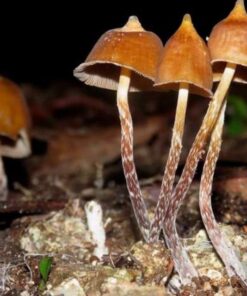
Price range: $178.00 through $865.00
This product has multiple variants. The options may be chosen on the product page 
Price range: $180.00 through $910.00
This product has multiple variants. The options may be chosen on the product page
Ezekiel McBride (verified owner) –
Potent and clean. No nausea.
Taliyah Smoot (verified owner) –
They came in perfect condition—fresh and ready.
Elena Blake (verified owner) –
I expected a good trip, but I didn’t expect emotional healing and a full-circle experience like this.
Xavier Craig (verified owner) –
This felt like more than a psychedelic journey. It felt like support from people who understand what real healing means.
Kenneth Hale (verified owner) –
Fast, stealthy delivery and amazing quality. I could feel the professionalism behind every step.
Leia Thorne (verified owner) –
The kind of healing I didn’t know I needed.
Juliana Welch (verified owner) –
It felt like my nervous system finally relaxed, and I could breathe again.
Tanner Paul (verified owner) –
The emotional clarity I gained from this session is hard to put into words. It felt safe, guided, and surprisingly gentle.
Gilbert Sharp (verified owner) –
This isn’t just a product — it’s a safe invitation to come back home to yourself.
Jaylene Shapiro (verified owner) –
These brought a sense of oneness I’ll never forget.
Shane Hopkins (verified owner) –
A deeply emotional journey that was only possible because I knew I was in good hands.
Warren McDaniel (verified owner) –
Everything slowed down, and for once, I didn’t feel rushed or reactive.
Ellie Rowe (verified owner) –
The colors were beautiful, yes, but the emotional healing was even more powerful.
Liliana Casey (verified owner) –
When something this powerful is handled with love and care, it becomes more than a product — it becomes a moment.
Sean Wood (verified owner) –
The journey was deep and personal, but the professionalism around it made me feel completely supported.
Melanie Riley (verified owner) –
This gave me space to explore parts of myself without fear or confusion. Everything was clear, even the packaging.
Amari Blackwell (verified owner) –
I felt supported throughout my whole experience, just from how the product was presented.
Talon Robles (verified owner) –
Shipping was fast and quiet, which I appreciate so much.
Hadley Shields (verified owner) –
Discreet shipping means I can explore without worry.
Monica Benitez (verified owner) –
I trust the process, because I trust this supplier.
Giovanna Hyatt (verified owner) –
I’m more myself now than I’ve ever been.
Zola Darnell (verified owner) –
Top-shelf quality mushrooms.
Delaney Salazar (verified owner) –
I’m more myself now than I’ve ever been.
Keira Blake (verified owner) –
This gave me emotional insight, and the professionalism behind the product gave me peace of mind.
Joseph Martin (verified owner) –
The come-up was smooth and warm, like slipping into a deep meditation.
Brandon Hall (verified owner) –
Each moment felt sacred. I was fully immersed in a gentle sense of awe.
Carl Thornton (verified owner) –
This product brought so much peace and insight. I sat with myself in total stillness for hours and felt completely safe.
Tony Briggs (verified owner) –
Helped me realize how much I was carrying emotionally. It softened the edges of everything.
Jared Foster (verified owner) –
I felt more like a person than a customer. That meant more to me than I expected.
Wayne Pratt (verified owner) –
There’s real wisdom in how this company operates. You can feel it in the care of every step.
Alaina Daniel (verified owner) –
This journey opened my eyes and softened my heart. I’m so grateful for the professionalism that made it possible.
Cody Collins (verified owner) –
The packaging was sturdy and kept everything secure.
Louis Jordan (verified owner) –
I liked how easy it was to store after opening.
Larry Delgado (verified owner) –
I enjoyed cooking with this product.
Julia Armstrong (verified owner) –
The quality remained excellent throughout the package.
Lydia Ward (verified owner) –
Everything about the purchase process was smooth.
Amanda Baker (verified owner) –
The flavor worked nicely in savory recipes.
Lawrence King (verified owner) –
I enjoyed the quality and ease of use.
Gabriella Chambers (verified owner) –
Everything about the purchase process was smooth.
Victoria George (verified owner) –
Delivery was quick and the order arrived safely.
Iris Willis (verified owner) –
A great addition to soups and sauces.